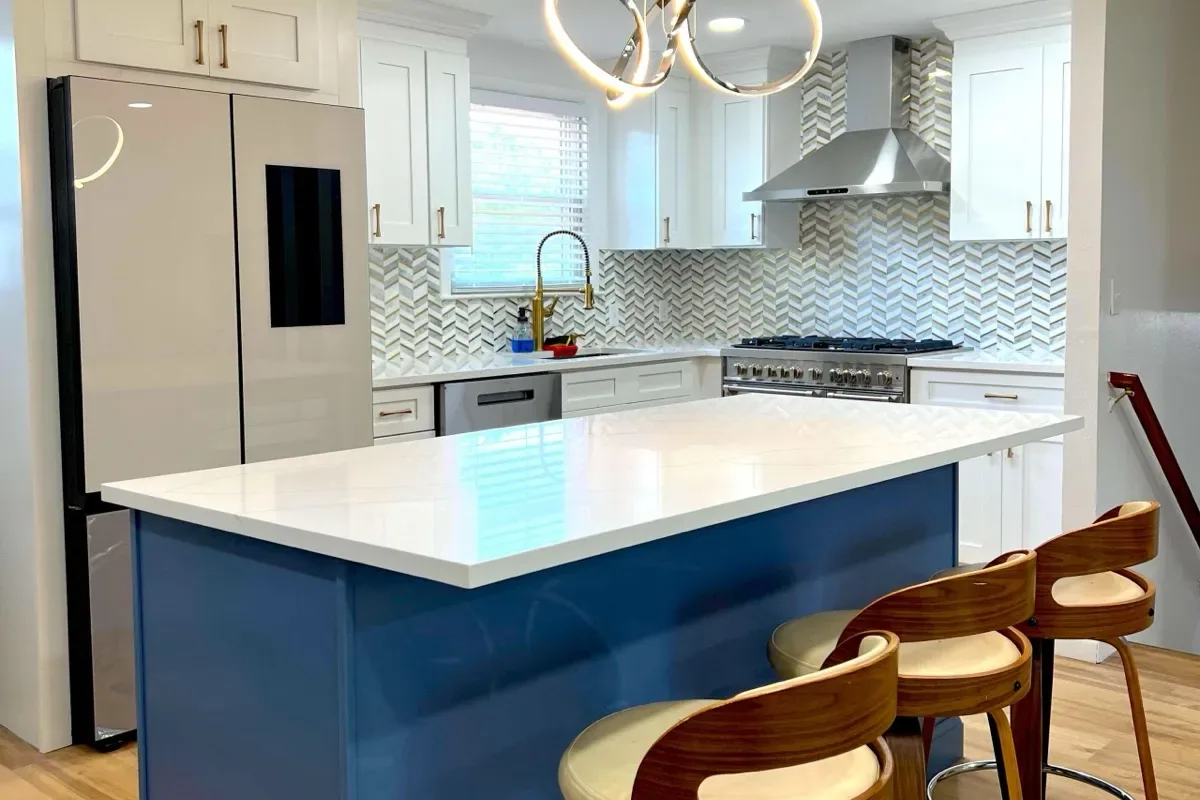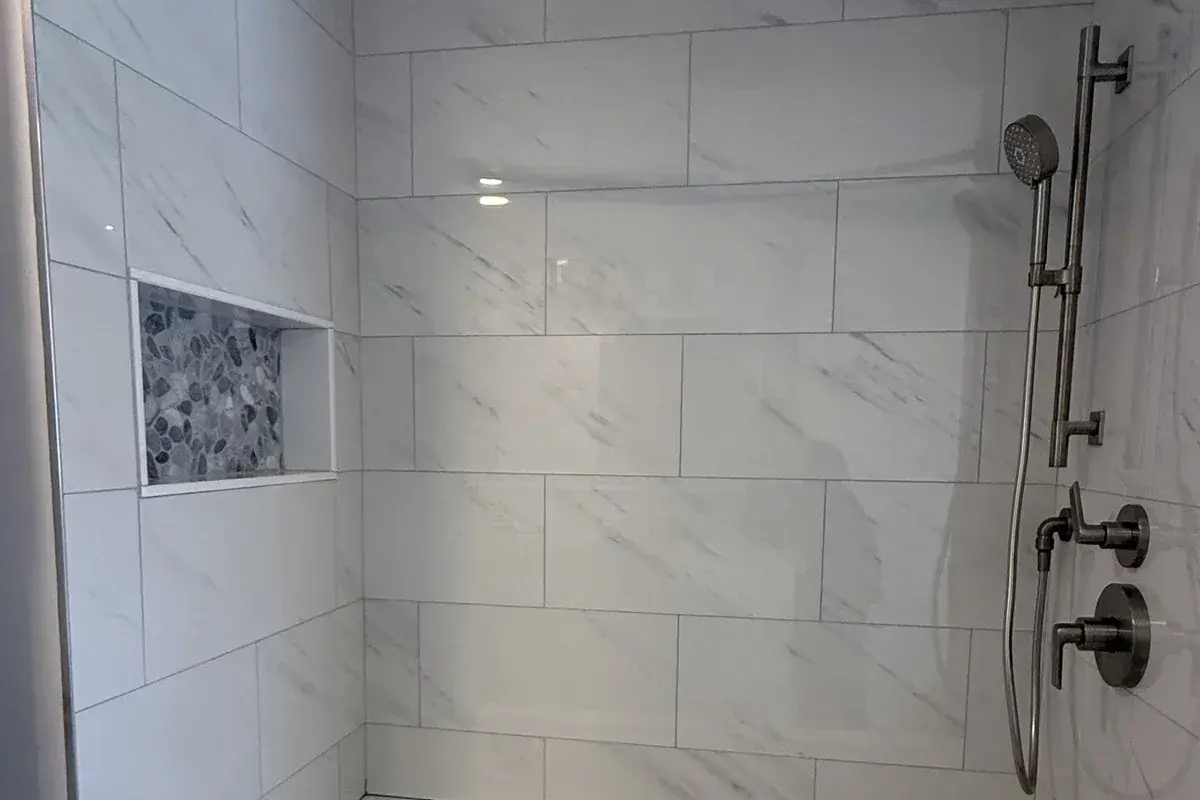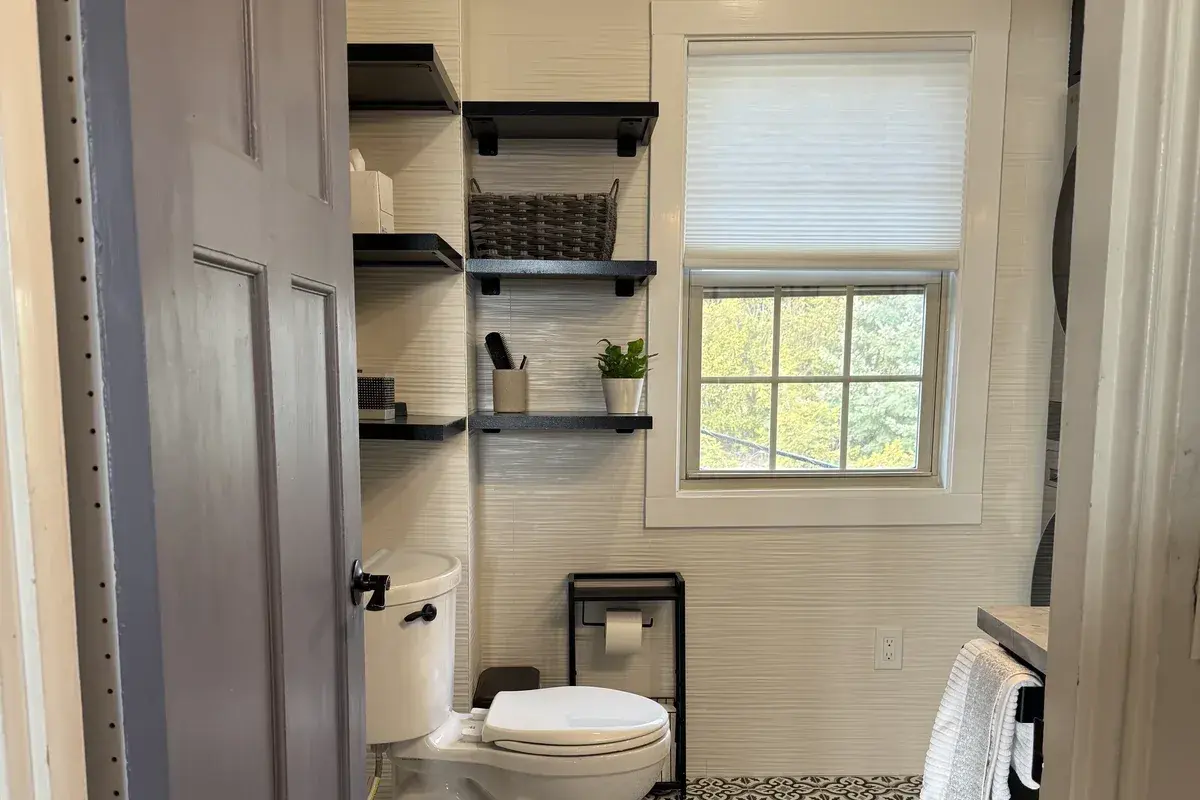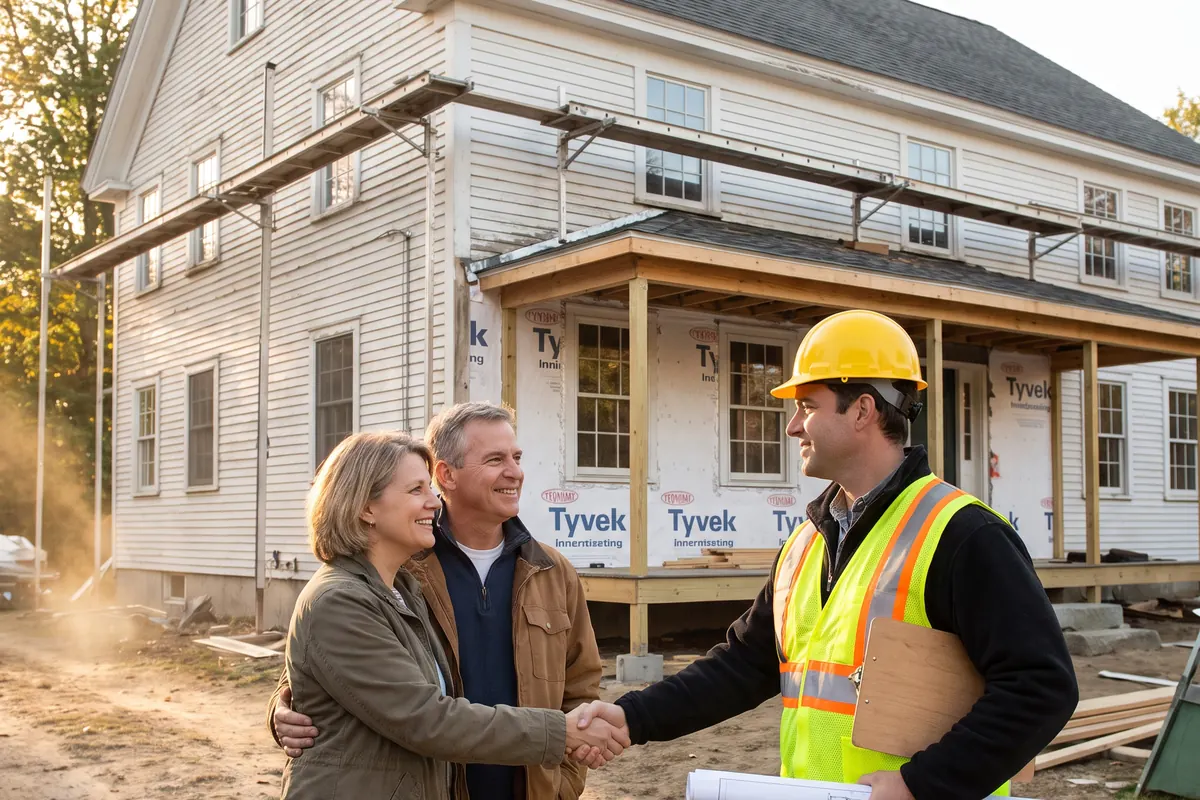
Innov Builders are the licensed general contractors Wakefield, MA homeowners rely on for kitchens, bathrooms, additions, basements, decks and full-home renovations. As a licensed and insured general contractor (HIC #212869, OSHA certified) led by Iago Maciel, we manage the whole project with our own in-house crew, pull the permits, and stand behind the work, so you deal with one accountable team from the first estimate to the final walkthrough.
Choosing a general contractor is the most important decision in any home project, and the one homeowners feel least equipped to make. You are about to hand a stranger a large sum of money and the keys to your home, based on a quote you have no easy way to verify. It is no wonder people feel anxious. The wrong contractor can cost you far more than money, it can cost you months of stress and a home you dread walking through.
At Innov Builders we have seen the aftermath of bad hires more times than we would like: unpermitted work, unfinished projects, jobs that fail inspection when it is time to sell. This guide gives you the exact checklist to hire the right contractor in Wakefield, MA, and the red flags that should send you running.
What a general contractor actually does
Before you hire one, it helps to know what you are paying for. A general contractor (GC) is the single accountable person who manages your entire project: scheduling and coordinating every trade (plumbers, electricians, carpenters, tile setters), pulling permits, ordering materials, keeping the job on timeline and budget, and standing behind the finished work. A good GC is why a complex project feels organized instead of chaotic. Hiring individual tradespeople yourself and trying to coordinate them is where most DIY-managed projects fall apart.
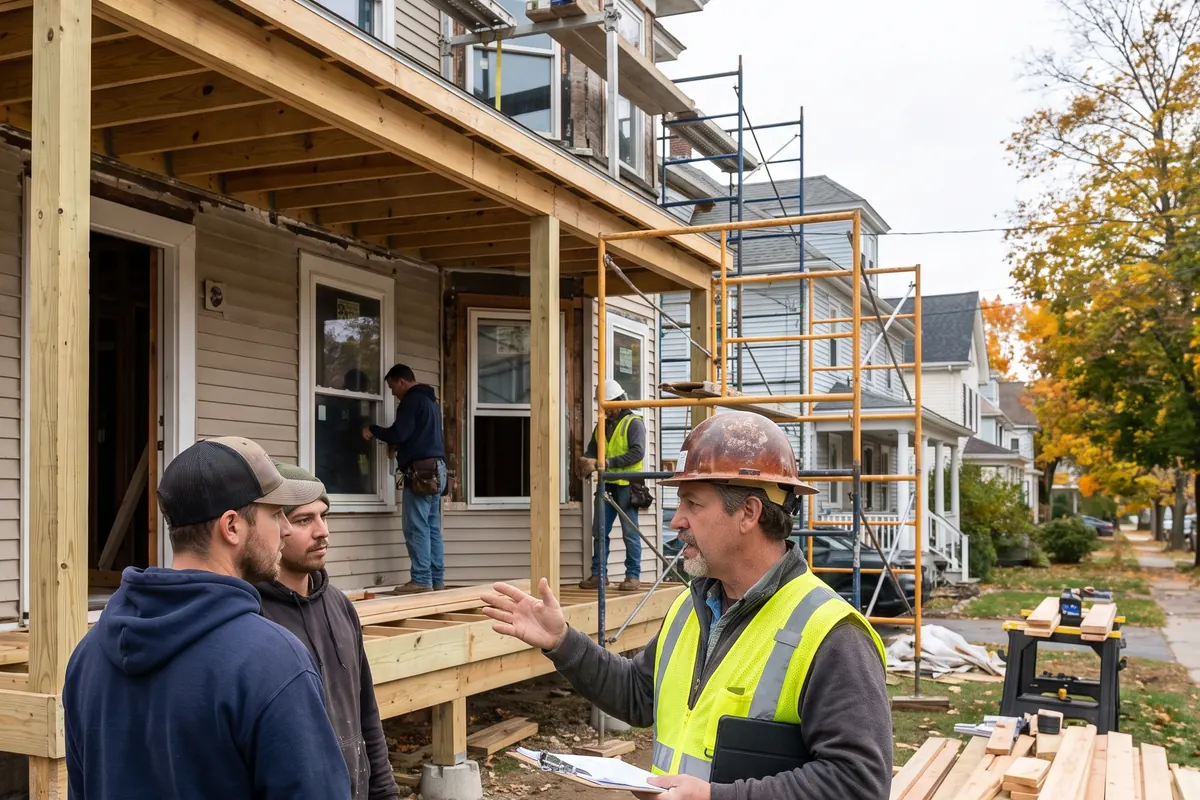
The checklist: how to vet a contractor in Massachusetts
Run every contractor you consider through these steps. A trustworthy builder will welcome the questions.
1. Verify the license and registration
In Massachusetts, contractors doing residential work must be registered as a Home Improvement Contractor (HIC), and construction supervisors carry a CSL. Ask for the numbers and confirm they are current. Innov Builders holds HIC License #212869. If a contractor cannot or will not give you a license number, the conversation is over.
2. Confirm insurance, in writing
Your contractor must carry liability insurance and workers' compensation. Ask for a certificate of insurance. If an uninsured worker is hurt on your property, or their work damages your home, you can be left holding the bill. This is not optional, it is protection for you.
3. Ask if they pull permits
A professional contractor pulls the required permits and schedules inspections, always. If anyone suggests skipping the permit to "save time and money," walk away. Unpermitted work can void your insurance, fail at resale, and create safety hazards. It is the single clearest sign of a contractor cutting corners.
4. Look at real, local work
Photos are nice, but ask to see projects like yours, and ideally in your area. A builder who works throughout Greater Boston can show you kitchens, bathrooms, additions and decks they actually completed. Reviews from local homeowners in Wakefield, Reading, Melrose and nearby towns tell you how they treat clients over the length of a real project.
5. Demand a clear, written estimate and scope
A real estimate spells out what is included: the work, the materials, the timeline and the payment schedule. Vague one-line quotes are how change orders and disputes are born. A detailed written scope protects both of you and is the mark of a professional operation.
6. Understand who is actually doing the work
Some "contractors" are really brokers who subcontract everything to the lowest bidder and manage none of it. Ask whether the company has its own trained crew or how it selects and supervises its trades. An in-house crew, like ours, means consistent quality and one team that answers for the result.
7. Judge the communication
Pay attention to how a contractor treats you before you have signed anything. Do they return calls? Show up when they say they will? Answer your questions clearly? That behavior only gets more important once the project is underway. If communication is poor during the sales stage, it will be worse during construction.
Red flags that should stop you cold
Some warning signs are worth memorizing. Be very cautious of a contractor who:
- Cannot provide a license number or proof of insurance.
- Suggests skipping permits to save money.
- Demands a large cash deposit up front, or wants to be paid entirely before the work is done.
- Gives a price far below every other bid (someone always pays for that gap, usually you, later).
- Pressures you to sign immediately or "today only."
- Has no written contract or a vague, one-line quote.
- Cannot show you completed local projects or references.
Any one of these is a reason to slow down. Two or more, and you should keep looking.
Understanding the contract and payment schedule
In Massachusetts, home improvement contracts over a certain dollar amount must be in writing, and that protects you. A proper contract spells out the scope of work, the materials and allowances, the total price, the payment schedule, the start and completion dates, and the warranty. Never rely on a handshake or a text message for a project worth tens of thousands of dollars.
Pay attention to the payment schedule. A reasonable structure ties payments to milestones, a modest deposit, then progress payments as defined stages are completed, with a final payment when the work is done and you are satisfied. Be wary of anyone demanding most or all of the money up front. Under Massachusetts law there are limits on the deposit a contractor can require before starting, and a large up-front demand is one of the most common signs of a problem. A legitimate builder is funded to start your job and gets paid as the work progresses.
What a good project actually feels like
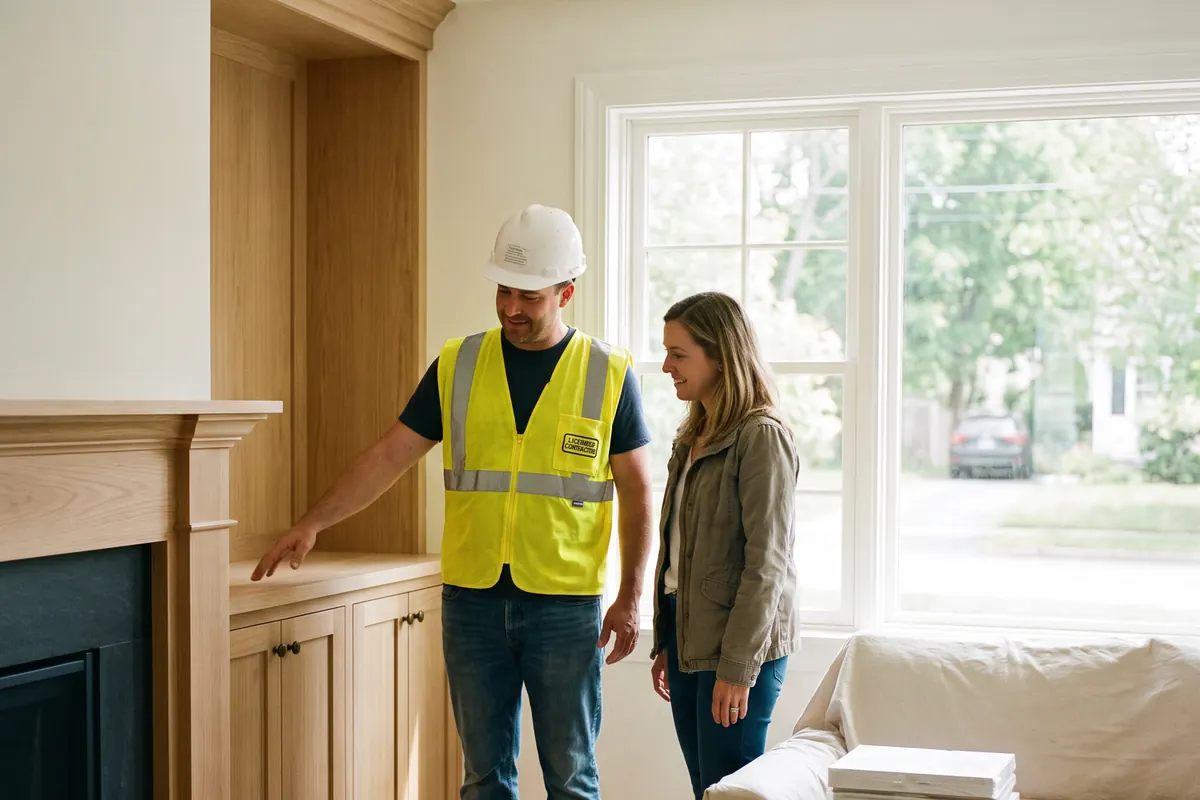
Hiring the right contractor changes the entire experience of a remodel. Instead of chasing subs, guessing at the schedule and worrying about quality, you get one team that shows up, communicates and delivers. Here is what that looks like day to day:
- Clear expectations from the start, you know the scope, the price and the timeline before work begins.
- Your home is respected, floors are protected, dust is contained, and the site is cleaned up every day.
- You are kept in the loop, you know what happened today and what is coming tomorrow, with one person to call.
- Problems are surfaced honestly, if something unexpected turns up behind a wall, you hear about it right away, with options and a clear path forward.
- The work stands behind a warranty, and the builder is still there if you need them after the job is done.
That is the standard a professional general contractor should meet, and the one that turns a stressful project into a good experience with a result you are proud of.
Questions to ask before you sign
Bring these to every contractor meeting:
- What is your HIC and CSL license number?
- Can I see your certificate of insurance?
- Will you pull the permits and handle inspections?
- Do you have your own crew, or do you subcontract everything?
- Can I see projects like mine and talk to a recent client?
- What does your written estimate include, and what is the payment schedule?
- Who is my point of contact and how often will I get updates?
- What warranty do you offer on your workmanship?
How to compare bids the right way
Once you have two or three estimates, the temptation is to sort by price and pick the lowest. That is exactly how homeowners get burned. The lowest number often reflects the smallest scope, the cheapest materials, or corners you will pay for later. Compare bids the smart way:
- Line up the scope, not just the total. Make sure each bid covers the same work, materials and allowances before you compare prices.
- Check the allowances. A low tile or fixture allowance makes a quote look cheap until you actually shop and blow past it.
- Confirm permits are included. If one bid excludes permits, it is not really cheaper.
- Weigh the intangibles. Communication, reputation, warranty and whether they run their own crew are worth real money over a multi-week project.
When the lowest bid is thousands below the rest, ask yourself where that gap is hiding. It is always hiding somewhere, and it usually surfaces as a change order, a delay, or a repair after the fact.
Local matters: hiring a contractor who knows the area
There is real value in hiring a builder who works in your area every day. A local Wakefield contractor knows the town's permitting process and inspectors, understands the quirks of Greater Boston's older housing stock, and has a reputation in the community to protect. They can show you completed projects nearby and connect you with local homeowners who have worked with them. A contractor with deep local roots is far more accountable than an out-of-area crew that disappears the moment the check clears. When something needs attention after the job, a local builder is still down the road, not three states away.
Why homeowners across Greater Boston choose Innov Builders
We built our company on being the contractor we would want to hire. Innov Builders is licensed and insured, HIC License #212869, OSHA certified, and led by Iago Maciel with a trained in-house crew, not a rotating cast of unmanaged subs. We pull every permit, provide a clear written scope, keep you updated on a real schedule, and back our work with a solid workmanship warranty. We are based at 50 New Salem St in Wakefield, MA, and we serve homeowners throughout Greater Boston.
From kitchens and bathrooms to additions, decks and full renovations, we handle every trade under one accountable roof, so you have one team to trust from the first sketch to the final walkthrough.
Interviewing contractors for your project? Put us on your list. Request a free estimate and we will get back to you within one business day, no pressure, just an honest conversation about your project. Explore our full range of services, see our work in the portfolio, and read our guides on kitchen remodel cost and bathroom remodel cost in Massachusetts.