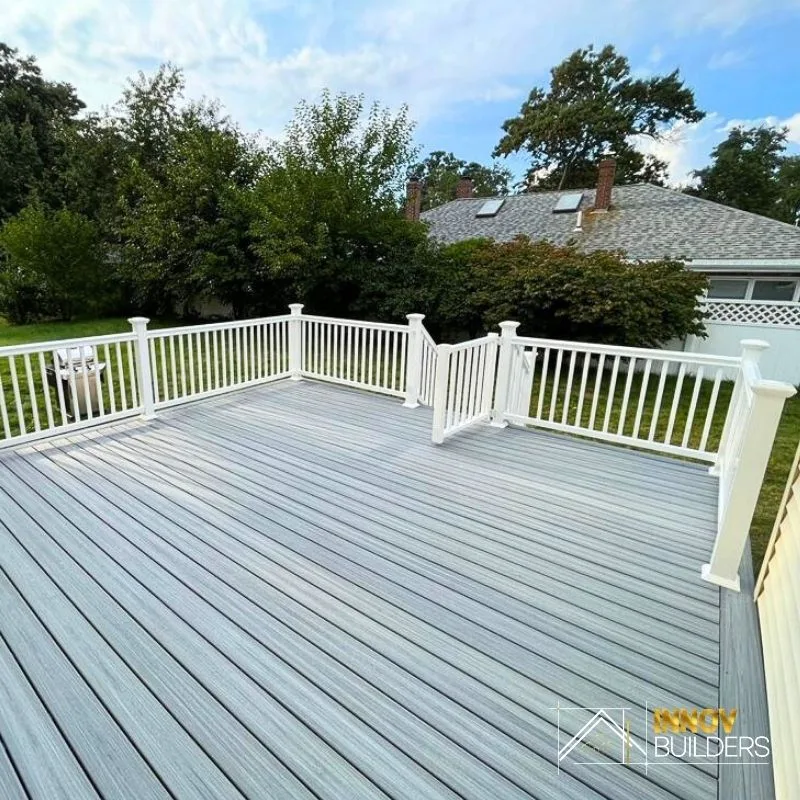
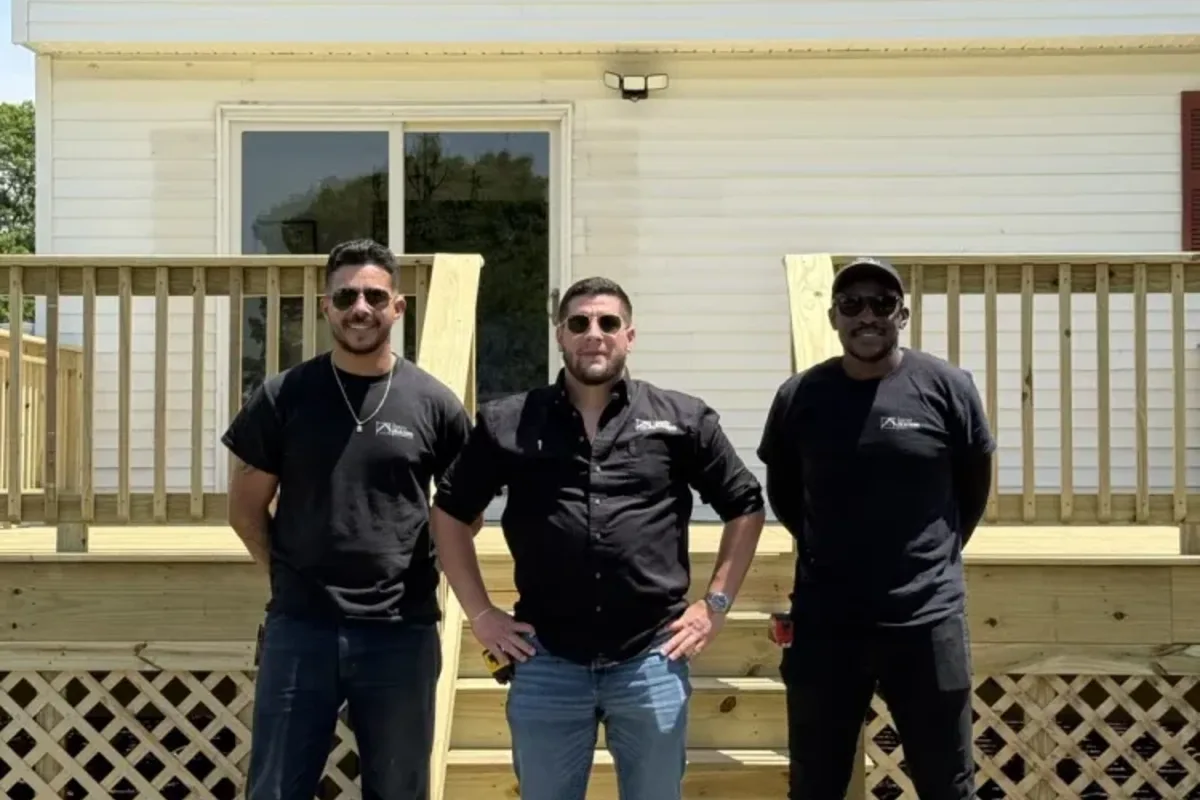
Innov Builders are the composite deck builders Wakefield, MA homeowners turn to when they want an outdoor space they never have to sand, stain or seal again. Composite decking is our most-requested material for a reason: in New England, where a deck faces snow load, ice melt, driving rain, freeze-thaw swings and heavy summer humidity in a single year, a well-built composite deck simply outlasts wood. Led by Iago Maciel and built entirely by our in-house crew, we design, permit and install capped composite and cellular PVC decks start to finish, one accountable team from the first footing to the last hidden clip.
This page is a deep dive into composite decking specifically, not a general deck overview. If you are weighing Trex against TimberTech against Azek, wondering whether the higher upfront price is worth it in Wakefield's climate, or trying to understand capping, joist spacing, hidden fasteners and warranties, this is the page for you. We build both wood and composite, so the guidance here is honest, not a pitch for the pricier board. By the end you will know what composite is, how the leading products differ, what it costs per square foot around Wakefield, and how we install it so it performs for decades on the North Shore.
What composite decking actually is
Composite decking is an engineered board made from a blend of recycled wood fibers and plastic (polyethylene or polypropylene), compressed into a solid plank that looks like wood but does not behave like it. The early composites of twenty years ago earned a mixed reputation: they faded, stained, and some sagged in the heat. Today's material is a different animal. Nearly every quality board now sold in Wakefield is capped, meaning a hard polymer shell is bonded around the composite core during manufacturing. That cap is what makes modern composite resistant to fading, staining, scratching and moisture, and it is the single biggest reason we recommend composite for New England decks.
There are really three families of low-maintenance decking we install, and it helps to know the difference before you shop.
Uncapped composite
The original wood-plastic composite with no protective shell. It is the cheapest low-maintenance option but the least resistant to fading and staining, and we rarely recommend it for an exposed Wakefield deck. If a quote seems unusually low for composite, uncapped board is often the reason.
Capped composite
A wood-plastic core wrapped in a durable polymer cap. This is the mainstream choice today, offered by Trex and TimberTech, and it delivers the fade, stain and scratch resistance most homeowners are actually paying for. It is our most common recommendation for a Wakefield backyard.
Capped cellular PVC
A board with no wood in it at all, a cellular PVC core wrapped in a PVC cap. Because there is zero organic material, it is the most moisture-proof and weather-resistant option we build with, lighter underfoot and the top pick for pool decks or fully exposed spaces. Azek is the best-known name here. It carries a premium price for a reason.
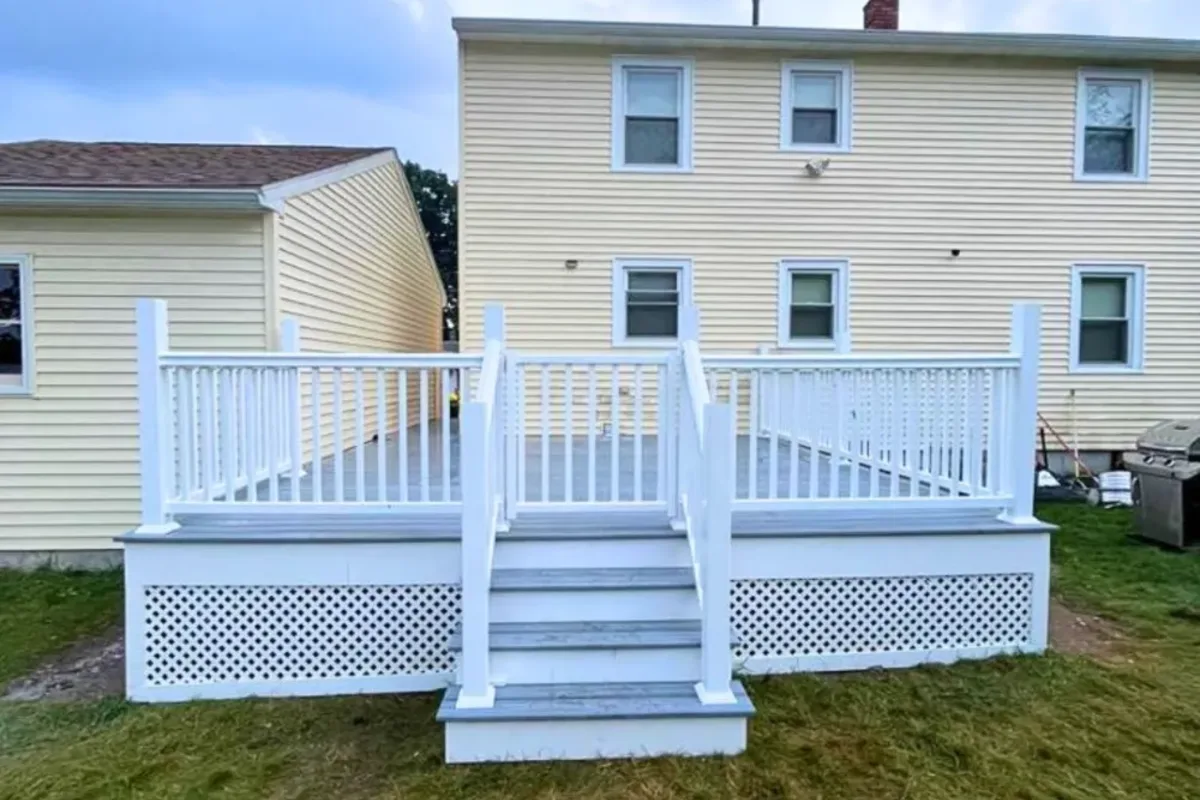
Why composite makes sense in Wakefield's climate
Wakefield sits inland on the North Shore, far enough from the coast to get real snow and cold, close enough to catch damp ocean air in summer. That combination is exactly what punishes a wood deck. Snow sits on the boards for weeks, meltwater soaks into the grain, then it freezes again overnight, a freeze-thaw cycle that pries wood fibers apart and opens the door to rot. Add July UV and the humidity that hangs over the region, and an untreated wood deck grays, cracks and cups within a few seasons.
Composite does not care about any of that. The polymer cap does not absorb water, so freeze-thaw has nothing to work on. It does not feed mold the way damp wood does, it will not splinter when the temperature drops, and it holds its color through years of North Shore sun. For a homeowner who wants to enjoy the deck rather than maintain it, that weather resistance is the whole point. It is also why we push composite hardest for decks that stay wet or shaded, near a pool, under trees, or on the north side of the house, where wood struggles most.
Composite deck cost per square foot in Wakefield, MA
The most common question we hear about composite is what it costs. Around Wakefield, an installed composite deck typically runs somewhere between 45 and 75 dollars per square foot, all in, depending on the board line you choose, the height and complexity of the deck, the railing system, and site conditions like footing depth and access. Premium cellular PVC and high-end capped lines land at the top of that range or beyond. Treat these as planning ranges for a licensed, permitted project, not fixed quotes, every deck is different.
| Composite tier | Installed cost per sq ft | What you get |
|---|---|---|
| Entry capped composite | $45 - $55 | Good-quality capped board, standard colors, 25-year fade and stain warranty |
| Mid-range capped composite | $55 - $65 | Realistic wood-grain, richer colors, cooler surface, longer warranties |
| Premium capped / cellular PVC | $65 - $80+ | Top-tier Azek or premium TimberTech, maximum weather resistance, lifetime-class warranties |
In whole-project terms, a new capped composite deck in the Wakefield area usually lands between about 25,000 and 45,000 dollars, with large multi-level or premium PVC builds running higher. Composite costs roughly 30 to 50 percent more than pressure-treated wood upfront. What that number hides is the maintenance you never pay for: no annual staining, no sealing, no board replacement from rot. Over the fifteen to twenty-five years you own the deck, composite frequently costs less than wood once you add up the stain, the sealer and the weekends. We give every homeowner an honest, itemized estimate.
Composite vs pressure-treated wood: the real trade-off
Choosing between composite and wood is the single biggest decision in a Wakefield deck project, both for how it looks and for what it costs to own. Here is how they compare for our climate, laid out plainly.
| Factor | Pressure-treated wood | Capped composite / PVC |
|---|---|---|
| Upfront cost | Lower | 30 to 50 percent more |
| Yearly maintenance | Clean, sand and re-stain every 1 to 3 years | Wash once or twice a year, nothing else |
| Lifespan in MA | 10 to 20 years with upkeep | 25 to 50 years |
| Fade and stain | Grays and stains without regular sealing | Cap resists fade, stain and mold |
| Splinters and rot | Splinters, cracks and can rot when wet | Will not splinter, rot or absorb water |
| Heat underfoot | Stays cooler in direct sun | Can run warmer, premium lines mitigate it |
| Barefoot and pet friendly | Prone to splinters over time | Smooth, splinter-free surface |
| Cost over 20 years | Often higher once upkeep is counted | Often lower thanks to zero refinishing |
There is no single right answer. If you love the smell and feel of real timber, or you are watching the budget closely, a well-built pressure-treated deck is a solid choice, as long as you accept the annual upkeep. If you would rather not spend a weekend every year sanding and sealing, composite is usually worth the premium in our snow-and-humidity climate. We build both and will tell you honestly which one fits your home and how you plan to use it.
Trex composite decking in detail
Trex is the best-known composite name in America, and for a Wakefield homeowner it is often the sweet spot of proven performance and reasonable price. Trex boards are made from a high percentage of recycled content, capped on the surface and edges, and backed by long warranties. The lineup runs in tiers, and understanding them keeps you from overpaying or underbuying.
- Trex Enhance is the entry line, capped composite in solid and lightly variegated colors, a strong value for a straightforward Wakefield backyard deck that still gets the fade and stain resistance most people want.
- Trex Transcend is the flagship, with deep, multi-tonal colors, a more realistic wood grain, a very durable shell and a long limited warranty against fading and staining. It is the Trex line we specify most for homeowners who want premium looks without stepping up to PVC.
- Trex Signature and Select fill in around those, giving you more grain patterns and color options depending on the look you are after.
Across the range, Trex resists fading, staining and scratching, carries warranties that commonly run 25 years or more, and offers colors from warm browns and reddish tones to cool grays that suit the classic New England palette. For most Wakefield deck projects, Trex Transcend or Enhance is a safe, satisfying choice.
TimberTech and Azek explained
TimberTech is the other major player we build with, and it is really two things under one roof. TimberTech makes capped composite lines and, as its premium tier, the Azek cellular PVC boards. That structure lets us match the exact product to your budget and exposure.
TimberTech capped composite
TimberTech's composite lines are known for some of the most realistic wood-grain looks on the market, with rich, layered color blends that read convincingly as real timber from a few feet away. Premium composite boards from TimberTech also tend to hold color exceptionally well and feel a touch cooler underfoot than many competitors, a genuine advantage on a sunny, south-facing Wakefield deck.
Azek cellular PVC
Azek, TimberTech's PVC line, is the most weather-resistant board we install. Because it contains no wood fiber, it is fully moisture-proof, will not absorb water, and shrugs off the freeze-thaw and mold pressures that define New England. It is also lighter than composite and the most fade and stain resistant of everything we build with. Azek is our top recommendation for pool decks, fully exposed platforms and anyone who wants maximum durability, and it carries warranties that reach lifetime-class coverage. The trade-off is price: it is the premium tier, and we are upfront about that during the estimate.
Between Trex, TimberTech and Azek, there is no single best board, only the best one for your deck, budget and exposure. During your estimate we bring real samples, explain the warranty and price differences in plain English, and help you choose with no pressure.
Composite colors, finishes and grain patterns
One of the underrated advantages of composite is choice. Where wood gives you the grain nature grew, composite comes in a controlled range of colors and textures that stay consistent board to board and hold that look for decades. For Wakefield homes, we see a few directions again and again.
- Warm browns and reddish tones that echo cedar or mahogany, a natural fit for the colonial and Cape-style homes common in Wakefield and Reading.
- Cool grays and driftwood tones that suit a modern or coastal look and hide pollen and dust well between washes.
- Multi-tonal, streaked boards that mimic real timber with subtle color variation, the most convincing wood look and a favorite on higher-end decks.
Finishes range from a smooth, low-sheen surface to a pronounced, embossed wood grain that adds slip resistance underfoot. You can also add a contrasting picture-frame border around the deck edge and stairs for a custom look plain wood cannot match without paint. During design we lay samples on your actual footprint and in your light, because a color that looks perfect in a showroom can read very differently against your siding and yard.
How composite decking is installed the right way
Composite performs beautifully, but only if the deck under it is built correctly. The boards are just the surface. What decides whether a composite deck stays flat, quiet and problem-free for decades is the framing and the fastening, exactly where a rushed build goes wrong. Here is how our crew installs composite in Wakefield.
Proper joist spacing
Composite is not as stiff as some wood, so joist spacing matters more, not less. We frame joists at 16 inches on center for standard runs and tighten to 12 inches for diagonal or 45-degree layouts, following the manufacturer's spans. Skimping on framing to save lumber is the most common cause of a bouncy, wavy composite deck, and it voids the warranty. We frame to the board maker's spec every time.
Hidden fasteners
Quality composite is designed for a hidden fastener system: clips that seat into a groove in the board edge and screw down to the joist, leaving a clean surface with no exposed screw heads and consistent gaps for drainage and expansion. Hidden fasteners look better and let the board expand and contract with temperature without popping or cracking. On boards designed for face-screwing, we use color-matched screws and pre-drill so nothing splits.
Gapping and thermal movement
Composite expands and contracts with heat more than wood, so correct end-to-end and side-to-side gapping is not optional. We follow each manufacturer's gap spec for the install temperature, which prevents the buckling and pinched-board look you see on decks laid too tight on a hot afternoon.
Ventilation and drainage
Composite needs airflow underneath to shed moisture and heat. We keep proper clearance from the ground, avoid trapping the frame against grade, and slope and flash correctly so water drains away instead of pooling, which keeps the boards stable and the frame dry, doubly important in our damp climate.
None of this is visible once the deck is done, which is precisely why it gets cut on cheap jobs. The part you cannot see is the part that decides how it holds up.
Composite warranties: what is actually covered
A big part of what you pay for with composite is the warranty, so it is worth understanding what the numbers mean. The leading brands publish two kinds of coverage: a structural or limited warranty on the board itself, often 25 years to lifetime, and a separate fade and stain warranty that guarantees the color and surface for a set number of years, commonly 25 or more on capped products, longer on premium PVC. These warranties are what make composite a long-term value rather than just a nicer board.
Two things protect that coverage, and both come down to the installer. First, the deck has to be built to the manufacturer's specifications, correct joist spacing, approved fasteners, proper gapping, or the warranty can be void. Second, you need the documentation and proof of a professional install. As a licensed contractor, we register your product where applicable, build to spec, and give you the paperwork, so if you ever need to make a claim, the warranty is genuinely there. A deck built by a handyman who ignored the spec can leave you with a warranty on paper that will not pay out in practice.
Composite deck maintenance: what near-zero really means
Homeowners choose composite to escape maintenance, and it delivers, but near-zero is not quite zero. A capped composite or PVC deck in Wakefield needs a wash once or twice a year: warm soapy water and a soft brush, or a garden hose, to clear pollen, dirt and the light film any outdoor surface collects. That is the whole regular routine. No sanding, no staining, no sealing, ever.
Beyond the wash, the occasional jobs are easy. Tree sap, grease or a stubborn mark wipes off with a cleaner made for composite. In shaded, damp corners you may see surface mildew feeding on pollen, not on the board itself, and a rinse removes it. Snow removal is fine: use a plastic shovel and calcium-chloride ice melt rather than rock salt or a metal blade to keep the cap pristine. Compare that to a wood deck, which needs a spring cleaning plus re-staining every one to three years, and the maintenance gap is exactly why so many Wakefield homeowners go composite.
Fade, stain and scratch resistance in the real world
The whole promise of capped composite rests on three claims: it will not fade, it will not stain, and it resists scratches. In the real world those hold up well. The polymer cap blocks UV, so a quality board keeps its color for decades where a wood deck would have grayed years earlier, the fade resistance the warranty stands behind. The cap is also non-porous, so spilled wine, grill grease, planter rust or dropped food wipe up instead of soaking in, the single biggest quality-of-life upgrade over wood on a deck you actually use.
Scratch resistance is strong but not indestructible. Capped composite shrugs off normal foot traffic, furniture and pets far better than softwood, though dragging something sharp or heavy can still leave a mark, as it would on nearly any surface. The good news is the color runs through the cap, so light marks are far less visible than a gouge in stained wood, and an embossed, textured finish hides day-to-day wear better than a smooth one. Set proper expectations and a composite deck looks new for a very long time.
Composite railings, stairs and lighting
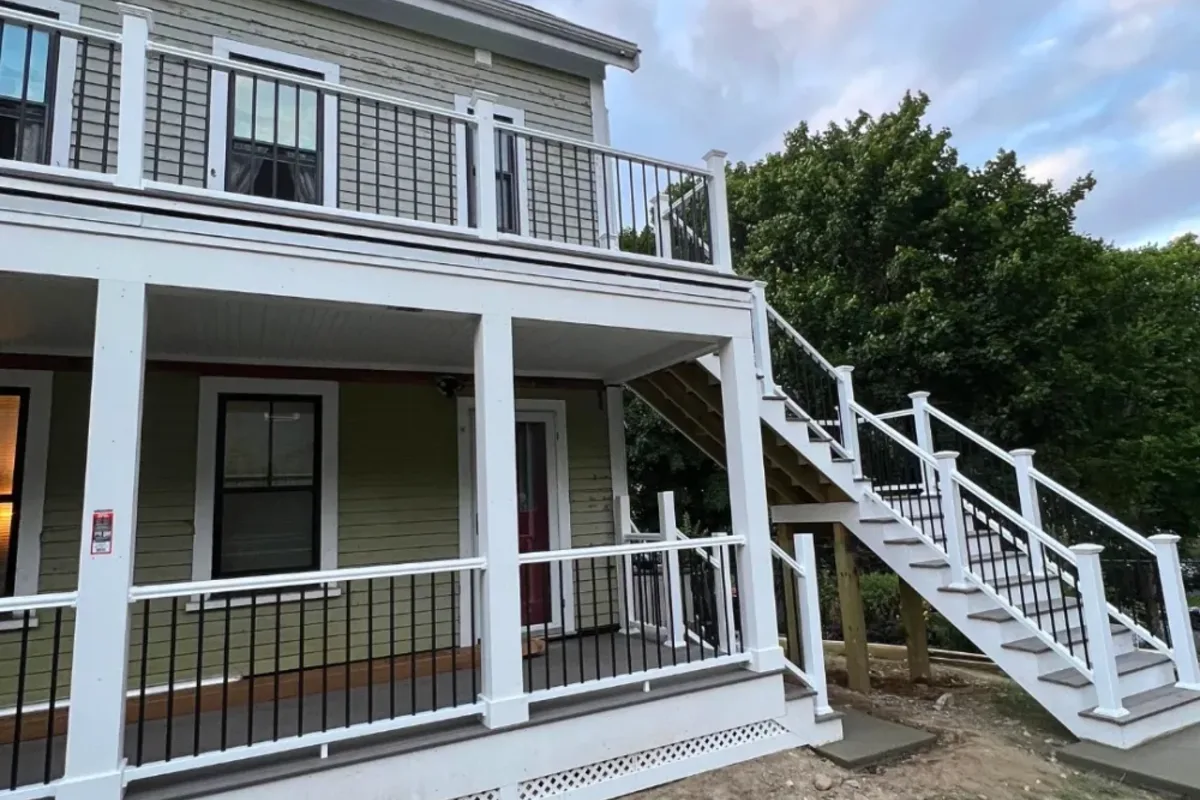
A composite deck is a system, and the railing, stairs and lighting are where a build either looks finished or looks cheap. Composite railings echo the deck color for a seamless look; aluminum railings give a slim, modern sightline and are nearly maintenance-free; cable or glass infill opens up the view on decks with a yard or water to look at. All of it is built to Massachusetts code for height and baluster spacing, because railings are the number-one deck safety item and a common code failure on older decks.
Stairs get the same treatment: composite treads over a properly built stringer, with code-compliant rise and run and, where it helps, step lighting. Low-voltage lighting is one of the best additions to a composite deck, recessed stair lights, post-cap lights and under-rail strips extend the evening and add real safety, all wired by a licensed electrician on the same project. Because we are a licensed general contractor, the deck, railing, stairs and wiring are one accountable job, not three trades pointing at each other.
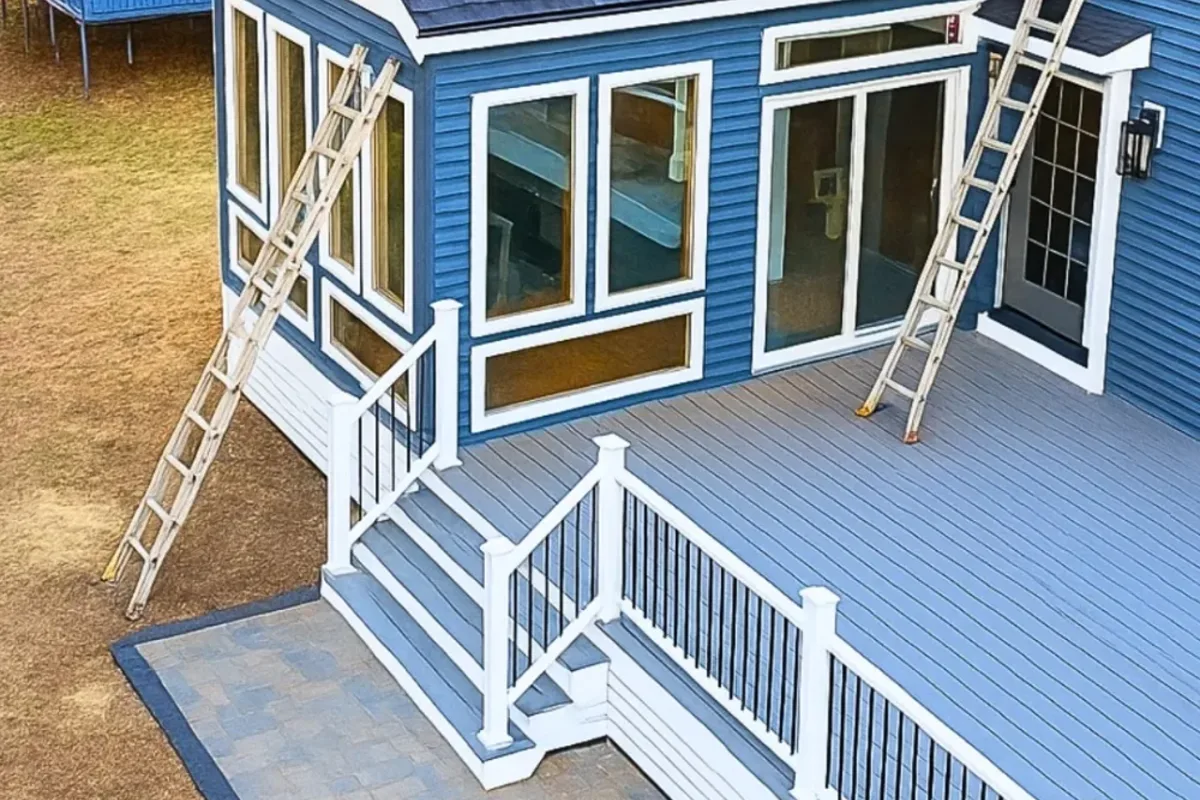
Permits and Massachusetts code for composite decks
Choosing composite does not change the permit picture: almost every new deck or structural deck replacement in Wakefield requires a building permit from the Wakefield Building Department, whatever the decking material. Composite is a surface choice; the permit is about the structure. Permitting covers footing depth below the frost line, the ledger connection to the house, railing height and baluster spacing, stair rise and run, and the load the deck must carry. Any lighting or outlet wiring is done and inspected under a licensed electrician.
Innov Builders handles the entire permit process for you as your licensed contractor, HIC #212869. We pull the permit, build to current Massachusetts code, follow the composite manufacturer's install spec so the warranty stays intact, and schedule the inspections, so your deck is legal, safe and never a problem when you sell the home. Skipping the permit, which some handymen offer to do, can cause failed home inspections and insurance headaches down the road, and it can void the very composite warranty you paid a premium for.
Our composite deck building process in Wakefield
A clear process is what keeps a composite deck project on time, on budget and true to the warranty. Here is how a Wakefield composite deck runs with Innov Builders, from the first call to the day you step out onto it.
1. Free consultation and sample review
We visit your home in Wakefield, assess the site or the existing deck, and talk through how you want to use the space. You get real Trex, TimberTech and Azek samples laid out in your own light, plus honest guidance on which line fits your budget, your look and your exposure.
2. Design and written, itemized estimate
We design the deck around your home and yard, then give you a clear written estimate with the exact board line, railing system, timeline and price locked in before any work starts, so there are no surprise change orders.
3. Permit and material order
We pull the Wakefield building permit and order your composite decking, railings, hidden fasteners and hardware up front, because special-order colors and premium lines carry lead time we plan around.
4. Demolition and framing to spec
Our crew removes the old deck when needed, sets footings below the frost line, and builds the frame with the joist spacing your composite requires, a properly flashed ledger, and code-compliant connections, the parts you never see that decide whether the deck lasts.
5. Composite install with hidden fasteners
We lay the boards with the correct gapping and hidden fastener system, add the picture-frame border, railings, stairs and any lighting, and detail the whole thing cleanly so it looks custom, not kit-built.
6. Final walkthrough, warranty and registration
We pass the final inspection, register the product warranty where applicable, walk the finished deck with you, and hand over the documentation. You get a low-maintenance outdoor space that is safe, beautiful and built to last.
Is composite worth it? When it pays off and when it does not
Composite is not automatically the right answer, and we would rather help you decide than upsell you. Here is the honest breakdown we give Wakefield homeowners.
When composite is clearly worth it
- You plan to stay in the home a while, so the decades of zero refinishing pay back the premium and then some.
- You hate maintenance and do not want to give up weekends to sanding and staining.
- The deck is exposed, shaded or near a pool, exactly where wood struggles and composite, especially PVC, shines.
- Kids, pets or bare feet use the deck, where splinter-free composite is a real comfort upgrade.
When wood might still be the better call
- Your budget is tight right now and the lower upfront cost of pressure-treated matters more than the long-term math.
- You love the look and feel of real timber and do not mind the upkeep it demands.
- You may not stay long, where recovering the composite premium at resale is less certain.
Most Wakefield homeowners who intend to enjoy their deck for the long haul land on composite, but we run the twenty-year cost with you and let the numbers, not the pitch, make the case.
Composite deck ROI and home value on the North Shore
A deck is one of the better returns in home improvement, and in the Greater Boston and North Shore market, low-maintenance outdoor living is a genuine selling point. A composite deck adds usable square footage, improves the flow to the backyard, and gives buyers something they can picture using without the mental note of a deck that needs refinishing. That matters at resale: a crisp, fade-free composite deck reads as move-in-ready, while a grayed, splintering wood deck reads as deferred maintenance and makes a buyer wonder what else was neglected.
The return depends on doing it right: quality board, clean detailing, a structure that passes inspection, and the permit paperwork that protects the sale. A mid-range composite deck that fits the home tends to recover a healthy share of its cost while giving you years of daily enjoyment first, and because composite needs no ongoing spend on stain and sealer, the total cost of ownership stays low the whole time you live there. Building it to code with permits also protects that value, because an unpermitted deck can derail a home sale during inspection.
Common composite mistakes we fix and avoid
Because we repair and rebuild as many decks as we install new, we see the avoidable composite failures again and again, almost always from a rushed or under-spec build.
- Joists spaced too wide for the board, leaving the deck bouncy and wavy and voiding the warranty.
- Boards laid too tight with no room for thermal movement, which buckles on the first hot day.
- The wrong fasteners, face screws where hidden clips were called for, splitting boards.
- Uncapped board sold as premium composite, which fades and stains within a few seasons.
- A ledger with no flashing, the leading cause of deck failures and water damage, hidden by a pretty new surface.
- Poor ventilation and drainage that trap moisture against the frame in our damp climate.
When we build or rebuild, we correct all of this to current Massachusetts code and the manufacturer's spec, so the deck is genuinely sound, not just good-looking on top.
Composite deck styles for Wakefield homes
A composite deck is more than a platform, it is an outdoor room, and the low-maintenance surface frees you to add the features that make it the favorite part of the house.
- Multi-level composite layouts that step down a sloped North Shore yard and separate dining, lounging and grilling zones.
- Picture-frame borders and inlays in a contrasting composite color for a finished, custom edge.
- Built-in composite benches and planters that add seating and greenery without eating floor space, and never need staining.
- Pergolas and covered sections for shade in July and shelter when the weather turns.
- Integrated low-voltage lighting in stairs, posts and rails for safety and a warm glow after dark.
- Privacy screens and matching railings that make a composite deck feel like a retreat, even on a tighter lot.
You do not have to decide all of this alone. During design we show you what works for your space and budget, and build it as one coordinated project so every detail lines up.
Composite over an existing frame: can you resurface?
Homeowners often ask whether they can swap old wood boards for composite and keep the existing frame, a resurface. Sometimes yes, and it saves money, but only if the structure qualifies. Composite is heavier than some wood and demands correct joist spacing, so the frame has to be sound and up to code to carry it. We inspect the joists, ledger, posts and footings first. If the bones are solid, the spacing is right and the ledger is flashed, resurfacing is a smart, lower-cost upgrade. If we find rot, heaved footings, over-spaced joists or an unflashed ledger, resurfacing would just hide a problem, and we will tell you straight that a rebuild is safer. We never lay a new surface over a frame we would not stand behind.
Best time to build a composite deck in Massachusetts
Spring and summer are the busiest deck seasons in Massachusetts, so the best builders and the premium composite colors book up fast. If you want your deck ready for warm weather, plan in late winter or early spring, get on the schedule, and let us handle permits and the material order while the ground thaws, since composite colors carry real lead time. That said, we build year-round. Fall is underrated: mild weather, open schedules, and a deck ready the moment spring arrives. Composite installs cleanly in cooler weather too, following the manufacturer's temperature-adjusted gapping. The one thing we avoid is rushing footings, ledger and framing to beat weather, because those are worth doing right regardless of the calendar.
How to choose a composite deck builder in Wakefield
Composite is only as good as the crew that installs it, so the builder you choose matters as much as the board. Before you hire anyone in the Wakefield area, a few questions separate a professional composite installer from a weekend handyman.
- Are you licensed and insured? In Massachusetts, look for a Home Improvement Contractor registration and liability insurance. Innov Builders is HIC #212869, licensed, insured and OSHA certified.
- Will you build to the manufacturer's spec? Correct joist spacing, approved hidden fasteners and proper gapping keep the warranty valid, ask directly.
- Will you pull the permit? A builder who suggests skipping it is one to avoid, it signals work that may not meet code and can wreck a future sale.
- Do you use your own crew or subcontractors? A dedicated in-house crew keeps quality and accountability consistent from footing to railing.
- Can I see recent composite work and reviews? Real decks in real North Shore yards tell you more than any brochure.
A trustworthy builder welcomes these questions and answers them plainly, because doing the job right is the whole point.
Why Wakefield homeowners choose Innov Builders for composite decks
Composite deck building is structural work with a finish that has to be flawless, and who builds it matters as much as which board goes down. Innov Builders is a licensed and insured general contractor, HIC #212869 and OSHA certified, led by Iago Maciel with a trained in-house crew based at 50 New Salem St right here in Wakefield, MA. We do not hand your deck off to rotating subcontractors: the people who quote the job are the people who build it. That is how we keep the framing tight, the gapping correct, the warranty intact and the finish clean, from the first footing to the last hidden clip.
Areas we serve around Wakefield
Based in Wakefield, we design, build and repair composite decks across the North Shore and Greater Boston, including Reading, North Reading, Lynnfield, Stoneham, Melrose, Saugus, Wakefield, Medford, Malden, Winchester and Woburn. Being local means we know the housing stock, the weather, and the Wakefield permit process, so your composite deck project moves without the delays an out-of-town contractor runs into.
Get a free composite deck estimate in Wakefield, MA
If you are ready to build a low-maintenance composite deck, or you are still weighing Trex, TimberTech and Azek and want honest guidance, the next step is simple. Request a free, no-obligation estimate from a licensed Wakefield composite deck builder, and we will visit your home, bring real samples, assess the project, and give you a clear written scope and price before any work begins. Let's build a composite deck your family will enjoy, and never have to refinish, for decades. Call (978) 878-7977 or request your quote online.