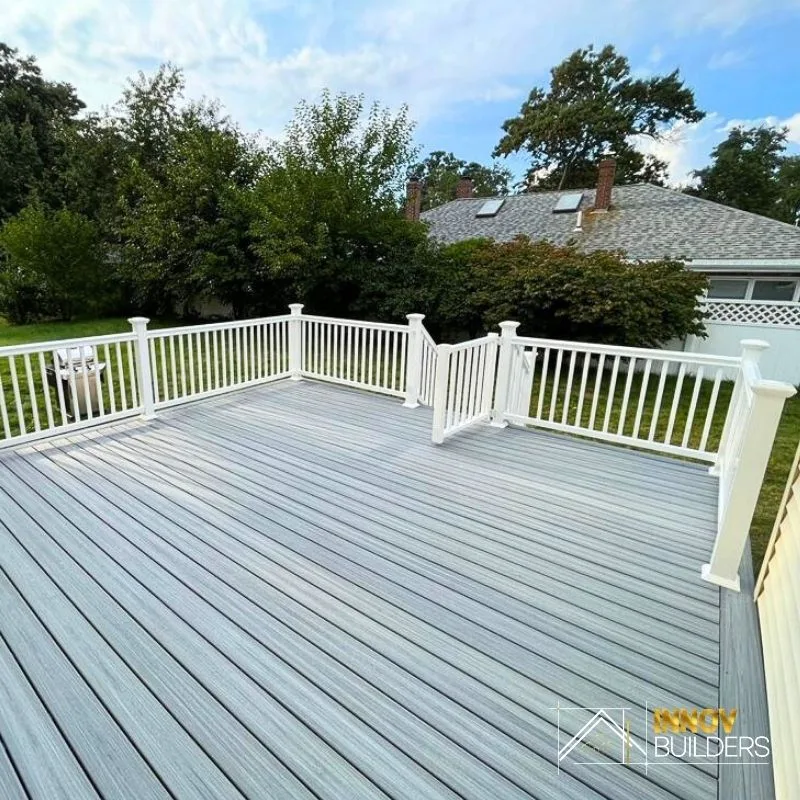
Deck installation cost in Wakefield, MA is the first thing most homeowners want to nail down before they call a contractor, and it is also the number that gets fuzzy fastest online. At Innov Builders, our in-house crew builds decks across Wakefield and the North Shore, and we believe you deserve a clear, honest picture of what your project should cost before anyone starts swinging a hammer. This guide breaks down deck pricing in real ranges: cost per square foot, cost by deck type, cost by size, the features that push the number up or down, permit fees in Wakefield, and how to read three wildly different quotes without getting burned.
A quick promise up front: the numbers below are planning ranges, not a fixed quote. Every deck sits on a different yard, at a different height, over different soil, attached to a different house. The only number that means anything for your home is the itemized written estimate we hand you after we walk your property at 50 New Salem St territory and beyond. Iago Maciel, who leads our crew, would rather spend twenty extra minutes measuring your grade than shave a corner on a bid and surprise you later. Innov Builders is a licensed and insured general contractor, HIC #212869, OSHA certified, and every estimate we write is built to survive contact with reality.
How much does deck installation cost in Wakefield, MA?
For a straightforward new deck in Wakefield, most homeowners land somewhere between $15,000 and $45,000 installed, depending on size, height, material and complexity. Pressure-treated wood decks generally run $15,000 to $30,000, while composite decks run $25,000 to $45,000 because the boards, hidden fasteners and low-maintenance railings cost more up front. A simple repair to a structurally sound deck usually falls in the $1,500 to $5,000 range. Large multi-level or heavily customized decks with pergolas, lighting and built-ins can climb past $45,000.
Those brackets sound wide, and they are, on purpose. The difference between a low-teens deck and a mid-forties deck is not one company gouging you and another giving a deal. It is a 200 square foot ground-level wood deck versus a 500 square foot elevated composite deck with a wraparound staircase and integrated lighting. Once you understand what actually drives the price, the ranges stop feeling random and start feeling like a menu you control.
To put those brackets in context: a modest 12 by 16 pressure-treated deck for grilling and family dinners typically lands in the high teens, while a 20 by 24 composite outdoor room with a wraparound staircase, upgraded railings and lighting can push into the forties or beyond. The rest of this guide exists so you can place your own project on that spectrum before a single quote arrives.
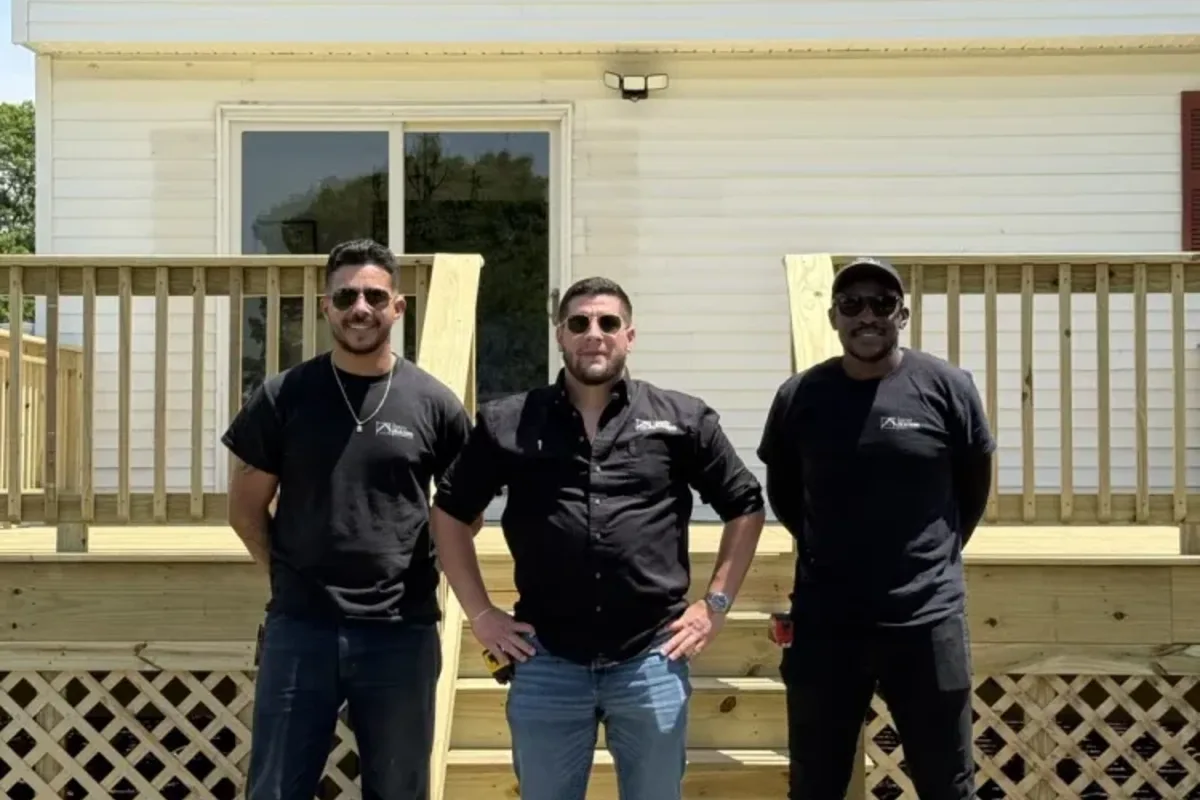
Deck cost per square foot in Wakefield
Cost per square foot is the fastest way to sanity-check a quote, but it is also the easiest number to misuse. In the Wakefield area, installed deck pricing typically runs like this: pressure-treated wood lands around $40 to $70 per square foot, composite runs about $60 to $95 per square foot, and premium capped composite or PVC with upgraded railings and features can reach $95 to $130 per square foot. Those figures are all-in for a professionally built deck, meaning footings, framing, decking, railings, stairs, fasteners, labor, permit and cleanup, not just the boards.
Here is the trap. A per-square-foot number only works when two decks are truly comparable. A low deck sitting a foot off the ground uses far less framing, fewer footings and no tall guardrail, so its per-foot cost is low. Raise that same deck to a second-story walkout and you add taller posts, deeper footings, code-required guardrails and a longer staircase, and the per-foot cost jumps even though the material is identical. When a contractor quotes you "$45 a foot," always ask what height, what railing and how many stairs that price assumes.
| Decking material | Installed cost per sq ft | What you get |
|---|---|---|
| Pressure-treated wood | $40 - $70 | Lowest up-front cost, needs staining and sealing every 2 to 3 years |
| Cedar or premium wood | $55 - $85 | Better looks and rot resistance, still needs regular sealing |
| Composite (Trex, TimberTech) | $60 - $95 | Low maintenance, fade and stain resistant, 25 year plus warranties |
| Capped composite or PVC (Azek) | $95 - $130 | Top-tier durability, cooler surface, premium railings and trim |
Deck installation cost by size in Wakefield
Size is the single biggest lever on your total, so it helps to see cost by common deck footprints. The table below assumes a mid-range build: a standard-height ground-to-first-floor deck with code guardrails, one staircase and quality materials. Move up to composite, add height, or add a second staircase and each row shifts toward the top of its range.
| Deck size | Pressure-treated wood | Composite | Typical use |
|---|---|---|---|
| 10 x 12 (120 sq ft) | $8,000 - $13,000 | $12,000 - $18,000 | Small grill and bistro-table deck |
| 12 x 16 (192 sq ft) | $12,000 - $19,000 | $17,000 - $26,000 | Dining plus seating for a family |
| 16 x 20 (320 sq ft) | $18,000 - $28,000 | $26,000 - $38,000 | Full entertaining deck with zones |
| 20 x 24 (480 sq ft) | $26,000 - $40,000 | $36,000 - $52,000 | Large or multi-level outdoor room |
Notice that composite is not simply "more expensive." On a small 120 square foot deck the gap between wood and composite might be a few thousand dollars, but on a 480 square foot deck it can be $10,000 or more, because the premium board price multiplies across every square foot. When you are budgeting, decide on material early, since it changes the shape of the whole estimate.
What actually drives your deck price
When two Wakefield homeowners get quotes $12,000 apart for decks that look similar in the driveway, the difference almost always lives in these factors. Understanding them lets you shape the project to your budget instead of being surprised by it.
Size and shape
More square footage means more of everything: framing, decking, fasteners and labor. Shape matters too. A simple rectangle is the most economical deck you can build. Angled corners, curves, wraparound designs and octagon bump-outs all add cutting, framing and waste, which adds cost. If budget is tight, a clean rectangle buys you the most usable space per dollar.
Height off the ground
Height is the quiet budget-killer. A deck a foot off the grade needs minimal posts and no guardrail in many cases. A second-story deck needs tall structural posts, deeper footings, code-height guardrails all the way around, and a much longer, code-compliant staircase. The same square footage can cost noticeably more simply because it sits higher.
Footings and ground conditions
In Wakefield and across the North Shore, we dig footings below the New England frost line so the deck does not heave in the freeze-thaw cycle. If your yard has ledge, wet soil, poor access, or old buried debris, footings take longer and sometimes need helical piers or extra concrete. Ground you cannot see is the most common reason a real estimate differs from a napkin number.
Stairs, railings and landings
Stairs are one of the most labor-intensive parts of any deck, and every additional staircase or landing adds real cost. Railings are a second big swing: basic pressure-treated wood rail is cheapest, aluminum and composite rail cost more, and glass or cable rail systems sit at the top. On many decks, railings and stairs together account for a surprising share of the total.
Material grade
Pressure-treated pine is the value floor. Cedar, composite and PVC each step up in price and down in maintenance. Even within composite there are good, better and best lines, and the railing you pair with the boards can move the number as much as the decking itself.
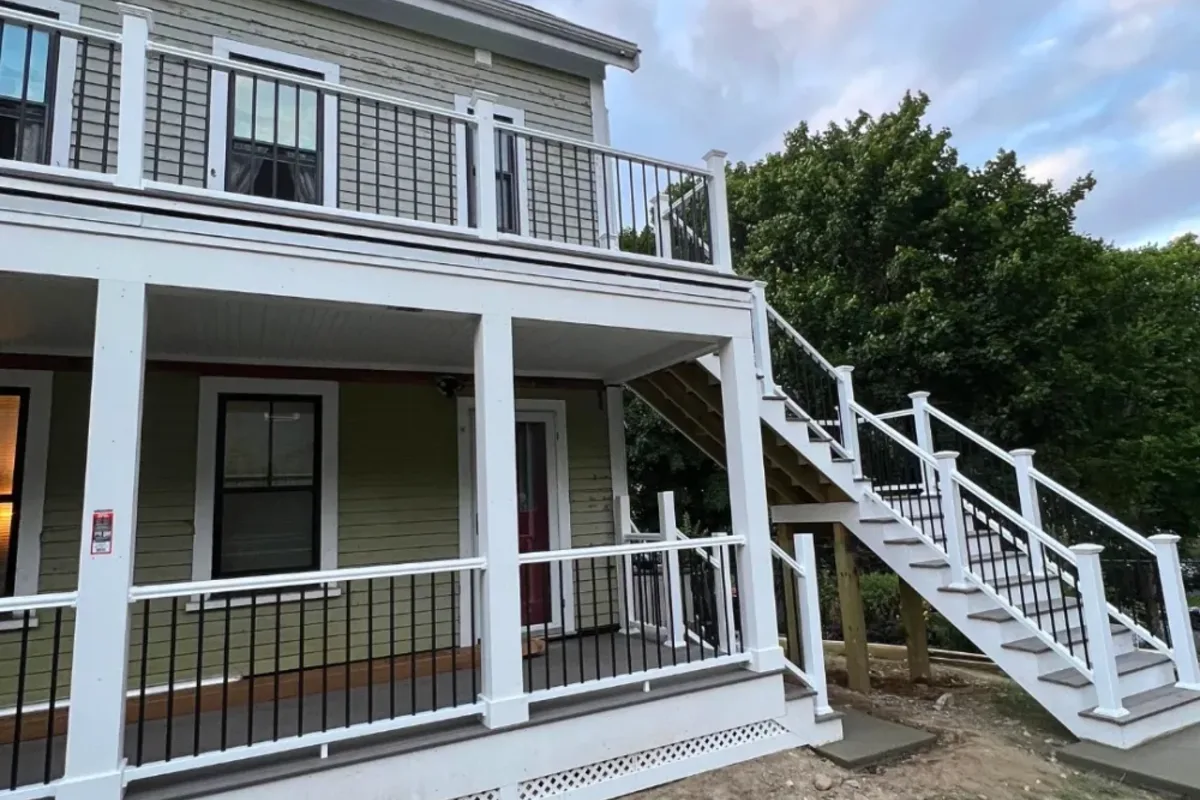
Composite vs wood deck cost: the real numbers
This is the decision that changes your budget the most, so it deserves honest math instead of a sales pitch. On the same footprint, expect composite to add roughly 40 to 70 percent to the material portion of the job and 25 to 50 percent to the installed total, depending on the line and railing you choose. A wood deck that costs $20,000 might be $28,000 to $34,000 in composite.
The catch is that the sticker price is only half the story. Pressure-treated wood needs cleaning, sanding, staining and sealing every two to three years. Over a 25 year life, that maintenance can add thousands of dollars in materials and weekends of labor, plus board replacement as pieces cup, crack or rot. Composite carries a higher up-front cost but almost no ongoing maintenance beyond a wash, and quality lines carry 25 to 50 year warranties. If you plan to stay in your Wakefield home long term, composite often wins on total cost of ownership even though wood wins on day one.
| Factor | Pressure-treated wood | Composite / PVC |
|---|---|---|
| Up-front installed cost | Lower | 25 to 50 percent higher |
| Maintenance every 2 to 3 years | Stain and seal, ongoing cost | Wash only, minimal cost |
| Lifespan in New England | 15 to 25 years with upkeep | 25 to 50 years |
| Warranty | Limited | 25 to 50 year manufacturer |
| Best for | Tight budgets, short-term stays | Long-term owners, low upkeep |
Deck permit cost in Wakefield, MA
Yes, your deck needs a permit in Wakefield, and yes, we handle it for you. A deck is a permanent structure attached to your home, so the Wakefield Building Department requires a building permit and inspections to confirm the footings, framing and guardrails meet the Massachusetts State Building Code. Permit fees in most North Shore towns are typically calculated on the project value and commonly land in the low hundreds of dollars, roughly $100 to $500 for a standard residential deck, though your exact fee depends on the town schedule and project size.
A reputable estimate always includes the permit and the inspections, and a suspiciously cheap quote sometimes leaves it out. Skipping the permit is a costly gamble: unpermitted work can stall a home sale, void insurance after an accident, and force you to tear out and rebuild non-compliant framing. Innov Builders pulls the permit under our license, coordinates the inspections, and makes sure your deck passes, which is part of what your price buys.
Cost of deck features and upgrades
Beyond the basic platform, most homeowners want at least one or two features that turn a deck into an outdoor room. These are where personality lives, and where budgets grow, so it helps to plan them in from the start rather than bolt them on later. Approximate add-on ranges for the Wakefield area:
- Built-in bench seating: about $500 to $1,500 per section, depending on length and material.
- Deck lighting (post caps, stair and rail lighting): roughly $1,200 to $4,000 installed for a full system.
- Pergola or shade structure: about $3,000 to $10,000 depending on size, material and whether it is a kit or custom.
- Privacy screens or lattice walls: roughly $1,000 to $4,000 based on height and coverage.
- Multi-level design: often adds 15 to 30 percent to the base deck because of extra framing, footings and stairs.
- Under-deck drainage or a dry space below an elevated deck: several thousand dollars, but it creates usable covered space.
- Upgraded railing (aluminum, composite, glass or cable): can add $30 to $90 per linear foot over basic wood rail.
None of these are required, and a beautiful deck can be built with none of them. The point is to decide which features matter to you before you compare quotes, so every builder is pricing the same deck.
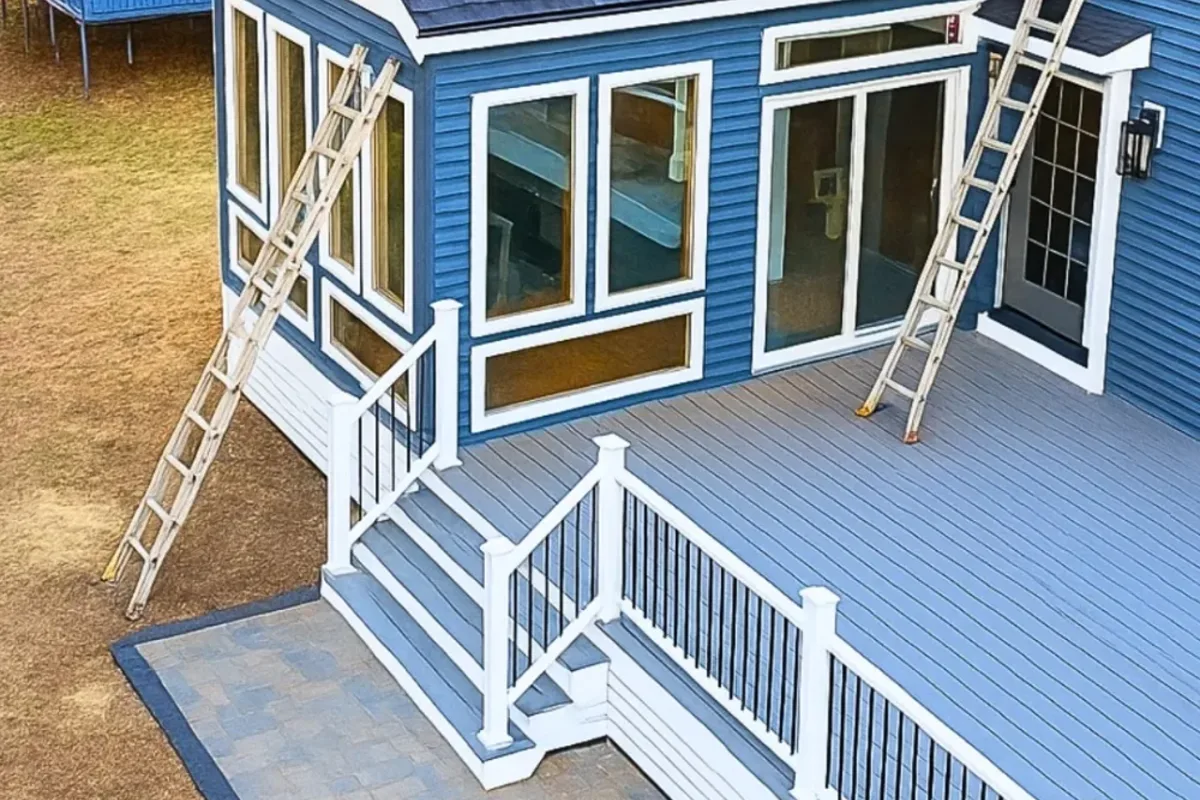
How to build a realistic deck budget
The homeowners who are happiest at the end of a project are the ones who budgeted the whole thing, not just the boards. Here is the framework we walk Wakefield clients through so the final invoice matches the plan.
Start with the space, not the price
Decide how you will use the deck: grilling and a small table, or full dining plus lounge seating for a crowd. That tells you the square footage, and square footage tells you the ballpark. Trying to reverse-engineer a deck from a target dollar amount usually leads to a space that is too small to enjoy.
Choose your material honestly
Pick wood or composite based on how long you will stay and how much maintenance you will realistically do. This one decision moves your budget more than almost anything else, so make it early and stick with it while you compare quotes.
Add a contingency
Build in a contingency of about 10 to 15 percent for the unknowns, mostly what we find in the ground when we dig footings. On a well-scoped project you often will not need it, but budgeting for it means a ledge surprise does not derail your plans.
Separate must-haves from nice-to-haves
List your features in two columns. If the estimate comes in high, you trim from the nice-to-have column, lighting or a pergola, without shrinking the deck itself. This keeps the core project intact and lets you phase upgrades later.
Deck financing options
A deck is a meaningful investment, and you do not always have to pay for it all at once. Wakefield homeowners commonly fund a deck through a few routes. A home equity loan or HELOC often carries the lowest rate because it is secured by the home, and the interest may be deductible in some cases, so it is worth asking your tax advisor. A personal loan is faster and unsecured but usually carries a higher rate. Some homeowners use a contractor financing option or a low-interest promotional credit line for the project. And plenty simply pay cash and phase optional features for later.
Whatever route you choose, the key is to finance against the real, itemized number, not a guess. That is another reason we insist on a written estimate: it gives your lender and you a firm figure to plan around instead of a moving target.
Does a new deck pay you back? Deck ROI and resale value
A deck is one of the more reliable outdoor projects for return on investment, which softens the cost. National remodeling data consistently shows wood deck additions recovering a strong share of their cost at resale, often well over half, and in a desirable market like the North Shore, outdoor living space is a genuine selling feature. Buyers in Wakefield picture summer dinners and morning coffee on that deck before they ever see the framing.
Beyond the resale number, a deck adds livable square footage you actually use for years before you sell. Composite decks add a further edge at resale because a buyer sees a low-maintenance feature they will not have to stain. When you weigh the cost, factor in both the enjoyment you get now and the value the deck carries into your eventual sale.
Why deck quotes vary so much, and how to compare them
Getting three quotes and finding them $10,000 apart is normal and confusing. Usually the spread is not about greed, it is about scope. One builder is quoting pressure-treated wood with basic rail, another is quoting composite with aluminum rail and lighting, and a third left the permit out entirely. Comparing them dollar-to-dollar is comparing three different decks.
To compare quotes fairly, make sure each one specifies the same core items: decking material and brand, railing type, number of stairs, footing method, whether the permit and inspections are included, cleanup and haul-away, and the warranty. When every quote covers the same scope, the real differences, craftsmanship, crew quality and accountability, come into focus. A rock-bottom bid that skips the permit or uses a rotating subcontractor crew is rarely the bargain it looks like.
| Line item to compare | Why it matters |
|---|---|
| Decking material and brand | Biggest driver of both cost and lifespan |
| Railing type and length | Can swing the total by thousands |
| Number of stairs and landings | Labor-heavy, often understated in low bids |
| Footing method and depth | Determines whether the deck survives freeze-thaw |
| Permit and inspections included | Missing permit is a hidden future cost |
| Cleanup, haul-away and warranty | Separates a finished job from a headache |
Common deck budgeting mistakes to avoid
Over the years we have watched a handful of budgeting errors trip up otherwise careful homeowners. Sidestep these and your project stays on track.
- Budgeting only for boards, and forgetting footings, railings, stairs, permit and labor, which are most of the cost.
- Choosing the lowest bid without checking that every quote covers the same scope and includes the permit.
- Ignoring maintenance cost, and treating a cheap wood deck as cheaper than composite without counting years of staining.
- Skipping the contingency, so a ledge or wet-soil surprise blows the plan.
- Under-sizing the deck to hit a price, then regretting a space too small to actually entertain on.
- Adding features one at a time after the build, which almost always costs more than including them from the start.
What is included in an Innov Builders estimate
When we hand you a written estimate for a Wakefield deck, it is itemized so you can see exactly where every dollar goes. That means no vague lump sum and no surprises on invoice day. A typical estimate spells out the footings and framing, the decking material and brand, railings and stairs, hardware and fasteners, the building permit and inspections, demolition and haul-away of any old deck, labor, and the warranty. If you want to compare wood against composite, or a 16 by 20 against a 16 by 24, we can show you the cost difference line by line so you make the call with real numbers in front of you.
How we keep your deck project on budget
An honest estimate is only useful if the final number matches it. Because Innov Builders runs an in-house crew rather than rotating subcontractors, the people who price your deck are the people who build it, which keeps scope from drifting mid-project. Iago Maciel walks the site before the number is written, we dig footings to code so nothing has to be redone, and we flag ground conditions early instead of discovering them as a change order. When the scope is right the first time, the invoice lands where the estimate promised.
Wakefield deck cost: local factors that matter
Building in Wakefield, MA carries a few local realities that shape the number. Many homes here are older colonials and capes with grade changes, mature trees and tighter lots, which affects access for materials and how the deck ties into the house. Our New England climate demands footings below the frost line and materials that shrug off snow load, freeze-thaw and summer humidity, all of which is baked into a proper local estimate. And Wakefield permitting runs through the town Building Department, so your builder needs to know the local process, not guess at it. A contractor who works Wakefield and the surrounding North Shore towns, from 50 New Salem St out to Reading, Lynnfield, Stoneham, Melrose and beyond, prices your deck for the conditions it will actually face.
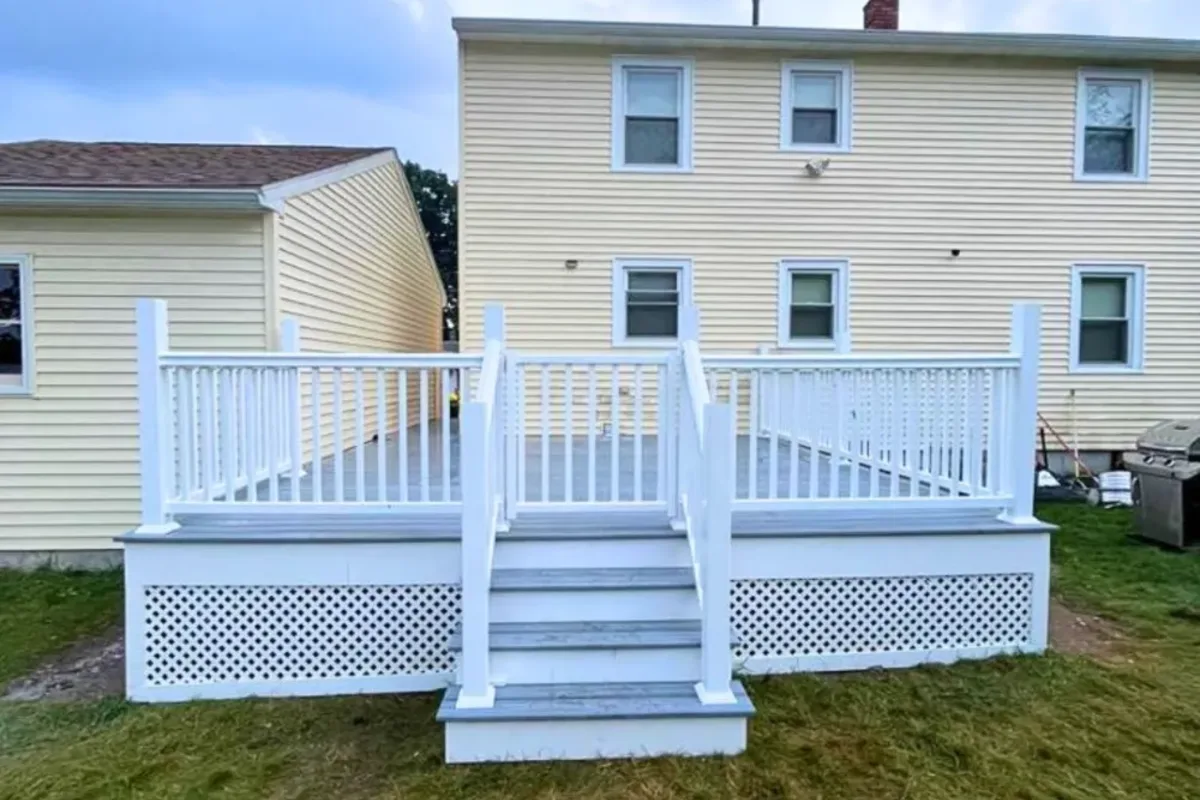
Areas we serve around Wakefield
From our home base at 50 New Salem St in Wakefield, MA, Innov Builders installs and prices decks throughout the North Shore and Greater Boston. We regularly build in Wakefield, Reading, North Reading, Lynnfield, Stoneham, Melrose, Saugus, Medford, Malden, Winchester and Woburn. Deck costs shift slightly town to town with lot conditions and local permit schedules, but the way we build, and the honesty of our estimate, stays the same wherever you are. If your town borders Wakefield, chances are we already know the yards, the soil and the building office.
New deck cost vs deck replacement cost
Building a brand-new deck and replacing an existing one are not the same price, and the difference often surprises people. A replacement can be cheaper when the old footings and support posts are still sound and up to code, because we reuse the foundation and only rebuild the framing and surface. But it can also cost more than a new build if the old footings are undersized, the ledger board rotted the house rim, or the previous deck was built without a permit and now has to be brought up to current code. In Wakefield, where many decks were added decades ago, we frequently open up an old deck and find framing that was never flashed properly, which means water damage to repair before the new deck goes on.
The honest answer is that a replacement estimate depends on what we find once demolition starts, which is exactly why we build a contingency into the plan and inspect the existing structure carefully before we quote. If your current deck is structurally solid and you only dislike the surface, resurfacing with new decking over good framing is the most economical path of all, often far below the cost of a full rebuild.
Ground-level vs elevated deck cost
Height is worth its own line in your budget because it changes so much of the structure. A ground-level or floating deck, sitting close to the grade, is the most affordable deck to build. It needs shorter posts, sometimes simpler footings, and often no guardrail, which strips real cost out of the framing and railing lines. Many Wakefield backyards with flat grade are perfect candidates for an economical ground-level deck.
An elevated deck, reaching a first-floor or second-floor walkout, is a different animal. Taller structural posts, deeper footings to handle the load, code-required guardrails around the full perimeter, and a longer staircase all stack cost onto the same square footage. On a sloped Wakefield lot, an elevated deck may also create usable space underneath, which some homeowners finish as a covered patio, adding value but also cost. When you compare quotes, always confirm the height each builder assumed, because it is one of the biggest reasons two estimates diverge.
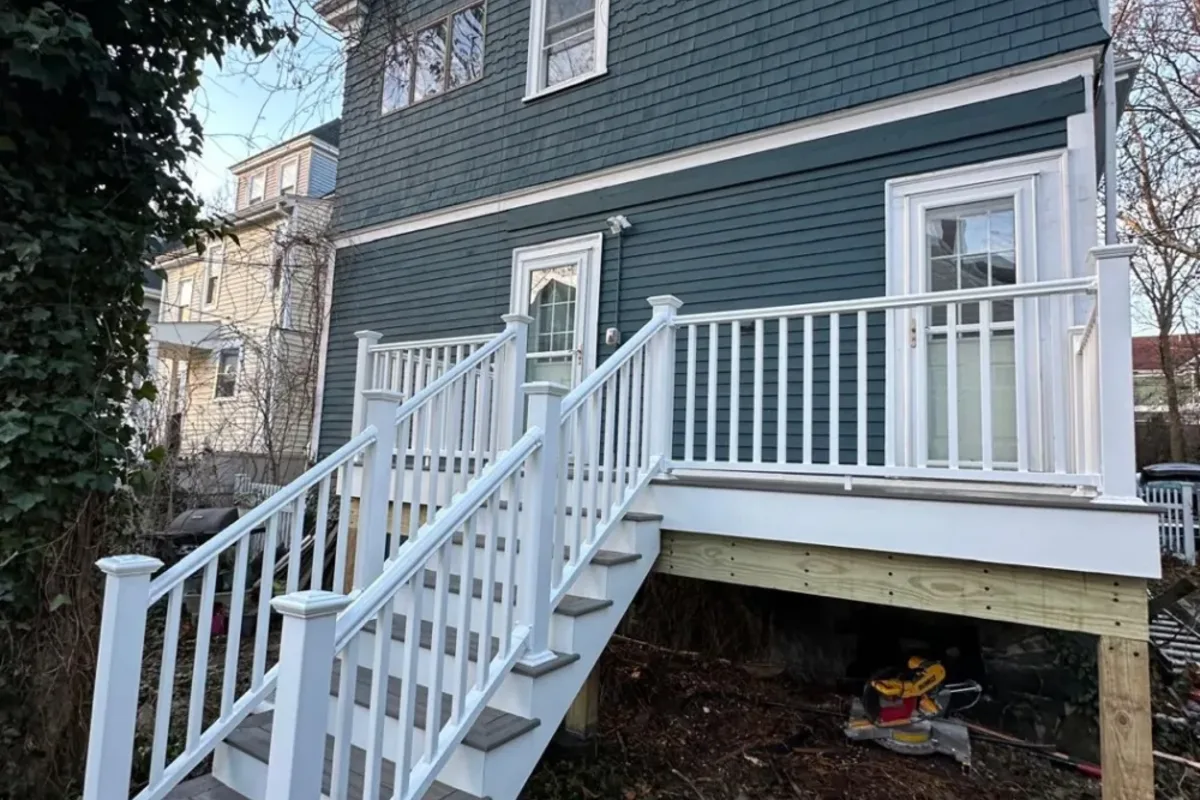
Deck maintenance cost over time
The price to build a deck is only the first number. The price to keep it is the second, and it can quietly rival the build cost over a couple of decades. A pressure-treated wood deck in New England should be cleaned, sanded lightly and re-sealed or re-stained every two to three years to fight moisture, UV and freeze-thaw. Budget roughly $500 to $1,500 per service if you hire it out, or a weekend and a few hundred dollars in materials if you do it yourself. Over 20 years that is a meaningful running cost, plus occasional board replacement.
Composite and PVC flip that math. They need little more than a wash with soap and water a couple of times a year, no staining, no sealing. That near-zero upkeep is a big part of why composite, despite the higher build price, frequently wins on total cost of ownership for homeowners who plan to stay put. When you weigh material, do not just compare the build quotes, compare 15 or 20 years of ownership.
Seasonal timing and how it affects deck cost
When you build can nudge your price in Massachusetts. Spring and early summer are peak deck season on the North Shore, so contractor schedules fill and demand is high. Booking a deck for late fall, winter planning with a spring build, or the shoulder seasons can sometimes give you more scheduling flexibility and a builder who is not stretched thin. We build year-round when weather allows, and concrete footings can be poured in cold months with proper practices, but frozen ground and snow can slow certain phases.
The bigger cost lever than season is planning lead time. Homeowners who plan a few months ahead have time to choose materials deliberately, lock in pricing, secure the permit and get on the schedule at a comfortable pace, rather than rushing in May when everyone else wants a deck for the summer. Early planning rarely costs more and often costs less.
Hidden costs homeowners forget to budget for
Even a careful budget can miss a few line items that are easy to overlook until they show up. Watching for these keeps your Wakefield deck project from creeping past plan.
- Old deck demolition and debris haul-away, which takes labor and dumpster fees on a replacement.
- Ledger and flashing repair, if the old deck let water into the house rim board.
- Grading or landscaping around new footings and stair landings once the build is done.
- Electrical work if you want outlets, a ceiling fan under an elevated deck, or hard-wired lighting.
- Ground conditions like ledge or wet soil that turn routine footings into a bigger dig.
- Utility marking and any setback or conservation considerations on lots near wetlands.
A thorough estimate anticipates most of these before we dig, which is the whole point of an on-site walk-through instead of a phone quote.
Is the cheapest deck quote actually the cheapest?
It is tempting to take the lowest number, but the cheapest bid is often the most expensive deck once the dust settles. A rock-bottom price usually comes from one of a few places: thinner or lower-grade materials, shallower footings that heave in the first hard winter, a rotating subcontractor crew with no accountability, or a scope that quietly leaves out the permit, the stairs railing, or the haul-away. Any of those saves money on day one and costs far more later, in repairs, in a failed inspection, or in a deck that has to be partly rebuilt.
Value is not the same as cheap. The right question is not "who is lowest" but "who gave me the clearest, most complete estimate for exactly the deck I want, built by the crew who will stand behind it." That is the number worth comparing, and it is the number Innov Builders works hard to give you.
Why Wakefield homeowners trust Innov Builders on price
Price you can trust starts with a company you can trust. Innov Builders is a licensed and insured general contractor, HIC #212869, OSHA certified, based right here at 50 New Salem St, Wakefield, MA 01880. Iago Maciel leads an in-house carpentry crew, so there are no rotating subcontractors marking up the job or cutting corners on your footings. We write itemized estimates, pull the permit under our own license, and stand behind the work with a warranty. When you ask us what a deck costs, you get a straight answer and a number you can plan around, not a teaser rate that balloons on invoice day.
Get a free, itemized deck estimate in Wakefield, MA
The most accurate deck installation cost for your Wakefield home is the one we measure on your property, not a chart. If you are ready to turn a budget into a real plan, reach out for a free, no-pressure consultation. We will walk your yard, talk through size, material and features, and hand you an itemized written estimate you can compare with confidence. Call Innov Builders at (978) 878-7977, email contact@innovbuildersusa.com, or visit us at 50 New Salem St, Wakefield, MA 01880. Licensed and insured, HIC #212869, and proud to build decks the North Shore trusts.