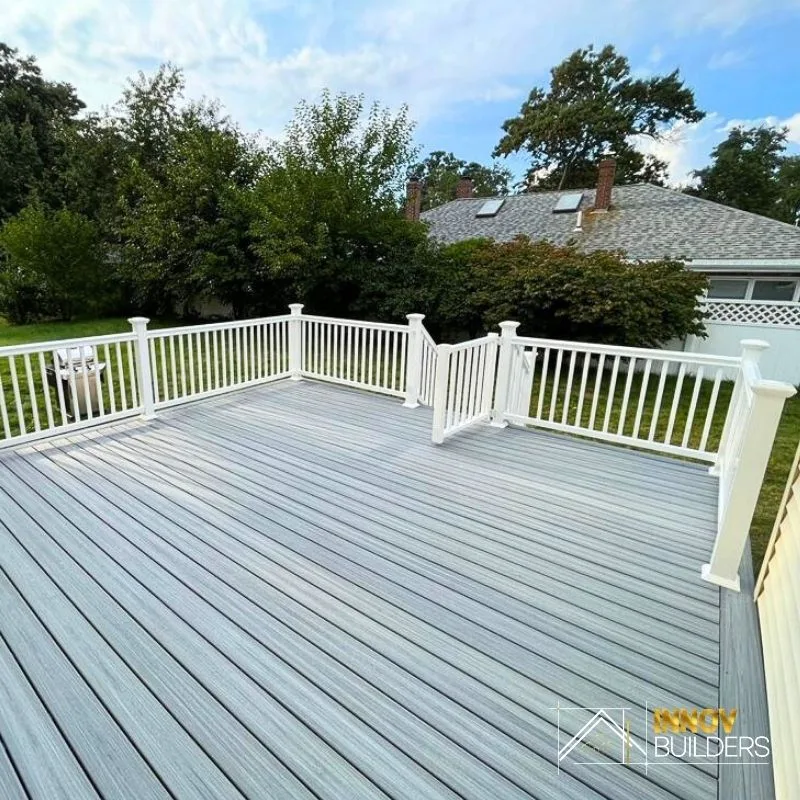
Innov Builders are the deck repair Wakefield, MA homeowners call the moment a board feels soft, a railing wobbles, or that dark stain where the deck meets the house starts to spread. We are a licensed and insured general contractor, HIC #212869, led by Iago Maciel with a trained in-house crew based at 50 New Salem St in Wakefield. When your deck needs fixing rather than replacing, we assess the structure honestly, tell you exactly what is worn and what is dangerous, and repair it to current Massachusetts code so the space is safe for your family again.
Most deck problems in Wakefield are not the whole deck failing at once. They are specific, fixable things: a rotted board, a fastener that rusted through, a ledger that was never flashed, footings that heaved over a hard winter. Catching those early is the difference between a modest repair and a full rebuild. This guide walks you through the warning signs, the most common repairs, when a repair is enough versus when replacement is safer, what deck repair costs in the Wakefield area, and how New England weather quietly wears a deck down. If your deck is starting to feel less than solid, this is where to start.
Why decks in Wakefield need repair sooner than you think
Wakefield sits on the North Shore, and our decks live through a punishing weather cycle. Snow piles on the boards for months, ice melt and road salt track across the surface, and the real damage happens in the freeze-thaw swing: water soaks into a hairline crack, freezes, expands, and splits the wood a little more every night it drops below freezing. Add summer humidity and years of foot traffic, and a deck that looked solid five seasons ago can quietly develop rot, loose connections and failing fasteners. Many Wakefield homes are older colonials and capes with decks built decades ago, sometimes to a code that no longer applies, sometimes by a handyman who skipped the parts you cannot see. Those decks are exactly the ones that need attention now, and the good news is that a deck that is sound under the surface is very repairable. Our job is to find out what is going on beneath the boards, tell you the truth, and fix the right things.
Signs your Wakefield deck needs repair now
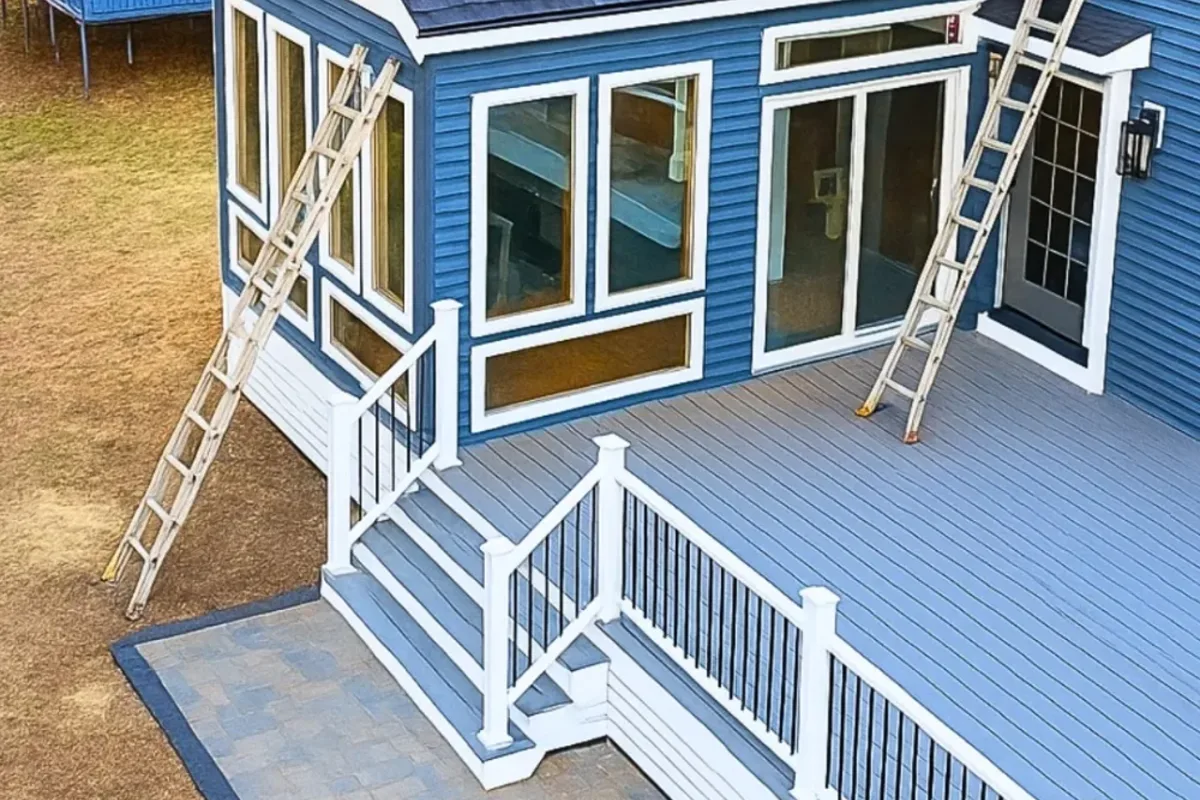
Decks rarely fail without warning. They give you signals first, and the earlier you catch them, the smaller and cheaper the repair. If you notice any of these on your Wakefield deck, it is worth a free inspection before a small problem turns into a safety issue.
- Soft, spongy or springy boards underfoot, a clear sign of rot in the deck boards or, worse, the joists below them.
- A railing that moves when you lean on it, one of the most common and most dangerous deck problems, especially with kids or guests around.
- Rusted, popped, backed-out or missing fasteners and connectors, particularly at the ledger where the deck attaches to the house.
- Dark water stains or visible rot where the deck meets the house, a red flag that the ledger flashing has failed and water is getting into the framing.
- Posts or stairs that feel unstable, or footings that have shifted, heaved or sunk after a hard winter.
- Cracked, splintering, cupped or heavily grayed boards, plus mushrooms, moss or a musty smell around the framing, all signs of trapped moisture.
Two of these matter more than the rest. A wobbly railing and a poorly attached or unflashed ledger are the failures behind the majority of serious deck accidents, and both are exactly what an aging deck tends to develop in our climate. If you are seeing either one, do not wait.
The most common deck repairs we do in Wakefield
Because we repair as many decks as we build, we see the same set of problems across Wakefield and the North Shore. Here are the repairs that make up most of what we do.
Deck board replacement
Individual boards rot, crack, cup or splinter long before the whole deck does, usually the ones that stay wet the longest or take the most sun. We pull the failed boards, check the joists underneath for hidden rot, and replace them with matching material, blending new boards into the existing deck so the repair looks intentional, not patched. On wood decks we can also sand and re-stain sound boards to freshen the whole surface at once.
Railing repair and rebuild
A loose railing is the single most common repair request we get, and the most important to take seriously, because a railing is what keeps someone from falling several feet to the ground. Railings loosen when posts rot at the base, fasteners rust, or the original connection was never strong enough. We reinforce or rebuild the posts, replace failed balusters, and bring the height and baluster spacing up to current Massachusetts code, which is stricter than what many older Wakefield decks were built to.
Fastener and connector replacement
Nails and screws not rated for exterior use rust, stain the wood and back out over time in our wet climate. Old decks also often lack the metal connectors, hangers and ties that modern code requires. We swap failed fasteners for corrosion-resistant hardware and add the structural connectors that hold framing together under load, the small, invisible parts that decide whether a deck stays rigid or turns bouncy and unsafe.
Ledger board re-flashing
The ledger is the board that bolts the deck to your house, and it is the single most critical connection on the structure. If it was installed without proper flashing, water runs behind it, rots the ledger and the house rim joist, and eventually the deck can pull away from the home. This is the leading cause of deck collapses. We remove the trim, inspect the connection, install proper flashing and the correct through-bolts, and re-secure the deck to the house the right way.
Footing and post repair
Footings not dug below the frost line heave and shift every winter, throwing the whole deck out of level and stressing every connection above them. We add or replace footings to the correct depth, sister or replace rotted posts, and re-level the structure so it stops moving with the seasons. Doing this right is what keeps a repair from becoming a rebuild a few years later.
Stair repair
Deck stairs take heavy wear and are a common trip-and-fall point. We rebuild sagging or bouncy stairs, correct rise and run that does not meet code, add or reinforce a graspable handrail, and replace rotted stringers and treads so the stairs are solid and safe underfoot.
Cleaning, staining and sealing
Sometimes a wood deck is structurally fine and just looks tired. A professional cleaning, sanding and re-stain or re-seal removes the gray, protects the wood from moisture and UV, and adds years of life, at a fraction of the cost of new decking. We cover restoration below, since in our climate it is the maintenance most Wakefield homeowners skip and pay for later.
Deck repair or replacement: how to decide
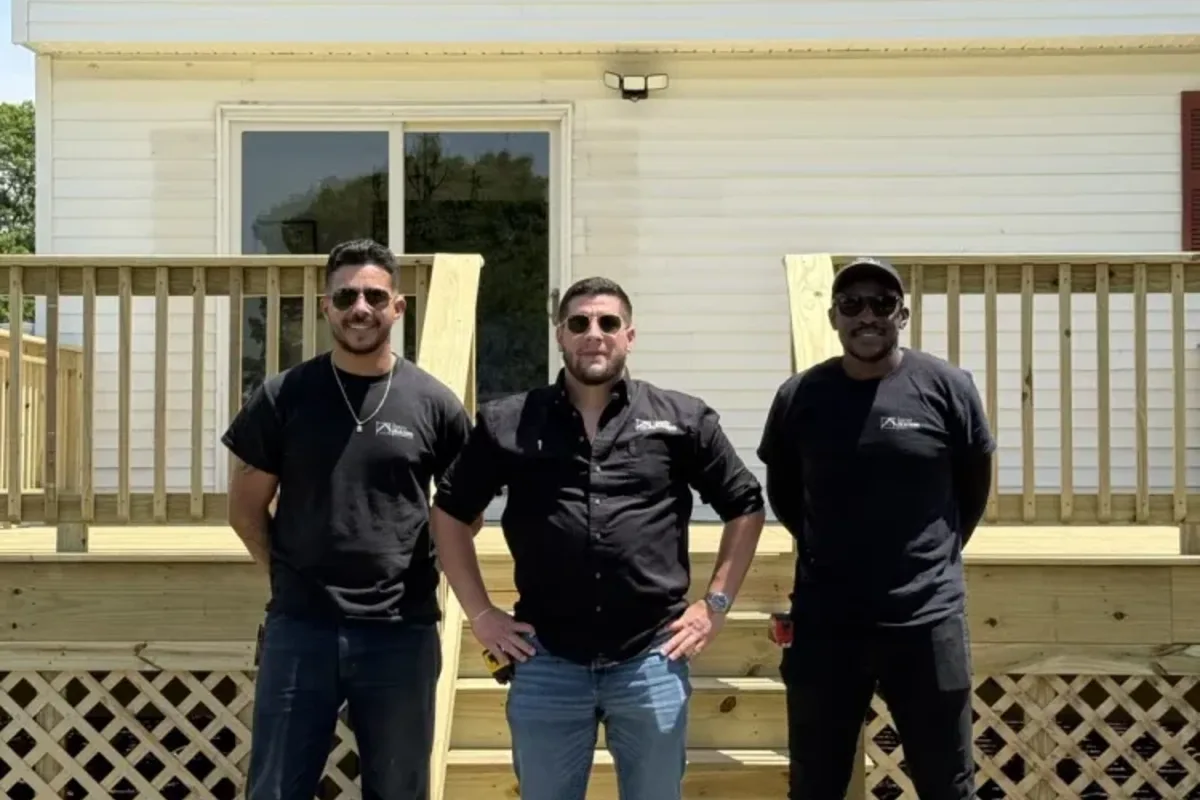
The most important question in any deck repair is whether the structure underneath is sound. The boards you walk on are the easy part. What matters is the framing, the posts, the ledger and the footings. Here is how we help Wakefield homeowners decide between fixing and rebuilding.
When a repair is the right call
If the framing, posts and footings are solid and the problems are on the surface or limited to specific components, a repair is the smart, budget-friendly move. Replacing rotted boards, tightening or rebuilding a railing, swapping failed fasteners, re-flashing the ledger, or re-staining a weathered deck can add years of safe use for a fraction of the cost of a full rebuild. The rule is simple: if the bones are good, we fix what is worn and leave the rest.
When replacement is the safer path
When the damage reaches the structure, replacement is usually safer and more cost-effective than chasing repairs. Rotted joists or posts, footings that have heaved from frost, a ledger that was never flashed and has rotted the rim joist, or widespread soft spots are all signs the deck is past patching. In older Wakefield homes we regularly find decks built to a code that no longer applies. When that many things are wrong at once, repeated repairs cost more over time than doing it right once, and never quite make the deck fully safe.
The 50 percent guideline
A useful rule of thumb: if repairs would cost more than roughly half the price of a new deck, replacement is usually the better investment, because you get a fully code-compliant structure with a fresh lifespan rather than an old deck with new parts. We give you an honest, itemized assessment either way. If a repair genuinely solves the problem and is the right value, we will tell you, we are not looking to sell you a rebuild you do not need.
| Situation | Usually a repair | Usually a replacement |
|---|---|---|
| A few rotted or cracked boards, sound framing | Yes | No |
| Loose railing, solid posts | Yes | No |
| Failed or rusted fasteners | Yes | No |
| Unflashed ledger, framing still sound | Yes, re-flash | Only if rim joist is rotted |
| Widespread soft spots and rotted joists | No | Yes |
| Footings heaved, deck out of level | Sometimes | Often |
| Deck decades old, multiple code issues | Rarely | Yes |
Every deck is different, which is why we start with a free on-site inspection rather than a phone quote, and base the recommendation on what is actually holding your deck up.
Wood rot and soft spots: what is really going on
Rot is the enemy of every wood deck, and in New England it has a lot of help. Rot is a fungus that feeds on wood fibers and needs moisture to grow. Anywhere water sits, in the gaps between boards, at the base of posts, behind an unflashed ledger, on top of joists under debris, is where rot starts. By the time a board feels spongy underfoot, the rot is usually well established and may have spread into the joist below.
That is why a soft spot is never just a board problem to us. When we find one, we lift the board and probe the joist and framing underneath, because repairing the surface while leaving rotted structure in place is the kind of shortcut that turns a small repair into a collapse risk. We remove the rotted material, repair or replace the affected framing, and correct the drainage or flashing detail that let water sit there, so the rot does not come back. Pressure-treated lumber resists rot far better than untreated wood, but it is not immune, especially at cut ends and ground contact, and older Wakefield decks were often built before modern treatment standards, one reason we see so much structural rot on decks 20 or more years old.
Deck repair cost in Wakefield, MA
The most common question we hear about repairs is what they cost, and the honest answer is that it depends on what is wrong and how far it has spread. Swapping a handful of boards is a very different job from re-flashing a ledger or repairing rotted joists. Treat the ranges below as planning guidance for a licensed, code-compliant repair in the Wakefield area, not a fixed quote, the only way to know your number is a free on-site inspection.
| Repair | Typical range | What it covers |
|---|---|---|
| Board replacement (several boards) | $500 - $2,000 | Removing and replacing rotted or cracked boards, checking joists underneath |
| Railing repair or rebuild | $800 - $3,500 | Reinforcing posts, replacing balusters, bringing height and spacing to code |
| Fastener and connector replacement | $400 - $1,800 | Corrosion-resistant hardware, hangers and structural connectors |
| Ledger re-flashing and re-securing | $1,200 - $4,000 | Flashing, correct through-bolts, repairing water damage if limited |
| Footing and post repair | $1,000 - $5,000 | New or deeper footings, sistering or replacing posts, re-leveling |
| Stair repair or rebuild | $700 - $3,000 | Stringers, treads, handrail, correcting rise and run to code |
| Full clean, sand and re-stain / seal | $1,000 - $3,500 | Restoring a sound wood deck, protecting it from moisture and UV |
What drives the number is how much is affected and whether the damage has reached the framing. Catching a problem early, while it is still a surface fix, is almost always cheaper than waiting until it becomes structural. We give you a clear, itemized estimate so you see exactly what you are paying for and decide with no pressure.
Restoring a weathered wood deck: staining and sealing
Not every tired-looking deck needs repairs. Sometimes the structure is perfectly sound and the deck simply lost its finish to years of sun, snow and rain. In that case, restoration, a thorough clean, a sand, and a fresh stain or seal, brings a wood deck back to life and, more importantly, protects it from the moisture that leads to rot in the first place.
Here is why it matters in Wakefield. A wood deck without a working finish soaks up water like a sponge. Through the freeze-thaw winter, that trapped water expands and contracts, splitting the grain, raising splinters, and opening the door to rot. A good stain or sealer sheds water, blocks UV graying, and buys the wood years of extra life, which is why skipping it is the most common reason we see well-built wood decks fail early.
Our restoration starts with a deep cleaning to strip off dirt, mildew and any failing old finish. We sand where needed, make small board or fastener repairs while the deck is bare, then apply a quality stain or sealer suited to New England weather. A clear or lightly tinted sealer shows off the wood grain but needs redoing more often, while a solid or semi-solid stain lasts longer and hides age. Either way, the goal is a deck that sheds water and stays protected through the winter.
Composite deck repair: yes, it needs attention too
Composite decking, Trex, TimberTech, Azek and similar brands, is marketed as low maintenance, and it is, but low maintenance is not no maintenance. We repair plenty of composite decks across Wakefield. The boards themselves rarely rot, but the substructure underneath, the wood framing, joists, ledger and footings, is often the same pressure-treated lumber as a wood deck, and it fails the same way if water gets to it.
The most common composite deck repairs we do are structural, not surface: a rotted framing member under a composite deck, a heaved footing, an unflashed ledger, or loose railing connections. We also handle composite-specific issues like faded or scratched boards, boards installed without proper spacing that now trap moisture, and hidden-fastener systems that have worked loose. Because composite boards come in specific colors and profiles, matching a replacement board on an older deck is the tricky part, and we help you source the closest match or blend the repair sensibly.
If you have a composite deck that feels bouncy, has a loose railing, or shows staining where it meets the house, do not assume the composite surface means the whole deck is fine. The problem is almost always underneath, exactly the kind of thing an inspection catches early.
Deck safety inspection: what we actually check
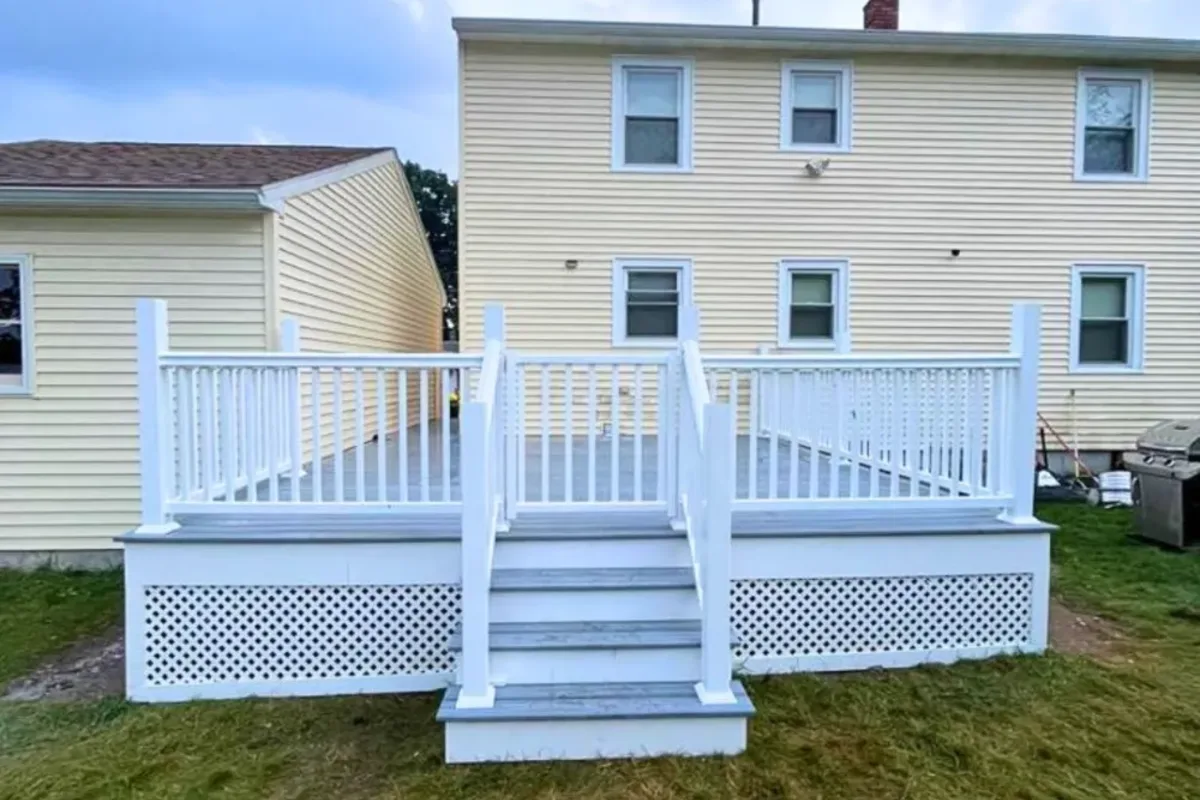
Deck safety is not a one-time event, it is something to keep an eye on, especially on older decks, because a deck carries people, often many at once, several feet off the ground. When we inspect a deck in Wakefield, we go well beyond the surface. Here is what a real inspection covers.
- The ledger connection and flashing where the deck meets the house, the most critical and most commonly failed connection on the whole deck.
- Posts and footings for rot at the base, movement, heaving and correct depth below the frost line.
- Joists and beams for rot, cracking, sag, undersized framing and proper connectors and hangers.
- Railings and balusters for firmness, height and spacing against current code, the difference between safe and dangerous with kids around.
- Stairs and handrails for solid stringers, safe rise and run, and a graspable rail.
- Fasteners and connectors for rust, backing out, missing hardware and corrosion staining.
- Decking surface for soft spots, rot, splintering and trip hazards.
At the end we give you a straightforward recommendation, repair, reinforce or replace, with no scare tactics and no upselling. If your deck is safe, we will tell you that too. Peace of mind for the people who use your deck is worth far more than the cost of a look.
Emergency deck repair after a storm or hard winter
Some deck damage cannot wait for a scheduled estimate. After a heavy snow load, an ice storm, or a fallen limb, a deck can come out of the winter with a cracked joist, a shifted footing, or a railing that has pulled loose, damage that makes the deck unsafe to use right now. If your Wakefield deck feels unstable, has a broken structural member, or the railing has come away from its posts, keep people off it and call us. We prioritize safety repairs, stabilize the structure, and get the deck usable again, then handle any permitted structural work properly rather than with a temporary bandage.
Why a wobbly railing and a failing ledger are emergencies
If you take one thing from this page, make it this: a loose railing and a poorly attached ledger are not cosmetic problems, they are safety emergencies. Together they are behind most serious deck accidents, and both develop quietly on aging Wakefield decks. A railing is the only thing standing between someone and a fall from height, and when posts rot at the base or fasteners fail, a railing that still looks fine can give way under the weight of a person leaning on it. A ledger that pulls away from the house is even more dangerous, because it can drop the entire deck, and everyone on it, at once, and unflashed ledgers rot slowly and out of sight, so the deck can look sound right up until it fails.
If your railing moves, or you see staining, rot or gaps where the deck meets the house, treat it as urgent. Keep people and especially children off the deck, and call for an inspection right away. These are the two failures we most want Wakefield homeowners to catch before, not after, something happens.
Deck permits and code for structural repairs in Wakefield
Not every repair needs a permit, but the structural ones do. Cosmetic work like replacing a few boards or re-staining generally does not require one. Structural repairs, replacing footings, rebuilding a ledger connection, repairing framing, or rebuilding railings and stairs, typically require a building permit from the Wakefield Building Department, and for good reason: those are the parts that keep the deck from failing.
Permitting exists to verify footing depth below the frost line, the ledger connection, railing height and baluster spacing, stair rise and run, and the load the deck must carry, the exact things a structural repair is meant to fix. Innov Builders handles the entire permit process for you as your licensed contractor, HIC #212869. We pull the permit when it is needed, repair to current Massachusetts code, and schedule the inspections, so the work is legal, safe, and never a problem when you sell the home. A handyman who offers to skip the permit on structural work is a warning sign: unpermitted structural repairs can fail a home inspection and create insurance headaches later.
How New England weather wears a deck down
Understanding what breaks a deck helps you protect it. In Wakefield and across the North Shore, the culprits are seasonal and relentless.
- Freeze-thaw cycles drive water into cracks and fastener holes, then expand it into ice night after night, splitting wood and loosening connections, the single biggest cause of deck wear here.
- Snow load sits on the deck for months, keeping the boards wet and stressing the framing.
- Ice melt and road salt tracked onto the deck accelerate corrosion of fasteners and connectors.
- Summer humidity and rain feed rot and mildew, especially in shaded areas and where debris collects between boards.
- UV exposure grays and dries out wood, breaking down an unprotected finish and raising splinters.
None of this is avoidable in our climate, but all of it is manageable. A deck that is well built, properly flashed, and kept sealed sheds this weather for decades. A neglected deck, or one built with shortcuts, is the one that develops the soft spots, loose railings and rotted ledgers we are called to fix.
Preventive deck maintenance: the annual checklist
The smartest and cheapest deck repair is the one you never need, because you caught the problem early. An annual look at your deck, ideally each spring after the snow is gone, turns expensive structural repairs into small, easy fixes. Here is the checklist we give Wakefield homeowners.
- Clear debris from between boards and off the surface, leaves and dirt that trap moisture and start rot.
- Test the railings by pushing on them firmly. Any give means posts or fasteners need attention now.
- Check the ledger where the deck meets the house for stains, gaps, rot or missing flashing.
- Probe for soft spots across the deck and at the base of posts with a screwdriver, soft wood signals rot.
- Look for rusted or backed-out fasteners and any missing connectors or hangers under the deck.
- Inspect the stairs for solid treads, a firm handrail and stringers that are not splitting.
- Wash the surface and, on a wood deck, re-stain or re-seal on schedule, every one to three years.
If any of these raises a question, that is the moment to call for an inspection. Catching a loose railing or a bit of rot early is a small, inexpensive fix, while ignoring it is how a deck becomes unsafe and how a small repair becomes a rebuild.
Our deck repair process
A clear process is what keeps a repair honest and efficient. Here is how a deck repair runs with Innov Builders in Wakefield, from first call to the day your deck is solid again.
1. Free on-site inspection
We come to your Wakefield home, assess the deck top to bottom, and probe the parts you cannot see, framing, ledger, footings and connections, to find the real cause, not just the symptom.
2. Honest, itemized assessment
You get a straightforward written recommendation and estimate: what needs repair, what is optional, and whether repair or replacement is the smarter value. If a repair genuinely solves it, that is what we recommend.
3. Permit when the work is structural
For structural repairs we pull the Wakefield building permit and repair to current Massachusetts code, so the work is legal and safe.
4. The repair, done right
Our in-house crew makes the repairs with corrosion-resistant hardware, proper flashing, and matched materials, correcting the underlying cause so the problem does not simply return.
5. Walkthrough and peace of mind
We walk the finished deck with you, show you what we fixed and why, and stand behind the work. You get a deck that is safe to use again.
Deck problems we see again and again in Wakefield
Because we repair so many decks, we see the same avoidable failures repeatedly, almost always from a rushed or unpermitted original build: ledgers attached with no flashing (the leading cause of collapses and water damage to the house), footings too shallow for the frost line that heave every winter, undersized joists and wide spacing that leave the deck bouncy, railings that do not meet code for height or baluster spacing, non-galvanized fasteners that rust and fail, and no drainage detail so water pools on joists and at post bases where rot starts. When we repair or rebuild, we correct these to current Massachusetts code, so the deck is genuinely safe, not just newer on the surface. The part of the job you cannot see is the part that matters most.
Deck repair vs a handyman patch job
There is a real difference between a proper deck repair and a quick patch, and on a structure that carries people several feet off the ground, that difference matters. A patch treats the symptom: it screws down the board that moved and tightens the railing that wobbled. A real repair finds why the board moved or the railing loosened, a rotted joist, a rusted fastener, a failing post, and corrects the cause so the problem does not come back next season. On a deck, the cheap fix is often the expensive one, because it leaves the danger in place while making the deck feel safe. We repair to the cause, to current Massachusetts code, so you are not paying twice.
Can you repair a deck yourself?
Some deck maintenance is genuinely a homeowner job: sweeping debris, washing the surface, and even re-staining a sound wood deck on a dry weekend. Those are worth doing often. Where DIY gets risky is anything structural. Reattaching a ledger, repairing framing, resetting footings, or rebuilding a railing to code involves load, connections and flashing details where a mistake is not cosmetic, it is a safety and code problem, and it can void insurance or fail a home inspection later.
The honest guidance we give Wakefield homeowners is simple: cosmetic care, do it yourself if you like; anything that holds the deck up or keeps people from falling, have a licensed contractor handle it. A railing that looks fixed but is not, or a ledger reattached without flashing, is more dangerous than the problem you started with, because now it feels safe.
How long do deck repairs take?
Most deck repairs in the Wakefield area are quick compared with a full build. A handful of board replacements or a re-stain is often a day or two. A railing rebuild or fastener replacement typically runs one to a few days. Structural work, footings, ledger re-flashing, or repairing rotted framing, can take several days to a week or more depending on how much is affected and whether a permit and inspection are involved. We give you a realistic timeline with the estimate, order special materials up front so lead times do not stall the job, and keep the work as tight and disruption-free as possible.
Older Wakefield decks and outdated code
A lot of the decks we repair in Wakefield were built ten, twenty or more years ago, and deck code has tightened significantly since then. Older decks often have shallower footings, lighter framing, weaker ledger connections, and railings that do not meet today's height and baluster-spacing rules. They were legal when built, but a deck that was safe by 1990s standards is not automatically safe now, and the components that changed are exactly the ones that fail: ledgers, footings and railings. When we repair an older deck, we do not just match what was there, we bring the repaired sections up to current Massachusetts code, so the fix improves safety rather than rebuilding a known weakness.
What happens if you ignore a deck repair
Deck damage does not stay put, it spreads, and it gets more expensive the longer it waits. A single rotted board left in place stays wet and passes moisture into the joist beneath it, turning a $200 board swap into a structural repair. An unflashed ledger that is stained today rots the rim joist tomorrow, and that is water damage to your house, not just the deck. A loose railing does not tighten itself. Beyond cost is the safety side: the failures that cause deck accidents develop slowly and out of sight, so a deck can look fine right up until it does not. The homeowners who spend the least on their decks over time are the ones who fix small problems while they are still small.
Why Wakefield homeowners choose Innov Builders for deck repair
Deck repair is structural work, and who does it matters as much as what gets done. Innov Builders is a licensed and insured general contractor, HIC #212869 and OSHA certified, led by Iago Maciel with a trained in-house crew based at 50 New Salem St in Wakefield, MA. We do not hand your repair off to rotating subcontractors: the people who inspect the deck are the people who repair it. That is how we keep quality high and the job accountable from the ledger to the last baluster. We tell you the truth about what your deck needs, repair only what it needs, and build back to current Massachusetts code. Our work is backed by strong local reviews and a simple promise, to fix it right and fix it to last.
Areas we serve around Wakefield
Based in Wakefield, we repair and restore decks across the North Shore and Greater Boston, including Reading, North Reading, Lynnfield, Stoneham, Melrose, Saugus, Wakefield, Medford, Malden, Winchester and Woburn. Being local means we know the housing stock, the New England weather, and the Wakefield permit process, so your deck repair moves without the delays an out-of-town contractor runs into. We understand the older colonial and cape homes common here, and the decks built to a code from a different era, which is exactly the deck that most often needs the kind of repair we specialize in.
Get a free deck repair estimate in Wakefield, MA
If a board feels soft, a railing wobbles, or you are just not sure your deck is safe, the next step is simple. Request a free, no-obligation inspection and estimate from a licensed Wakefield deck repair contractor. We will visit your home, assess the deck from the ledger to the footings, tell you honestly whether it needs a repair or a replacement, and give you a clear written scope and price before any work begins. Let's get your deck solid and safe again before the next hard winter.