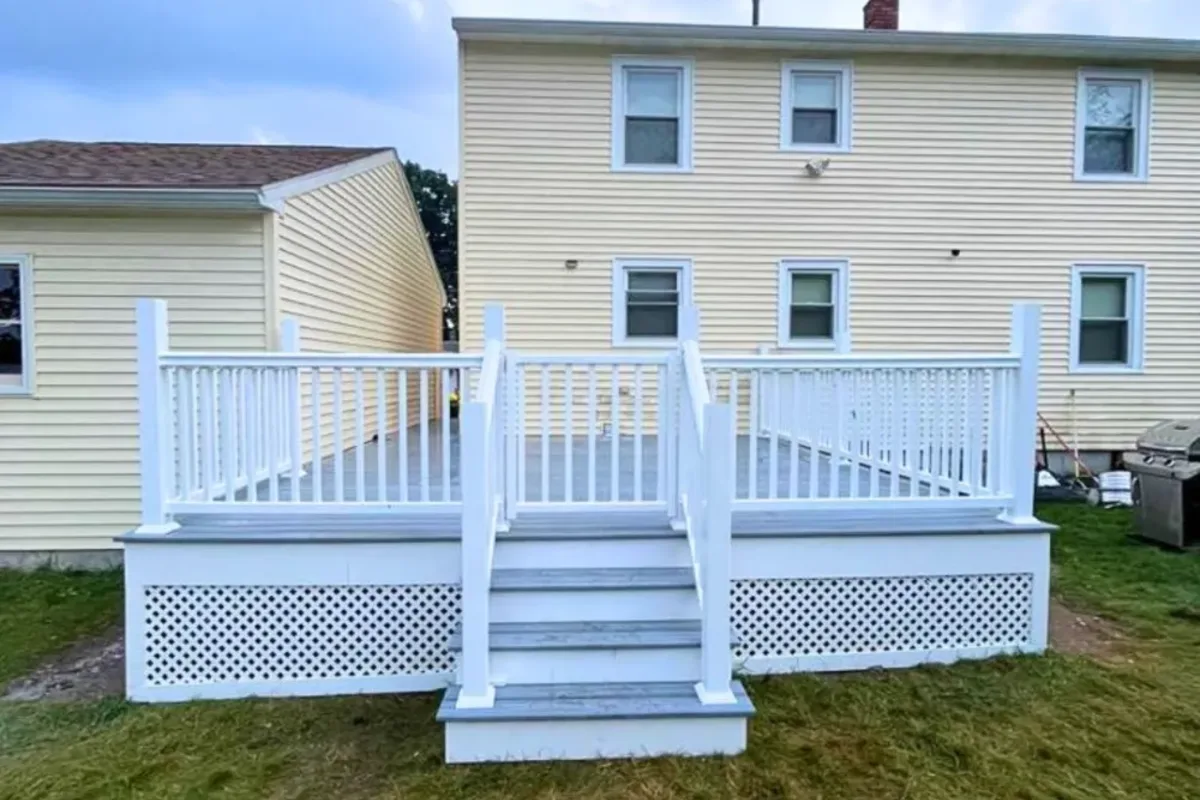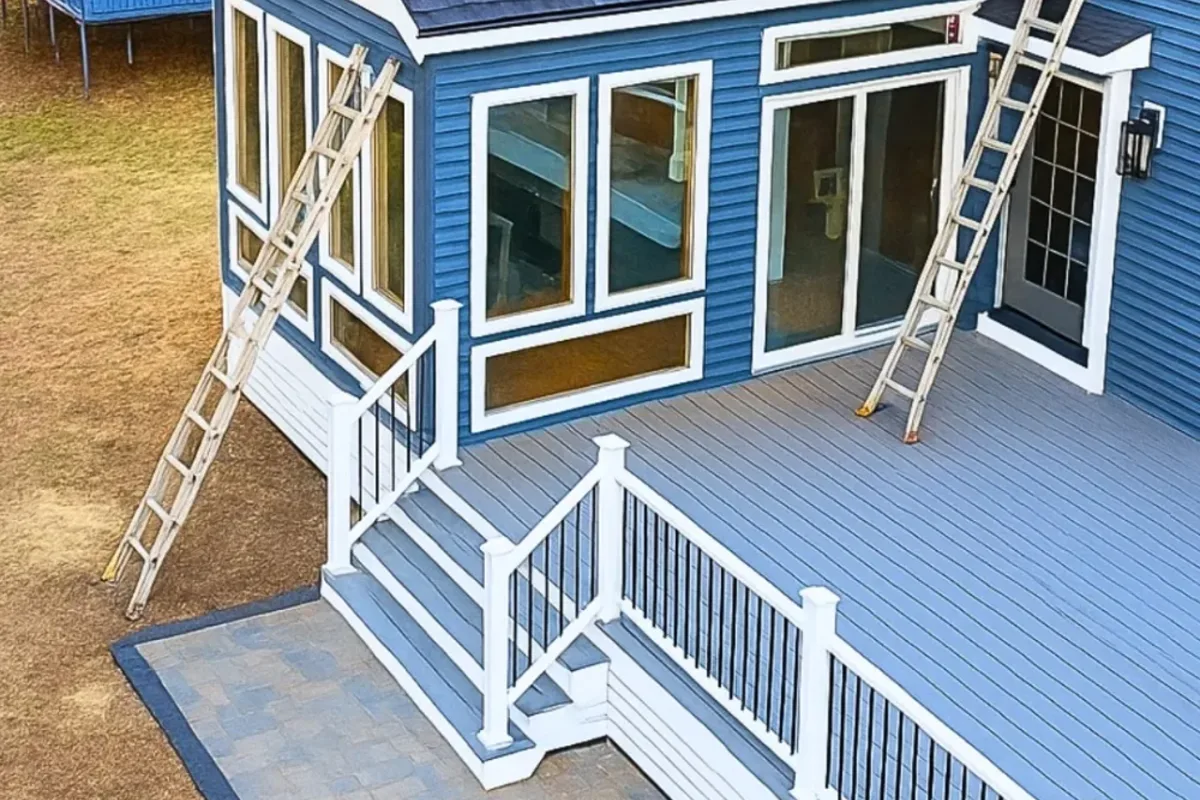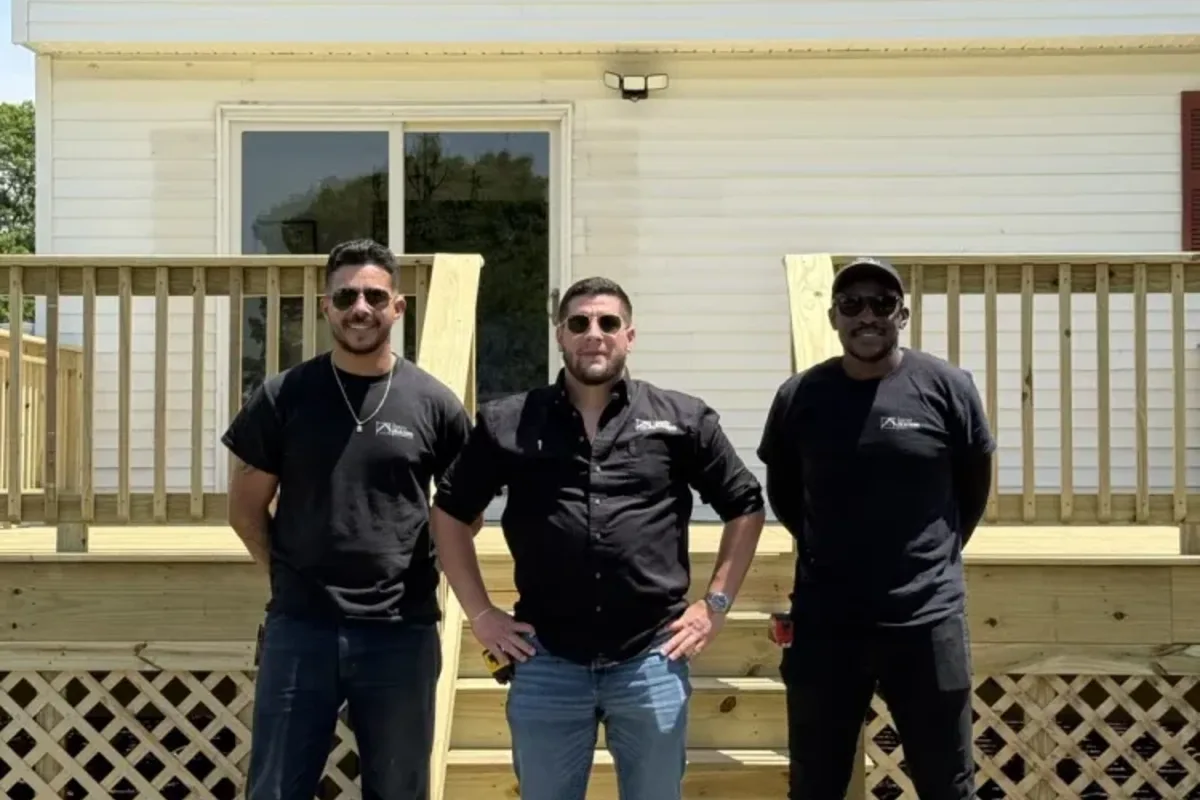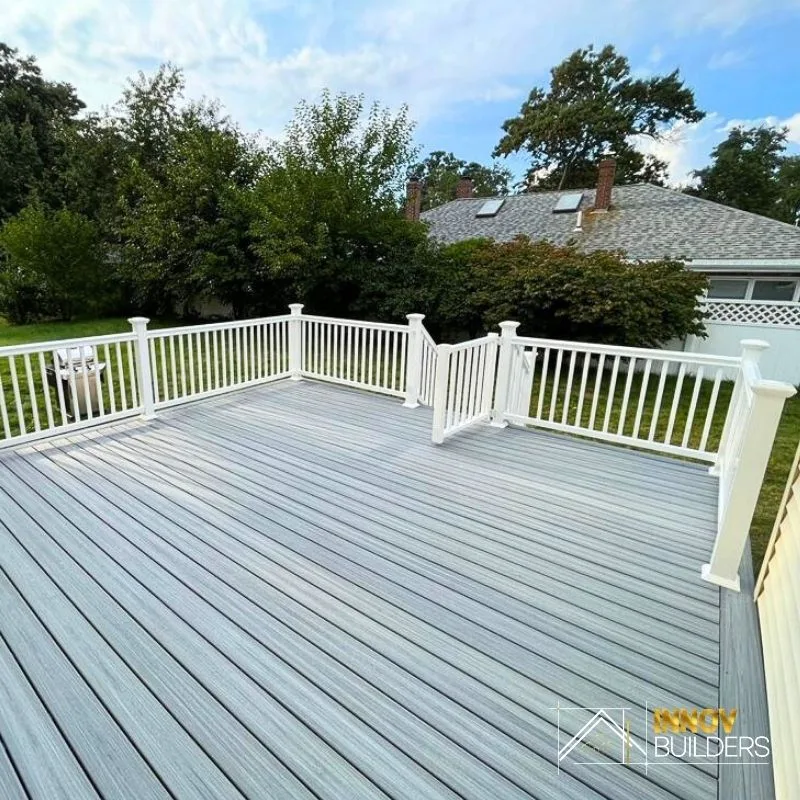
Innov Builders are the deck builders Wakefield, MA homeowners call when a deck is starting to feel unsafe, dated, or too small for the way the family actually lives. Whether you need a repair, a full replacement, or a brand-new custom deck, our in-house crew designs, permits and builds it start to finish, so you deal with one accountable team, not a rotating cast of subcontractors.
In Massachusetts, decks take a real beating from snow, rain, freeze-thaw cycles, summer humidity and years of foot traffic. What looked solid a few seasons ago can turn into loose boards, soft spots, wobbly railings, or a space that no longer fits how you entertain. For Wakefield and nearby North Shore homeowners, the real question is usually not "do I need a deck contractor?" It is: should I repair the deck, replace it, or build something completely new? This guide walks you through each option, the signs to look for, what a deck costs here, and how to choose the right deck builder for your home.
What a deck project in Wakefield includes
A deck project with Innov Builders covers the whole job, not just the boards you walk on. We start with a free on-site consultation in Wakefield, review the condition of the existing structure, and talk through how you want to use the space. From there we handle design and layout, the building permit, demolition of the old deck when needed, footings and framing, waterproofing and flashing at the ledger, decking and railings, stairs, and the finish details that make a deck feel built to last. Because we are a licensed general contractor, we also coordinate any electrical for lighting or outlets and pull the permits so the whole project is up to Massachusetts code.
Every deck is different, but the goal is always the same: a safe, good-looking outdoor space that adds real value to your home and holds up to New England weather for decades, not seasons.
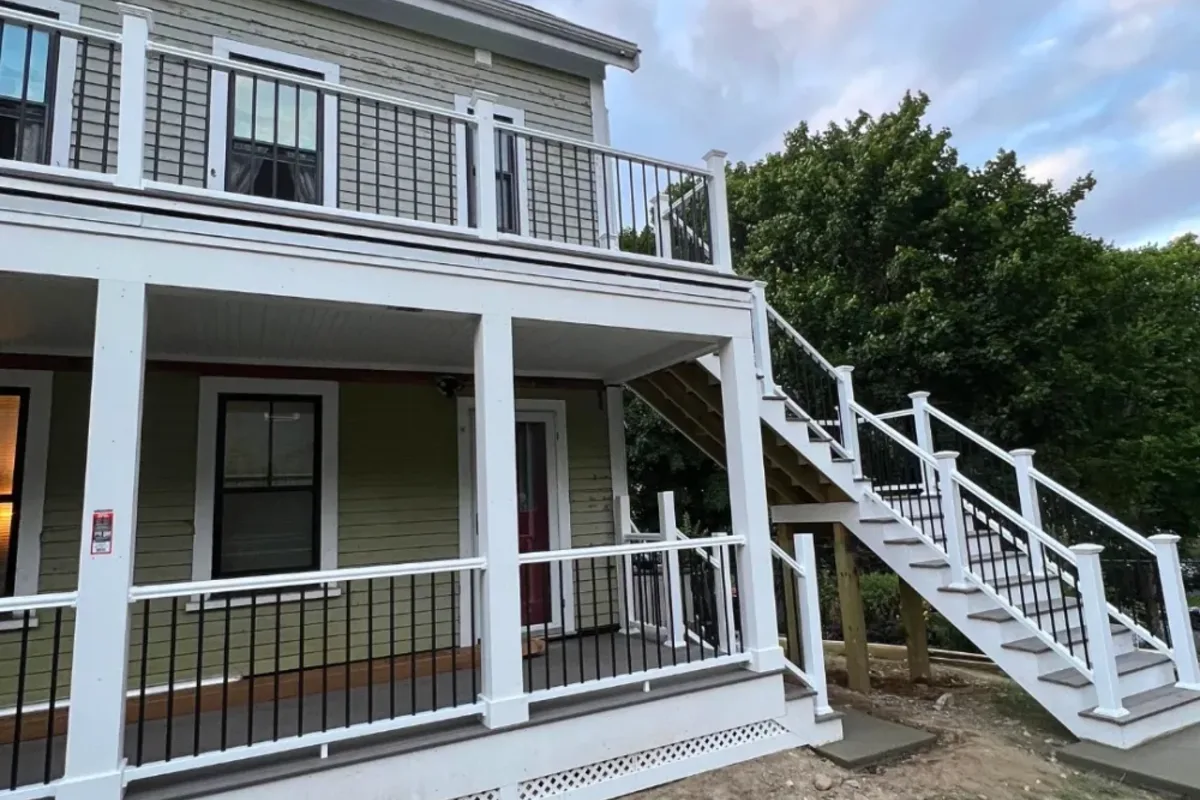
Repair, replace or build new: which one do you need?
The right choice comes down to the condition of the structure underneath, not just the boards on top. Here is how we help Wakefield homeowners decide.
When a deck repair makes sense
If the framing, posts and footings are solid and the problems are on the surface, a repair is the smart, budget-friendly move. Replacing a few rotted boards, tightening or rebuilding a railing, swapping failed fasteners, re-flashing the ledger where it meets the house, or re-staining a weathered wood deck can add years of safe use for a fraction of the cost of a full rebuild. The key word is structure: if the bones are good, we fix what is worn and leave the rest.
When it is time to replace the deck
When the damage reaches the structure, a replacement is usually the safer and more cost-effective path. Rotted joists or posts, footings that have heaved from frost, a ledger that was never flashed correctly, or widespread soft spots are all signs the deck is past patching. In older Wakefield homes we often find decks that were built decades ago to a code that no longer applies. Rebuilding lets us correct the footing depth, ledger connection and railing height to current Massachusetts standards, so the deck is genuinely safe, not just newer on top.
When a brand-new custom deck is the right call
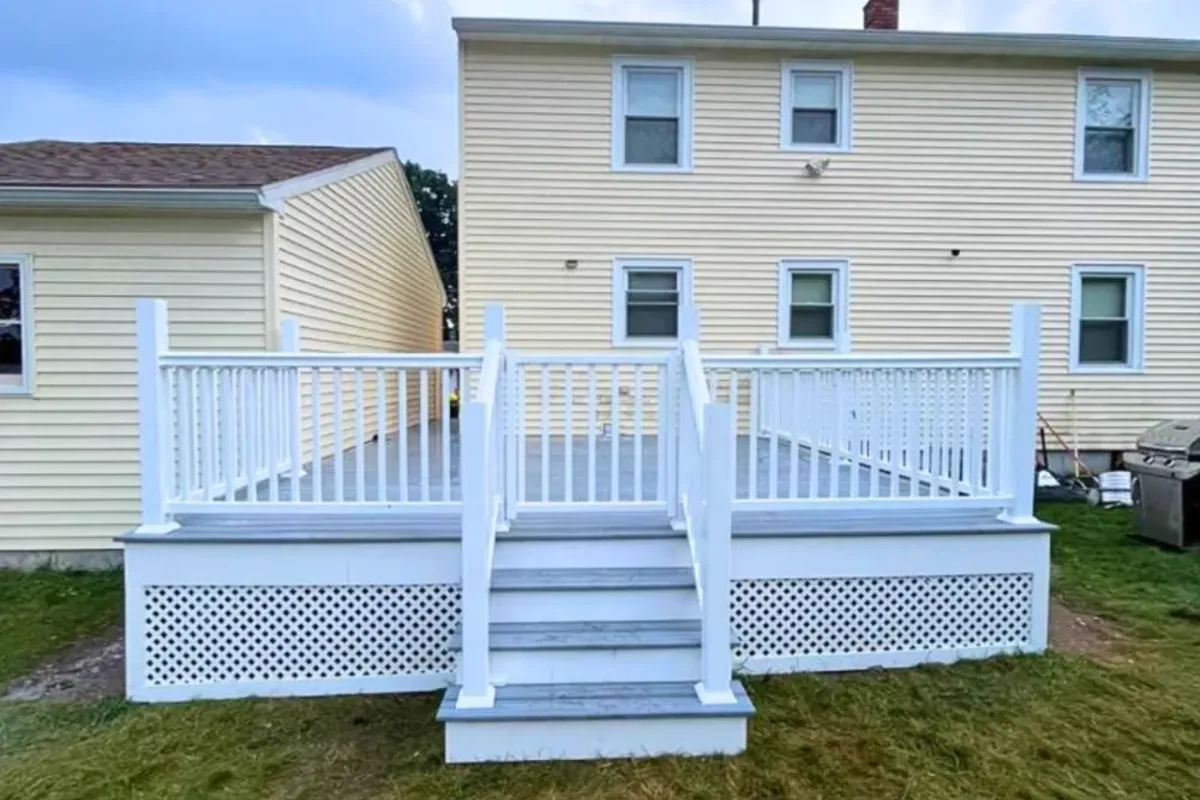
Sometimes the existing deck is simply too small, in the wrong spot, or does not match how you want to live outdoors. A new custom deck lets us rethink the whole space: a larger footprint, multiple levels, built-in benches, a pergola, better stairs, privacy screening, or a smooth transition to a patio or pool. This is also the moment to choose low-maintenance composite decking and modern railings that will look great and stay that way for 25 years or more.
Signs your deck needs attention
Decks rarely fail overnight. They give you warning signs first. If you notice any of these on your Wakefield deck, it is worth a free inspection before a small problem becomes a safety issue.
- Soft, spongy or springy boards underfoot, a sign of rot in the boards or the joists below.
- Wobbly or loose railings that move when you lean on them, one of the most common and most dangerous deck problems.
- Rusted, popped or missing fasteners and connectors, especially at the ledger where the deck attaches to the house.
- Cracked, splintering or heavily faded boards that no amount of cleaning brings back.
- Posts or stairs that feel unstable, or footings that have shifted, heaved or sunk.
- Water stains or rot where the deck meets the house, a red flag that the ledger flashing has failed.
Wobbly railings and a poorly attached ledger are the two failures that cause the most deck accidents, and both are exactly what an older deck tends to develop in our climate. If you are seeing them, do not wait.
Deck cost in Wakefield, MA
The most common question we hear is what a deck costs. In the Wakefield area, the number is driven by the size of the deck, the material you choose, the height and complexity, and whether it is a repair or a full build. Treat these as planning ranges for a licensed, permitted project, not fixed quotes.
| Project | Typical range | What it covers |
|---|---|---|
| Deck repair & restoration | $1,500 - $5,000 | Board and railing repairs, fasteners, re-flashing, cleaning and staining a sound deck |
| Pressure-treated wood deck (new) | $15,000 - $30,000 | New footings, framing, wood decking and railings, stairs, permit and inspections |
| Composite deck (new) | $25,000 - $45,000 | Composite boards (Trex, TimberTech, Azek), aluminum or composite railings, low maintenance |
| Large / multi-level or custom | $45,000+ | Multiple levels, built-ins, pergola, lighting, privacy screens, premium materials |
Two decks the same size can land far apart in price, and material is usually the reason. Pressure-treated wood is the most affordable to build; composite costs more upfront but needs almost no maintenance and lasts longer, which often makes it cheaper over the life of the deck. We give you an honest, itemized estimate so you can see exactly where the money goes and choose the path that fits your budget.
Composite vs wood decking in Massachusetts
Choosing the decking material is the single biggest decision, both for how the deck looks and for what it costs to own. Here is how the two main options compare for our New England weather.
| Factor | Pressure-treated wood | Composite (Trex / TimberTech / Azek) |
|---|---|---|
| Upfront cost | Lower | Higher (often 30-50% more) |
| Maintenance | Clean, sand and re-stain every 1-3 years | Occasional wash, no staining or sealing |
| Lifespan in MA climate | 10-20 years with upkeep | 25-50 years |
| Look | Natural wood grain, warm | Consistent color, many styles, fade and stain resistant |
| Best for | Tighter budgets, homeowners who like real wood | Low-maintenance living and long-term value |
There is no single right answer. For homeowners who do not want to spend a weekend every year sanding and sealing, composite is usually worth the premium in our snow-and-humidity climate. For those who love real wood or are watching the budget, a well-built pressure-treated deck is a solid choice. We build both and will tell you honestly which fits your home and how you plan to use it.
Deck permits and code in Wakefield
Almost every new deck or structural deck replacement in Wakefield requires a building permit from the Wakefield Building Department, and for good reason: decks are structural, and the code exists to keep them from failing. Permitting covers footing depth below the frost line, the ledger connection to the house, railing height and baluster spacing, stair rise and run, and the load the deck must carry. Any electrical for lighting or outlets is done and inspected under a licensed electrician.
Innov Builders handles the entire permit process for you as your licensed contractor, HIC #212869. We pull the permit, build to current Massachusetts code, and schedule the inspections, so your deck is legal, safe, and never a problem when you sell the home. Skipping the permit, which some handymen will offer to do, can cause failed home inspections and insurance headaches down the road.
Our deck building process
A clear process is what keeps a deck project on time and on budget. Here is how a Wakefield deck runs with Innov Builders, from first call to the day you step out onto it.
1. Free consultation and design
We visit your home, assess the existing deck or site, and talk through your goals, style and budget. You get honest guidance on repair versus replace versus build new, plus a design that fits how you actually use the space.
2. Written, itemized estimate
You receive a clear written estimate with the materials, timeline and price locked in before any work starts, so there are no surprise change orders.
3. Permit and materials
We pull the Wakefield building permit and order your decking, railings and hardware up front, so lead times never stall the job.
4. Demolition and framing
Our crew removes the old deck when needed, sets footings below the frost line, and builds the frame with a properly flashed ledger and code-compliant connections, the parts you never see that decide whether a deck lasts.
5. Decking, railings and stairs
We install your decking, railings and stairs with clean, tight, professional detailing, then add any lighting, benches or finishing touches.
6. Final walkthrough and warranty
We pass the final inspection, walk the finished deck with you, and stand behind the work. You get an outdoor space that is safe, beautiful and built to last.
How long does a deck take to build?
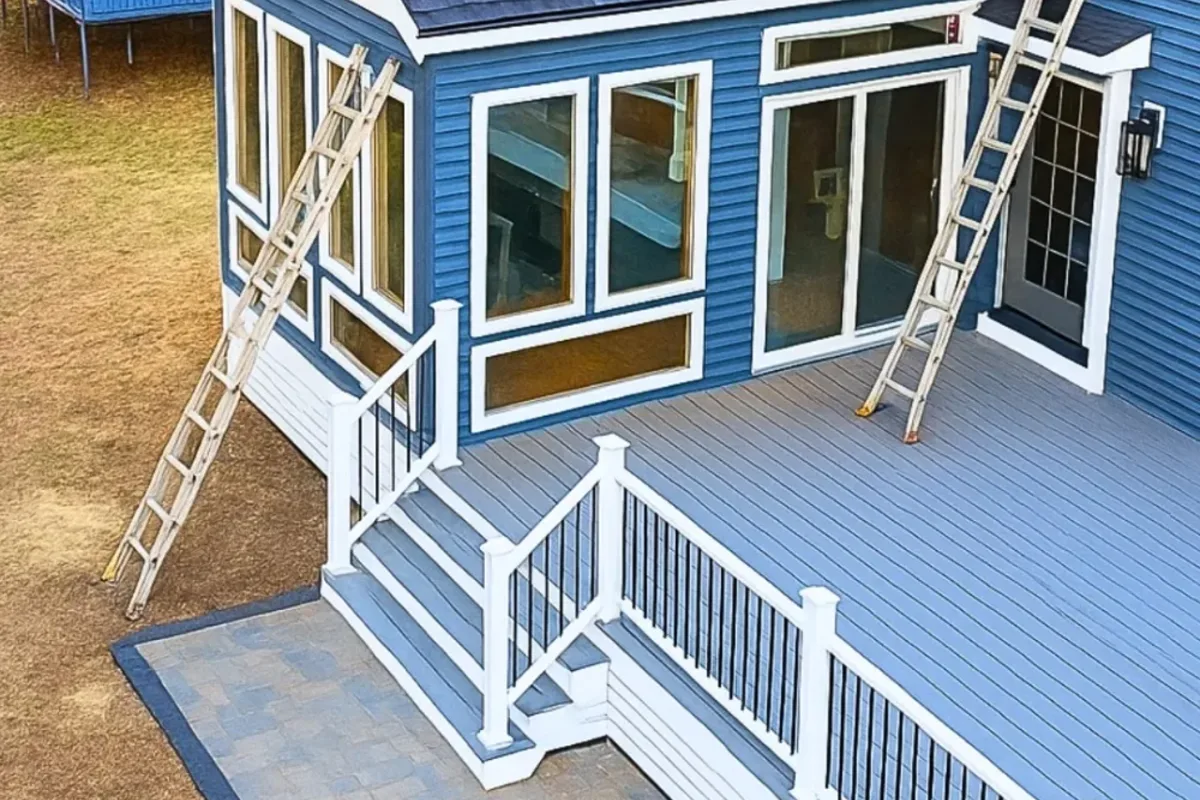
Most deck projects in the Wakefield area take one to three weeks of active work once we start, depending on size and complexity. A straightforward repair can be a day or two. A standard new deck usually runs one to two weeks, while a large multi-level or custom deck with built-ins, a pergola or lighting can take three weeks or more. Special-order composite decking and railings can add lead time, so we order materials before we begin. As with any build, the projects that run long are the ones where selections were not locked in up front, which is why we finalize everything before the first board goes down.
Deck types we build
Innov Builders designs and builds the full range of outdoor structures for Wakefield-area homes:
- Custom wood decks in pressure-treated lumber, cedar or mahogany, built to your layout.
- Composite decks in Trex, TimberTech and Azek for low-maintenance, long-term living.
- Multi-level decks that work with sloped yards and connect the house to the landscape.
- Porches and covered decks that extend your season and add curb appeal.
- Pool and hot-tub decks designed for safety, drainage and easy access.
- Deck stairs, railings and privacy screens, including code-compliant rebuilds of failing ones.
Why Wakefield homeowners choose Innov Builders
Deck building is structural work, and who builds it matters as much as what they build. Innov Builders is a licensed and insured general contractor, HIC #212869 and OSHA certified, led by Iago Maciel with a trained in-house crew based at 50 New Salem St right here in Wakefield, MA. We do not hand your deck off to rotating subcontractors: the people who quote the job are the people who build it. That is how we keep quality high, communication clear and the job accountable from the first footing to the final railing. Our work is backed by strong local reviews and a simple promise, to build it right and build it to last.
Deck design ideas and features for Wakefield homes
A deck is more than a platform, it is an outdoor room. When we design a deck for a Wakefield home, we think about how you will actually use it: morning coffee, weekend grilling, kids running in and out, or evening gatherings with friends. The right features turn a plain deck into the favorite part of the house.
- Multi-level layouts that step down a sloped North Shore yard and separate the dining, lounging and grilling zones.
- Built-in benches and planters that add seating and greenery without eating up floor space.
- Pergolas and covered sections for shade in July and a little shelter when the weather turns.
- Low-voltage deck and stair lighting for safety and a warm glow after dark, wired by a licensed electrician.
- Privacy screens and lattice that make a deck feel like a retreat, even on a tighter lot.
- Wide, code-compliant stairs and smooth transitions to a patio, pool or yard.
You do not have to decide all of this alone. During the design consultation we show you what works for your space and your budget, and we build it all as one coordinated project so the details line up.
Caring for your deck in New England
New England is hard on decks. Snow load, ice melt, freeze-thaw cycles and summer humidity all work against the structure and the finish. The good news is that a well-built deck needs very little upkeep, and the maintenance depends mostly on the material you chose.
Composite decking (Trex, TimberTech, Azek) is the low-maintenance winner. A wash once or twice a year with soap and water keeps it looking new. It never needs sanding, staining or sealing, and it will not splinter, rot or warp, which is why we recommend it for homeowners who would rather enjoy the deck than maintain it.
Pressure-treated and natural wood decks need more attention: a cleaning each spring, and re-staining or sealing every one to three years to protect the wood from moisture and UV. Skipping it is what leads to the graying, cracking and rot we see on neglected decks. If you love real wood, that upkeep is the trade-off, and we will show you how to do it right.
Whatever the material, the smartest maintenance is an annual look at the structure: the ledger connection, the railings, the fasteners and the footings. Catching a loose railing or a bit of rot early is a small fix. Ignoring it is how a deck becomes unsafe.
Does a new deck add value to your home?
A deck is one of the better returns in home improvement, and in the Greater Boston market outdoor living space is a real selling point. A well-built deck expands the usable footprint of the home, improves the flow to the backyard, and gives buyers a feature they can picture themselves using. A dated, sagging or unsafe deck does the opposite, it reads as deferred maintenance and can make a buyer wonder what else was neglected.
As with any project, the return depends on doing it right: quality materials, clean detailing, and a structure that passes inspection. A mid-range composite or well-built wood deck that fits the home tends to recover a healthy share of its cost while giving you years of daily enjoyment before you ever sell. Building it to code with permits also protects that value, because an unpermitted deck can derail a home sale during inspection.
Deck, porch or patio: which is right for you?
Homeowners often ask us whether they want a deck, a porch or a patio. Each fits a different goal, and we build all three, so our advice is not tied to selling you one.
- A deck is an elevated wood or composite platform, ideal when your yard slopes or the door sits above grade, and the easiest way to create a large, open outdoor room off the house.
- A porch is covered and often screened, extending your season into spring and fall and giving you shelter from sun and bugs. It adds the most curb appeal at the front of the home.
- A patio is a ground-level paved surface, a good fit for flat yards and a different look and price point.
Many of our favorite projects combine them, a composite deck that steps down to a paver patio, or a deck with a covered porch section. We help you weigh cost, maintenance and how you want to live outdoors, then design the option that fits.
Common deck problems we fix
Because we repair as many decks as we build, we see the same avoidable failures again and again, usually from a rushed or unpermitted original build:
- Improperly attached ledgers with no flashing, the leading cause of both deck collapses and water damage to the house.
- Footings too shallow for the frost line, which heave and shift every winter and throw the whole deck out of level.
- Undersized joists and spacing that leave the deck bouncy and unsafe under load.
- Railings that do not meet code for height or baluster spacing, a serious safety issue, especially with kids.
- Wrong or rusted fasteners that stain the wood and fail over time in our wet climate.
When we rebuild or repair, we correct these to current Massachusetts code, so the deck is genuinely safe, not just newer on the surface. It is the part of the job you cannot see that matters most.
Composite decking brands: Trex, TimberTech and Azek
If you go the low-maintenance route, the next question is which composite brand. We build with all the leading names and pick based on your budget, your look and how the deck will be used, not on what we happen to stock.
- Trex is the best-known composite and a strong value. Its high-performance lines resist fading, staining and scratching, come with long warranties, and offer a wide range of colors from warm browns to cool grays. A great fit for most Wakefield homeowners who want proven, low-maintenance decking.
- TimberTech offers both composite and capped-polymer boards with some of the most realistic wood-grain looks on the market. Its premium lines hold color exceptionally well and feel cooler underfoot, a nice advantage for a sunny deck.
- Azek (part of the TimberTech family) is capped cellular PVC, the most weather-resistant option we build with. It is fully moisture-proof, extremely durable and ideal for decks near pools or exposed to heavy New England weather, at a premium price.
- Cedar and pressure-treated wood remain the choice for homeowners who want real timber and a lower upfront cost, with the understanding that wood needs regular sealing to last in our climate.
There is no single best board, only the best board for your deck. During your estimate we bring samples, explain the warranty and price differences in plain English, and help you choose with no pressure.
The best time to build a deck in Massachusetts
Spring and summer are the busiest deck seasons in Massachusetts, which means the best builders book up fast. If you want your deck ready for warm weather, the smart move is to plan in the late winter or early spring, get on the schedule, and let us handle permits and materials while the ground thaws. That said, we build decks year-round. Fall is an underrated time to build, the weather is mild, schedules open up, and your deck is ready the moment spring arrives. Even winter builds are possible for many projects. The one thing we avoid is rushing a job to beat weather, because the footings, ledger and framing are worth doing right regardless of the season.
How to choose a deck builder in Wakefield
A deck is structural, so the contractor you choose matters as much as the design. Before you hire anyone in the Wakefield area, it is worth asking a few questions that separate a professional builder from a weekend handyman:
- Are you licensed and insured? In Massachusetts, look for a Home Improvement Contractor (HIC) registration and liability insurance. Innov Builders is HIC #212869, licensed and insured, and OSHA certified.
- Will you pull the permit? A builder who suggests skipping the permit is a builder to avoid, it is a sign the work may not meet code, and it can wreck a future home sale.
- Do you use your own crew or subcontractors? A dedicated in-house crew, like ours, keeps quality and accountability consistent from footing to railing.
- Can I see recent local work and reviews? Real decks in real North Shore yards, and honest reviews, tell you more than any brochure.
- Is the estimate itemized and in writing? A clear written scope protects you from surprise change orders and vague allowances.
The answers reveal a lot. A trustworthy builder welcomes these questions and answers them plainly, because doing the job right is the whole point.
Financing your deck project
A deck is a meaningful investment, and you do not always have to pay for it all at once. Many homeowners fund a deck through a home equity line of credit, a home improvement loan, or a contractor-arranged financing plan, spreading the cost over time while enjoying the deck now. Because a well-built deck adds value and usable space to the home, it is one of the more sensible improvements to finance. During your consultation we are happy to talk through the budget and the options, so the project fits your plans without stretching them.
Deck safety and annual inspection
Deck safety is not a one-time event, it is something to keep an eye on, especially on older decks. The reason is simple: a deck carries people, often many at once, several feet off the ground, and the failures that cause accidents, a pulled-away ledger or a collapsing railing, tend to develop slowly and out of sight. An annual look is cheap insurance. We recommend checking the ledger connection and flashing where the deck meets the house, testing the railings and stairs for any give, looking for rusted or missing fasteners and connectors, and probing for soft, spongy spots that signal rot. If you find any of these on your Wakefield deck, or you are simply not sure the deck is safe, we offer a straightforward inspection and an honest recommendation, repair, reinforce or replace, with no scare tactics. Peace of mind for the people who use your deck is worth far more than the cost of a look.
How big should your deck be?
One of the first questions homeowners ask is how large to build. The honest answer is that the right size is the one that fits how you will use the deck and stays in proportion to the house and yard, not simply the biggest deck the space allows. A deck that is too small feels cramped the first time you set out a table and chairs; one that is too large can overwhelm a modest yard and cost more than it needs to.
As a rough guide, a deck meant for a bistro table and a couple of chairs works at around 10 by 10 feet, a comfortable dining and lounge deck usually starts near 12 by 16 feet, and a deck built for real entertaining, with separate dining and seating zones and room for a grill, often runs 16 by 20 feet or more. If you want a hot tub, an outdoor kitchen or a dining set that seats eight, we plan the load and the layout around those features from the start.
In Wakefield, the buildable size can also be shaped by property setbacks, lot lines and, in some neighborhoods, HOA rules. As your licensed contractor we check the local requirements before we design, so the deck you fall in love with is a deck you can actually permit and build. During the consultation we walk the space with you, mark out real dimensions, and help you find the size that feels generous without wasting budget on square footage you will not use.
Areas we serve around Wakefield
Based in Wakefield, we build and repair decks across the North Shore and Greater Boston, including Reading, North Reading, Lynnfield, Stoneham, Melrose, Saugus, Wakefield, Medford, Malden, Winchester and Woburn. Being local means we know the housing stock, the weather, and the Wakefield permit process, so your deck project moves without the delays an out-of-town contractor runs into.
Get a free deck estimate in Wakefield, MA
If your deck needs a repair, a replacement, or you are ready to build the outdoor space you have been picturing, the next step is simple. Request a free, no-obligation estimate from a licensed Wakefield deck builder, and we will visit your home, assess the project, and give you a clear written scope and price before any work begins. Let's build a deck your family will enjoy for years.