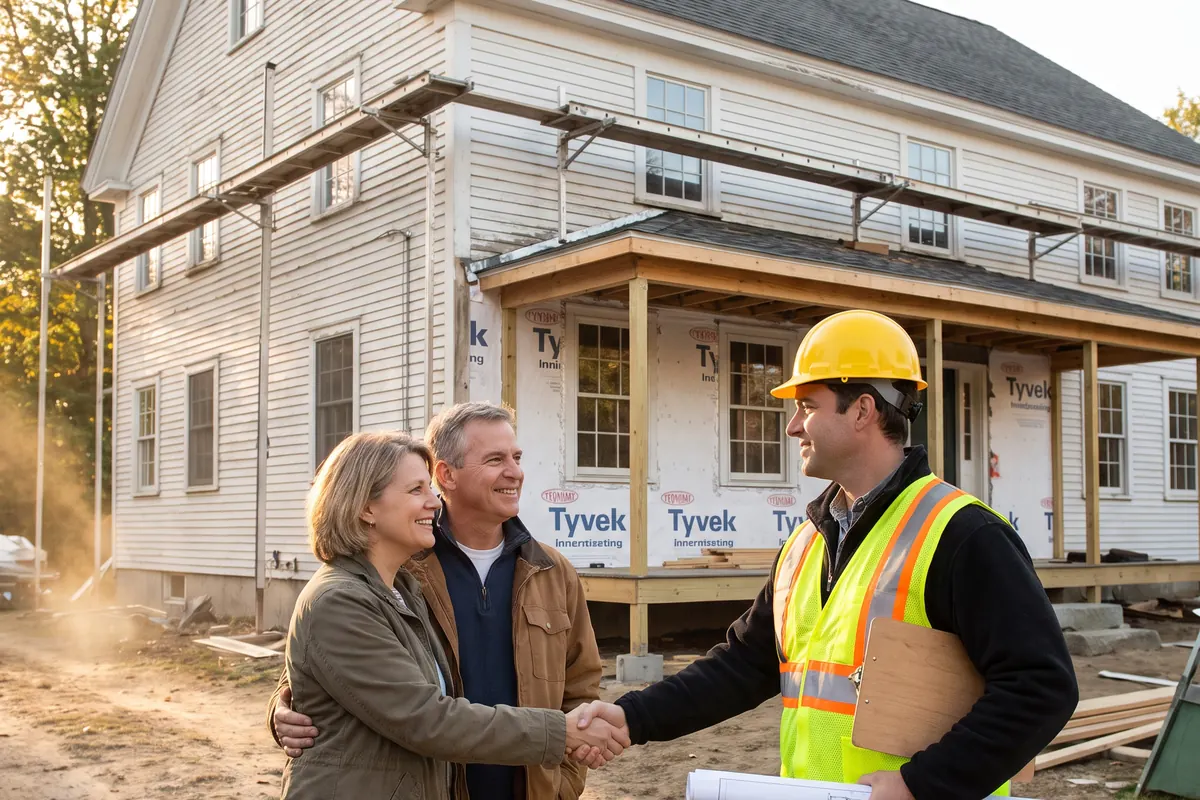
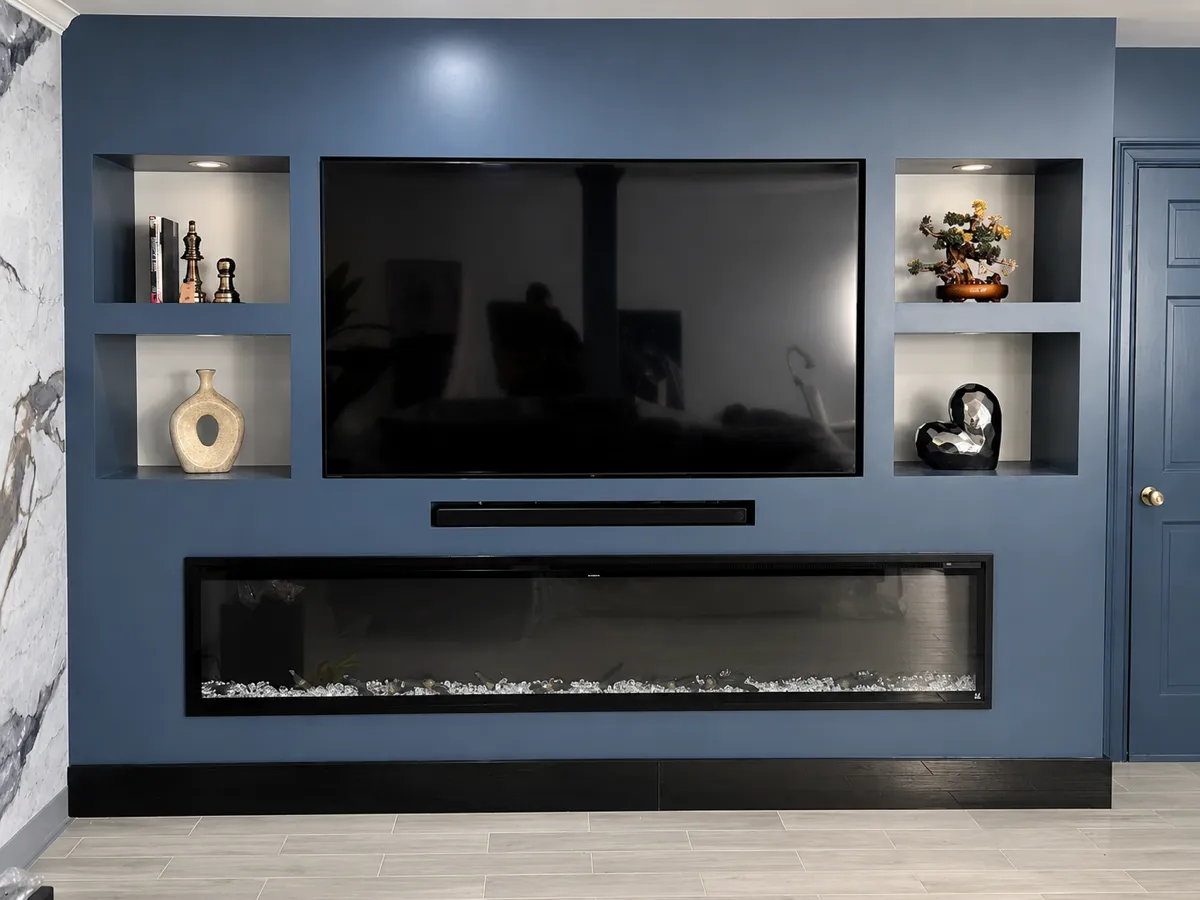
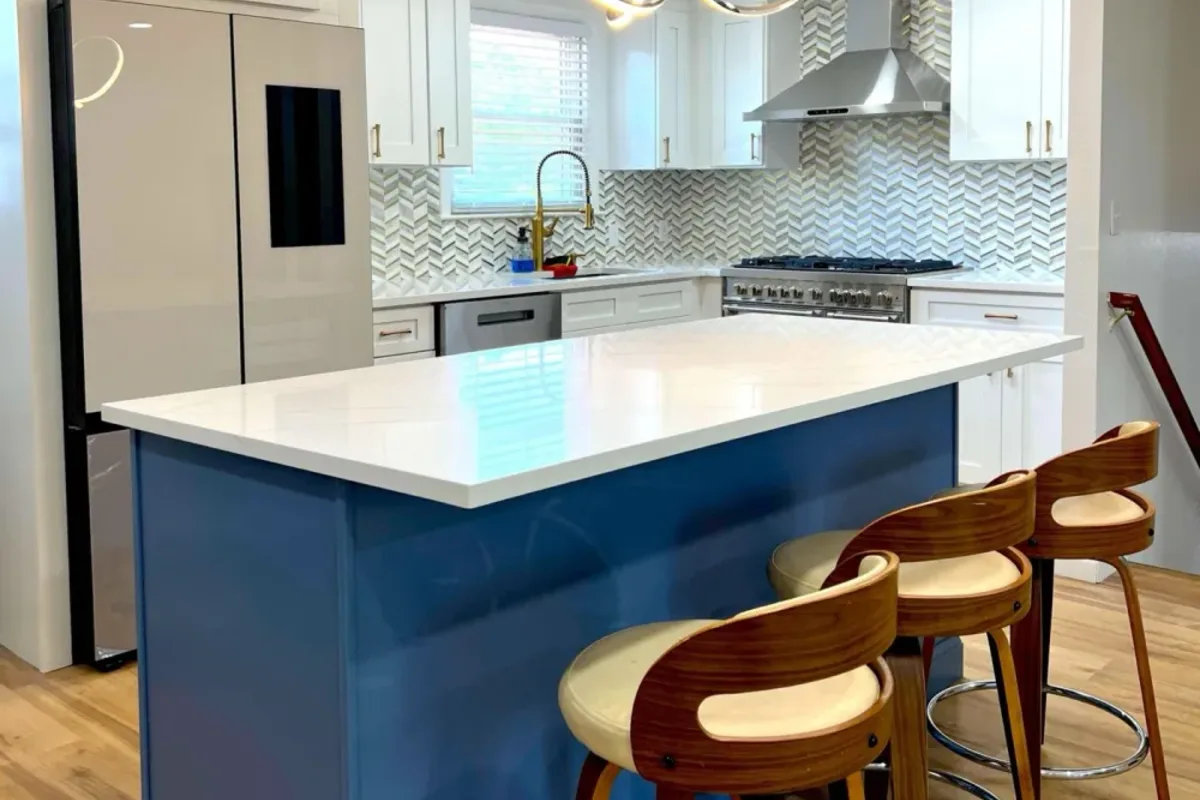
Innov Builders are the stair remodeling Wakefield, MA homeowners call when a staircase feels dated, sounds loud, or simply no longer matches the home they have worked hard to improve. From refinishing worn treads and risers to installing new railings, balusters and newel posts, to rebuilding a staircase from the stringers up, our in-house finish carpenters own the entire project from the first measurement to the last coat of finish. You work with one licensed and insured general contractor, HIC #212869, based right here at 50 New Salem St in Wakefield, not a rotating cast of subcontractors who disappear when the details get hard.
A staircase is the one piece of carpentry a family touches every single day, and in a Wakefield home it is almost always the first thing a guest sees when the front door opens. Wakefield is a town of older colonials, capes, Victorians and two-family homes, many built long before current Massachusetts stair code, and those original staircases were built to standards that no longer apply. Treads squeak, railings wobble, balusters have gone missing, and the whole run feels tired next to a freshly remodeled kitchen or living room. This guide walks Wakefield homeowners through every honest option: what a stair remodel really includes, how refinishing compares to a full rebuild, what iron, wood and cable railings cost and how they hold up, how Massachusetts stair code and the Wakefield Building Department shape the work, realistic pricing, timelines, and how to pick a finish carpenter who will still stand behind the work years from now.
Stair remodeling in Wakefield, MA: what the project really includes
A stair remodel with Innov Builders is far more than swapping out a handrail. We start with a free on-site consultation in your Wakefield home, where we inspect the existing staircase from the basement stringers to the top landing, measure the rise and run, check the railing height and baluster spacing against current code, and talk through how the finished stair should look and feel. From there we handle the full scope in-house: demolition of the old parts, structural repairs to stringers or landings, new or refinished treads and risers, skirt boards, new railings, balusters and newel posts, staining and finishing, and the trim work that decides whether a staircase looks custom or looks patched. Because we are a licensed general contractor, we also pull any permit the project requires with the Wakefield Building Department and coordinate the inspection so the finished stair meets Massachusetts code.
Every Wakefield staircase is different, but the goal never changes: a stair that is safe, quiet underfoot, and beautiful enough to anchor the whole entry. On an older Wakefield colonial, that often means keeping the character of the original stair, the turned newel post, the profile of the handrail, while quietly bringing the structure and safety up to modern standards.
Refinish, rebuild or replace: which stair remodel does your Wakefield home need?
The right decision comes down to the condition of the structure under the stair, not the look of the treads on top. Here is how we help Wakefield homeowners choose with clear eyes and no pressure.
When refinishing the existing staircase is the smart move
If the stringers, treads and framing are sound and the trouble is cosmetic, refinishing is the budget-friendly answer. On many Wakefield homes we uncover solid oak or maple treads hidden for decades under carpet. We can strip the old finish, repair minor gaps, re-secure loose treads to kill the squeak, sand everything smooth, and apply a fresh stain and durable finish. Pair that with new balusters or a re-stained handrail and a fifty-year-old stair can look brand new for a fraction of a full rebuild. The word that matters is structure: if the bones are good, we renew what is worn and leave the rest alone.
When a stair rebuild is the right call
Once the problem reaches the structure, a rebuild is the safer and more cost-effective path. Cracked or bouncing stringers, treads that have pulled loose, a run that was built with an unsafe rise or run, or landings that flex all say the stair is past patching. In older Wakefield two-families and colonials we regularly find staircases built before modern code, with railings too low and balusters spaced far too wide. A rebuild lets us correct the rise and run, the railing height and the baluster spacing to current Massachusetts standards so the stair is genuinely safe, not just prettier on top.
When a full replacement or reconfiguration makes sense
Sometimes the existing staircase is simply in the wrong place, too steep, too closed-in, or out of step with how you want the home to live. A full replacement lets us rethink the whole staircase: opening up a boxed-in stair, switching to an open-riser or open-side design, adding a graceful curve, widening the run, or turning a dark back stair into a real feature. It is also the natural moment to move to premium hardwood treads and modern iron or cable railings that will still look sharp decades from now.
Signs your Wakefield staircase needs remodeling
Staircases rarely fail without warning. They tell you first. If you notice any of these on your Wakefield stair, it is worth a free inspection before a small problem becomes a safety hazard.
- Loud, persistent squeaks on the same treads, a sign the tread has separated from the stringer or the wedges have dried out and loosened.
- A wobbly or loose handrail or newel post that shifts when you lean on it, one of the most common and most dangerous stair faults.
- Missing, cracked or widely spaced balusters that a small child could slip between, a clear code and safety issue.
- Worn, cupped or splintering treads that refinishing alone no longer brings back.
- Uneven rise or run between steps, common in old Wakefield homes, which makes a stair feel treacherous and trips people who know it well.
- Soft spots, flex or movement in the stringers or landing, a signal the structure itself needs attention.
A loose railing and widely spaced balusters cause the majority of stair injuries at home, and both are exactly what an older Wakefield staircase tends to develop after decades of daily use. If you are seeing them, do not put it off.
Stair railing installation in Wakefield: iron, wood and cable compared
For most Wakefield homeowners, the railing is where a stair remodel becomes visible. New stair railing installation instantly modernizes the whole run, and the material you choose sets the entire tone of the entry. We install and finish all three of the popular systems, and we help you match the choice to your home, your budget and how you use the stair.
Wood railings and balusters
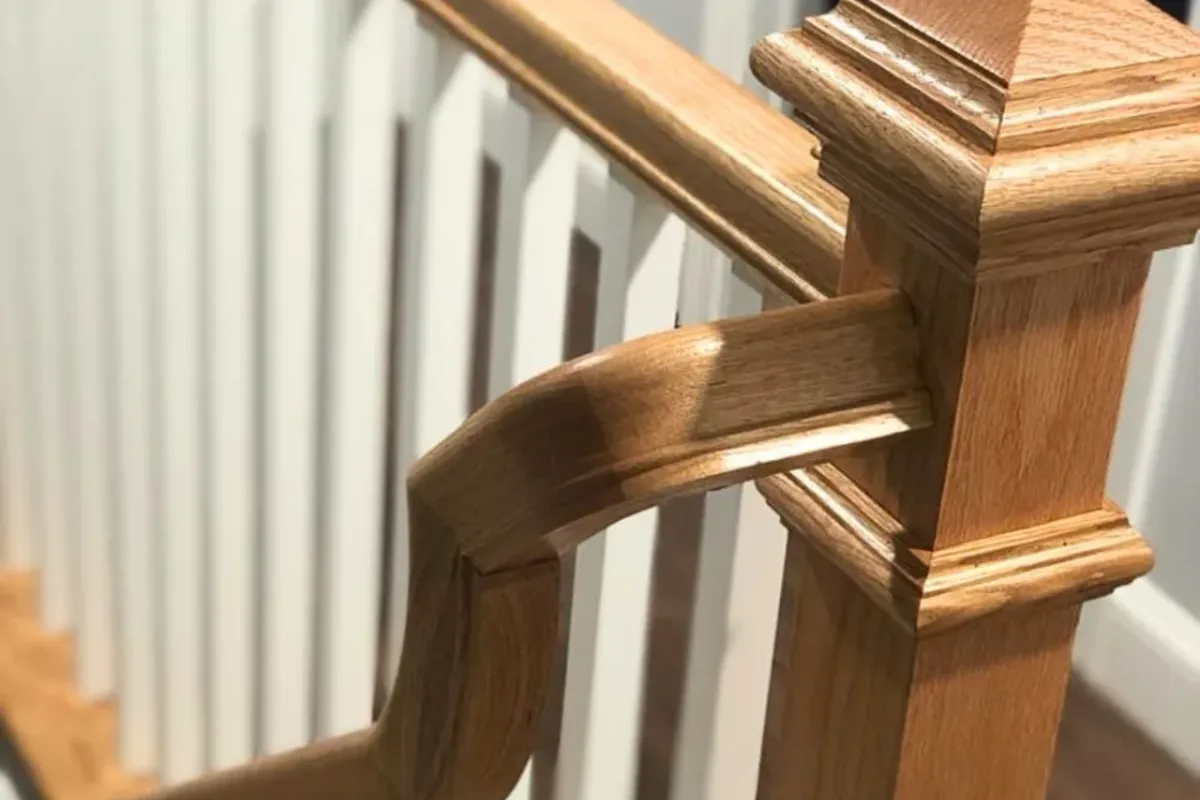
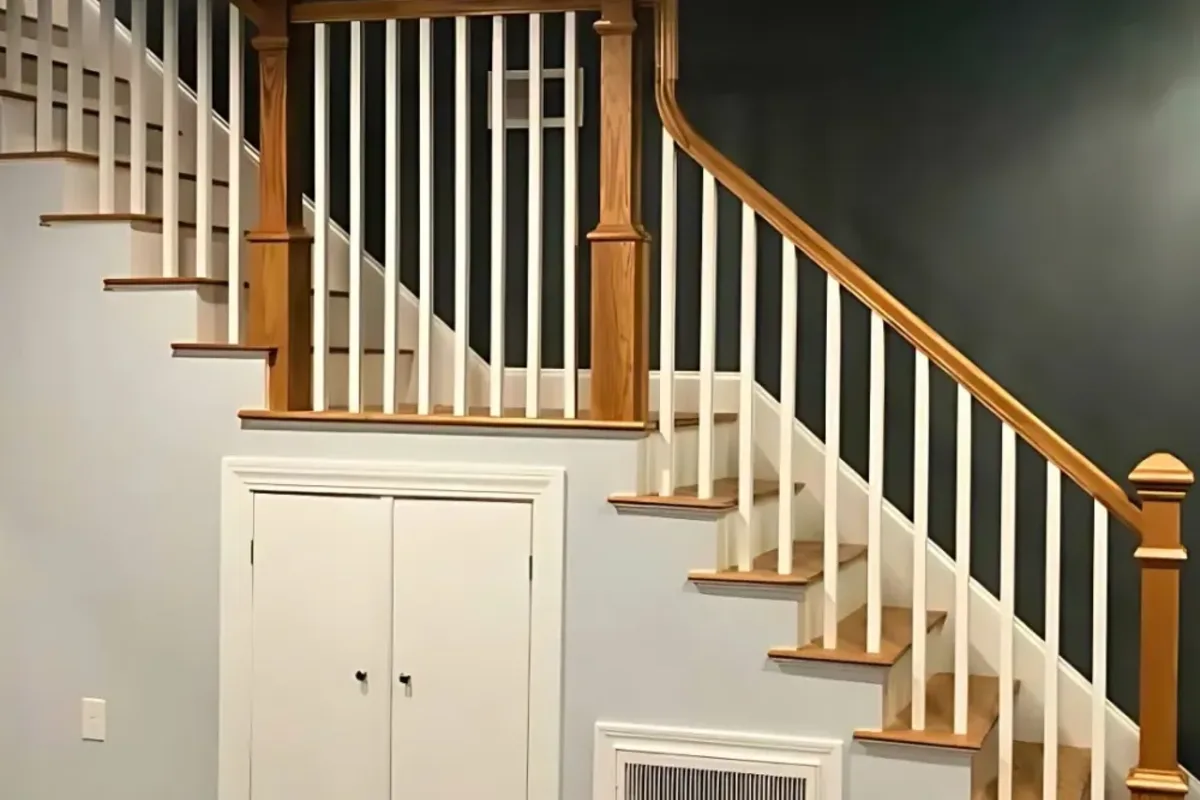
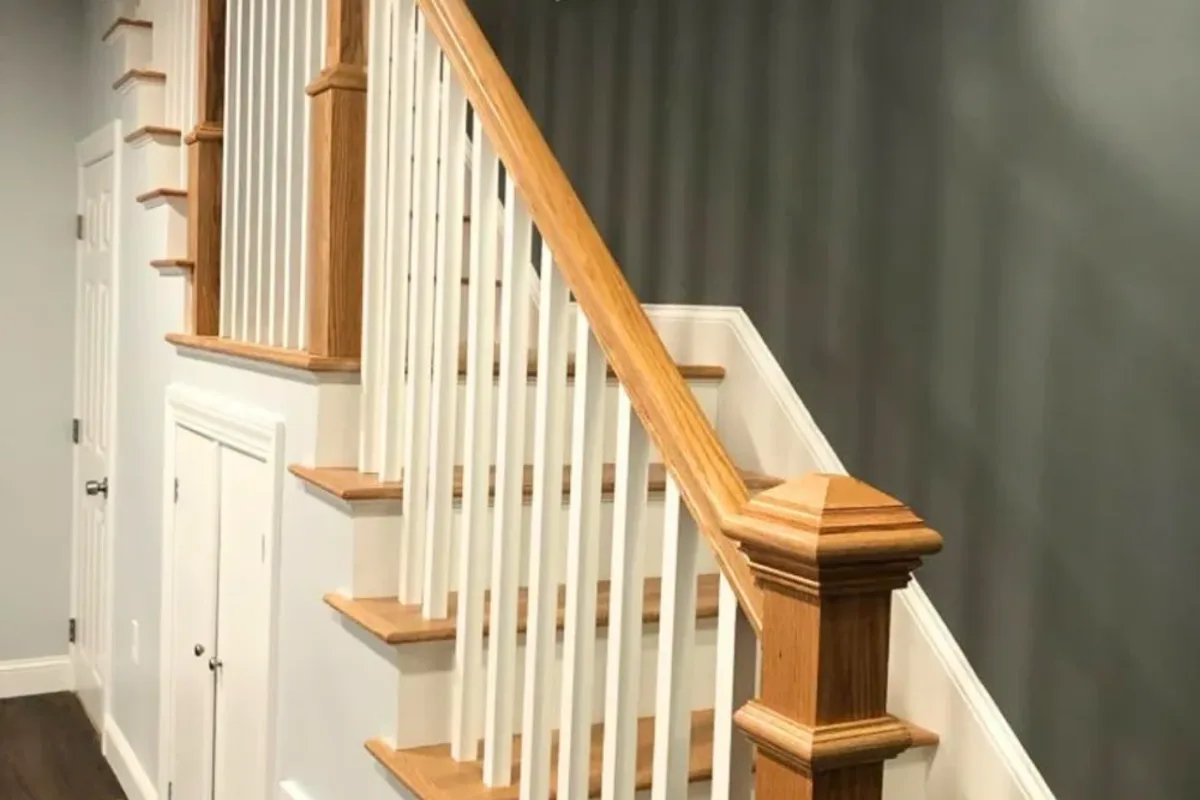
Wood is the classic choice, and on a traditional Wakefield colonial or Victorian it is often the right one. A stained oak or maple handrail with turned or square wood balusters and a substantial newel post keeps the home feeling original and warm. Wood lets us match an existing profile so a partial remodel blends seamlessly, and it takes stain beautifully to tie the railing to refinished treads. It is the most forgiving material to repair down the road.
Wrought iron balusters
Swapping tired wood balusters for wrought iron, while keeping a wood handrail and newel, is one of the highest-impact, best-value upgrades we do in Wakefield. Iron balusters, plain, twisted, or with a basket or scroll detail, make an ordinary builder-grade stair look custom, and they are extremely durable. This hybrid look, wood rail plus iron balusters, is the single most requested railing style in our Wakefield remodels because it modernizes the stair without gutting it.
Cable and modern railings
For a contemporary Wakefield home or an open-concept renovation, stainless cable railings or a sleek metal-and-glass system open up sightlines and let light move through the space. Cable rail is a precise install, the code rules on cable spacing and tension are strict, so it belongs with a finish carpenter who does it correctly. When it fits the home, nothing feels more current.
| Railing type | Best for | Look and durability | Relative cost |
|---|---|---|---|
| Wood rail and wood balusters | Traditional colonials, capes, Victorians | Classic, warm, easy to match and repair; stain to any tone | $ |
| Wood rail with iron balusters | Most Wakefield remodels, high impact upgrade | Custom look, very durable, modernizes without a full rebuild | $$ |
| Stainless cable railing | Modern and open-concept homes | Sleek, open sightlines, low maintenance; precise install | $$$ |
| Metal and glass panel railing | Contemporary staircases, dramatic entries | Very modern, maximum light; premium price and lead time | $$$$ |
Two Wakefield stairs the same size can land far apart on price, and the railing system is usually why. We walk you through the options in your own home so the choice fits both the house and the budget before any work begins.
Massachusetts stair code and what it means for your Wakefield remodel
Stairs are one of the most heavily code-governed parts of a home, and for good reason: they are where most serious in-home falls happen. Any stair remodel in Wakefield that touches the structure, the railing, or the guard has to meet the Massachusetts State Building Code, which is based on the International Residential Code. As a licensed general contractor we build every stair to those standards, and we make the numbers work in your existing home rather than cutting corners.
The rules that matter most in a Wakefield stair remodel include:
- Handrail height: the graspable handrail must sit between 34 and 38 inches above the tread nosings, consistent the full length of the flight.
- Guard height: open sides of stairs and landings need a guard at least 34 inches high at the stair, and 36 inches on landings and open floor areas above the walking surface.
- Baluster and guard spacing: the openings must be small enough that a 4 3/8 inch sphere cannot pass through on the stair, which is why old, widely spaced balusters have to be corrected.
- Rise and run: the maximum riser height and minimum tread depth are limited, and the variation between the tallest and shortest riser in a flight is tightly capped so no single step surprises your foot.
- Graspable handrail profile: the handrail itself has to be a shape a hand can actually close around, not just a wide decorative cap.
Older Wakefield homes almost never meet all of these as originally built, which is exactly why a professional remodel is worth it. We bring the stair up to code as part of the work, so it is safe for kids, older parents and guests, and so it passes inspection cleanly.
Permits and the Wakefield Building Department
Most structural stair work in Wakefield, rebuilding stringers, replacing a staircase, or altering the rise and run, requires a building permit through the Wakefield Building Department at Town Hall on Main Street. A purely cosmetic refinish of existing treads usually does not, but new guards, structural changes and reconfigurations do. As your contractor we handle the permit application, schedule the inspection, and make sure the finished stair is signed off, so the work is documented and protects the value of your home. Because our shop is right here in Wakefield at 50 New Salem St, we know the local process and are never far when a question comes up.
Working without the required permit is a genuine risk: it can surface at resale, complicate an insurance claim after an injury, and leave you with a stair that was never inspected. Iago Maciel and our crew pull the permit as a matter of course. It is part of doing the job right.
The Innov Builders stair remodeling process, step by step
A staircase sits in the busiest path in the house, so a smooth, well-sequenced process matters as much as the finished look. Here is how a typical Wakefield stair remodel runs.
1. Free consultation and measurement
We meet you at your Wakefield home, inspect the full staircase, measure the rise, run, width and railing heights, and listen to how you want the finished stair to look and function. You get an honest read on whether refinishing, a rebuild or a full replacement is the right path.
2. Design, materials and written estimate
We help you choose treads, railing style, balusters, newel posts and stain, then put it all in an itemized written estimate so you can see exactly what drives your number before anything begins. No surprises, no vague lump sums.
3. Permit and scheduling
When the scope requires it, we file for the Wakefield building permit and set a start date that works around your household, because a main staircase cannot simply be closed for weeks.
4. Demolition and structural work
We carefully remove the old treads, railings or balusters, protect the surrounding floors and walls, and repair or rebuild any stringers, landings or framing that need it.
5. Treads, risers and finish carpentry
Our finish carpenters install or refinish the treads and risers, fit the skirt boards, and set the newel posts, handrail and balusters with tight, clean joints, the details that separate a custom stair from a patched one.
6. Sanding, staining and finishing
We sand everything smooth, apply the stain, and build up a durable finish that stands up to daily foot traffic, then reinstall or install the railing system.
7. Inspection and walkthrough
We schedule the final inspection when a permit applies, then walk the finished stair with you, confirm every detail, and clean up completely so the only thing left behind is a staircase you are proud of.
Hardwood treads: the heart of a Wakefield stair remodel
The treads are the surface you feel every day, so hardwood is where most Wakefield stair remodels earn their keep. Solid oak is the workhorse, hard, widely available, and it takes stain in any tone from light natural to deep espresso to match your floors. Maple gives a smoother, more contemporary grain, and where budget or design calls for it, we can install pre-finished engineered treads for consistency and speed. On many older Wakefield homes we find original solid treads under carpet that only need refinishing, which is both the greenest and the most budget-friendly path. When we replace treads, we match the species and stain to the existing hardwood floors so the stair reads as one seamless part of the home rather than an afterthought.
New England living is hard on stairs. Winter tracks in grit and salt, humid summers swell wood, and a busy family adds thousands of footfalls a week. That is why we finish treads with durable, traffic-rated products and detail the nosings and joints to resist the loosening and squeaking that Wakefield homeowners live with on old stairs.
Curved, open and feature staircases
Not every Wakefield stair is a straight, closed run. When the layout allows, an open-side or open-riser staircase transforms a dark hallway into a light-filled feature. Curved and winder staircases add real drama to an entry and can solve tight-footprint problems in older homes, but they demand precise layout and true finish-carpentry skill, this is exactly the work our in-house crew specializes in. We also build and remodel basement and attic stairs, back stairs in two-families, and the low-headroom staircases common in older Wakefield homes, where getting the rise, run and headroom right within a fixed opening takes real experience.
Newel posts: the anchor that makes a railing feel solid
Homeowners tend to focus on treads and balusters, but the newel post is what decides whether a finished railing feels rock-solid or slightly loose forever. The newel is the heavy post at the bottom of the stair and at every turn, and it carries the load of the entire handrail. On older Wakefield staircases we frequently find newels that were never properly anchored to the framing, so the whole rail flexes when someone leans on it. During a remodel we set each newel with a proper mechanical connection into the structure below, whether that means a through-bolt to a floor joist, a hardware kit, or blocking added under the floor. A turned wood newel keeps a colonial feeling traditional, a clean box newel reads more transitional, and a slim metal post suits a modern cable rail. Getting the newel right is quiet, invisible work, and it is the difference between a railing you trust and one you only tolerate.
Refinishing a squeaky staircase without a full tear-out
The single most common complaint we hear from Wakefield homeowners is the squeak, that same step that announces every trip up to bed at night. A squeak means a tread has separated from the stringer or the wood wedges that hold it have dried and shrunk after decades in a dry New England winter home. Handymen often mask the noise by driving a few face nails through the tread, which works for a season and then fails. We fix it properly. Where we have access from below, in a Wakefield basement or under an open stair, we re-glue and re-wedge the treads and add screws and blocking from behind so the fix is invisible and permanent. Where we can only work from the top, we counterbore, screw and plug the treads so the repair disappears into the finish. Paired with a fresh sand and stain, a chronically noisy staircase becomes silent and looks new, all without tearing the stair out.
Carpet-to-hardwood stair conversions in older Wakefield homes
Many Wakefield colonials and capes still have their main staircase covered in decades-old carpet, and pulling it up is one of the most satisfying transformations we do. Sometimes we uncover solid oak treads that only need refinishing, an ideal, budget-friendly result. Just as often the treads underneath were never meant to be seen, rough builder-grade lumber, in which case we cap them with new solid hardwood retro-fit treads and add finished risers and skirt boards to complete the look. Either way, converting a carpeted stair to hardwood removes a dust-and-allergen trap, modernizes the entry instantly, and, because we match the new treads to your existing floors, ties the whole first floor together. It is one of the highest-return upgrades available in an older Wakefield home.
Stair remodel cost in Wakefield, MA
Cost is the first question most Wakefield homeowners ask, so here are honest ranges. The final number depends on the scope, refinish versus rebuild, the railing system, the number of steps, and the finish level. Every project gets an itemized written estimate, but this table gives realistic expectations.
| Stair project | Typical range | What it covers |
|---|---|---|
| Refinish existing staircase | $1,800 - $4,500 | Strip, repair and re-secure treads, sand, stain and finish; kill squeaks; refresh existing railing |
| New railing and balusters (existing stair) | $3,000 - $8,000 | New handrail, newel posts and wood or iron balusters on a sound staircase |
| New hardwood treads and risers | $4,000 - $10,000 | Replace treads and risers with solid hardwood, matched and finished to your floors |
| Full stair rebuild | $9,000 - $20,000 | New stringers, treads, risers, skirt boards and railing, brought up to Massachusetts code, permit included |
| Curved, open or feature staircase | $18,000+ | Open-riser or curved design, premium hardwood, iron, cable or glass railing, custom finish carpentry |
A common and cost-effective package in Wakefield is refinishing the existing treads while swapping tired wood balusters for iron and re-staining the handrail, a remodel that reads as a complete transformation for far less than a full rebuild. We will always tell you honestly when the simpler path gets you most of the result.
What drives the price of a Wakefield stair remodel
If you are comparing estimates, it helps to know the seven factors that actually move the number so you can compare like for like.
- Scope: a cosmetic refinish is a fraction of a full structural rebuild.
- Railing system: wood is the most affordable, iron balusters cost more, and cable or glass systems sit at the top.
- Tread material: refinishing existing treads is cheaper than new solid hardwood, and species and finish level matter.
- Number of steps and any turns or landings, which drive both material and labor.
- Structural repairs uncovered once the old parts come off, common in older Wakefield homes.
- Design complexity: a straight closed run is far less than a curved or open-riser feature stair.
- Permit and inspection when structural work is involved, which we handle for you.
Timeline: how long a Wakefield stair remodel takes
Because the staircase is the busiest path in the home, we plan the schedule carefully and keep the disruption short. A straightforward refinish or a railing and baluster swap on a sound staircase usually takes two to five working days, with the finish needing time to cure between and after coats. A full rebuild that includes new stringers, treads, risers and railing typically runs one to two weeks, and a curved or open feature staircase, or one waiting on a permit or custom material lead times, can run longer. We give you a realistic schedule up front and coordinate the sequence so you are never fully without a way up and down for longer than absolutely necessary.
Why a remodeled staircase is one of the best interior investments
A staircase remodel delivers a rare combination in home improvement: it is highly visible, it is used constantly, and it directly touches safety. Because the stair usually sits in the entry, refinishing the treads and updating the railing changes the first impression of the entire home, which pays off both in daily enjoyment and at resale. Buyers in the Wakefield and North Shore market notice a stair that has been brought up to code with a solid, quiet, well-finished run, and they notice a tired, wobbly one just as fast. Quieting the squeaks, tightening the railing and closing wide baluster gaps also removes a real daily hazard for children and older family members. Dollar for dollar, few interior projects give back as much visible impact and peace of mind as a professionally remodeled staircase.
Basement, attic and back staircases in Wakefield two-families
The showpiece front stair gets the attention, but Wakefield is full of two-family and older homes with a second, harder-working staircase: the steep basement stair, the tight attic stair, or the back stair off the kitchen. These are often the least safe stairs in the house, built long ago with steep risers, shallow treads, low headroom and a flimsy rail, if any rail at all. We remodel and rebuild these too. Working within a fixed opening we do everything possible to improve the rise and run, add proper stringers and solid treads, install a code-compliant graspable handrail, and improve the lighting so a trip to the basement or up to a finished attic is no longer a hazard. In a rental or two-family, bringing these secondary stairs up to standard also protects you as a property owner.
Matching a stair remodel to the rest of your renovation
A staircase rarely gets remodeled in isolation. Most of our Wakefield stair projects happen alongside a broader update, a refinished first floor, a new kitchen, or opening up a wall between rooms, and the stair is what visually ties it all together. Because Innov Builders is a full general contractor with an in-house crew, we can carry the same hardwood species, stain and trim details from your floors and built-ins straight onto the staircase, so nothing looks like it was done by a different hand on a different day. If your stair opens onto a room we are also remodeling, we sequence the work so the finishes line up and the reveals match. That whole-home consistency, the same team owning the floors, the built-ins and the stair, is exactly why homeowners bring the entire project to one licensed contractor rather than juggling separate trades.
Common stair remodeling mistakes to avoid
We are often called in to fix stair work that went wrong the first time. The most common mistakes we see in Wakefield homes are worth knowing before you hire anyone.
- Ignoring code on railing height and baluster spacing, which leaves the stair unsafe and can fail an inspection or a home sale.
- Face-nailing loose treads instead of properly re-securing and shimming them, which hides a squeak for a season and then brings it right back.
- Skipping the permit on structural work, creating a problem that surfaces at resale.
- Mismatched stain between new treads and existing floors, which makes a remodel look like a repair.
- Undersizing or loosely setting the newel post, the anchor of the whole railing, so the rail never feels solid.
- Using a general handyman for finish work that demands a true finish carpenter, where the joints and reveals are the entire point.
Making a Wakefield staircase safer for children and older parents
For many Wakefield families a stair remodel is really a safety project. Homes here often hold multiple generations, and the same original staircase that a couple bought in the 1990s now has to work for young grandchildren and aging parents. We close wide baluster gaps that a small child could slip through, add a continuous graspable handrail on both sides where the width allows, correct uneven risers that trip people who have used the stair for years, and can build in features like a landing to break up a long steep flight. Where headroom and layout allow, we advise on lighting at the treads and a second lower rail for little hands. None of this has to look institutional, we detail it so the finished stair is both genuinely safe and still beautiful, exactly the balance a good finish carpenter is there to strike.
Finishing that survives New England winters
A staircase in a Wakefield home takes a beating that a stair in a milder climate never sees. Winter drags in grit, road salt and snowmelt on every boot, and the swing from a dry, heated house in January to a humid August makes wood expand and contract all year. A finish that looks fine in a showroom can dull and wear through on a busy New England stair within a couple of seasons. That is why we use durable, traffic-rated finishes, detail the nosings, the most-worn edge of every tread, to resist wear, and seal the wood so seasonal humidity swings do not reopen squeaks and gaps. Building for the local climate is the reason a stair we finish still looks and sounds right years later.
Serving Wakefield and the North Shore
Our shop at 50 New Salem St puts us minutes from the neighborhoods we serve, and stair remodeling is a project where being local genuinely matters, because the busiest path in your home cannot wait days for a crew to drive in. Beyond Wakefield we remodel and rebuild staircases throughout the North Shore and Greater Boston, in Reading and North Reading just to the north, Lynnfield and Saugus to the east, Woburn, Stoneham and Winchester to the west, and Melrose, Medford and Malden to the south. Each of these towns has its own mix of housing stock, from tight-footprint two-families to grand older colonials, and our in-house crew has done the finish carpentry to match. Wherever you are in the area, you get the same licensed, insured, HIC #212869 team and the same standard of work.
How to choose a stair remodeling contractor in Wakefield
Stair work is finish carpentry at its most demanding, and it is also safety-critical, so who you hire matters more than on almost any other interior project. When you compare contractors in Wakefield, look for a few non-negotiables.
- A licensed and insured general contractor, so the work is accountable and your home is protected. Innov Builders is licensed and insured and holds HIC #212869.
- Real finish-carpentry crews, not a rotating cast of subcontractors. Our in-house crew, led by Iago Maciel, does the work themselves.
- Knowledge of Massachusetts stair code and the Wakefield permit process, so the finished stair is genuinely safe and passes inspection.
- An itemized written estimate, so you can compare scope and materials honestly instead of vague lump sums.
- Local roots, a real shop you can find. Ours is at 50 New Salem St in Wakefield, and we stand behind the stairs we build.
Innov Builders is OSHA certified, licensed and insured, and built specifically to deliver this level of interior finish work for Wakefield and the surrounding North Shore towns, Reading, North Reading, Lynnfield, Woburn, Stoneham, Melrose, Saugus, Medford, Malden and Winchester.
Ready to remodel your Wakefield staircase?
Whether your stair needs a fresh refinish, a new iron or cable railing, or a full rebuild to current Massachusetts code, Innov Builders will give you an honest assessment and a clear written estimate. Call us at (978) 878-7977 or email contact@innovbuildersusa.com to schedule a free on-site consultation at your Wakefield home. As your local finish carpenters, licensed, insured and based right here at 50 New Salem St, we will help you turn the busiest, most visible feature in your home into one you are proud to show off.