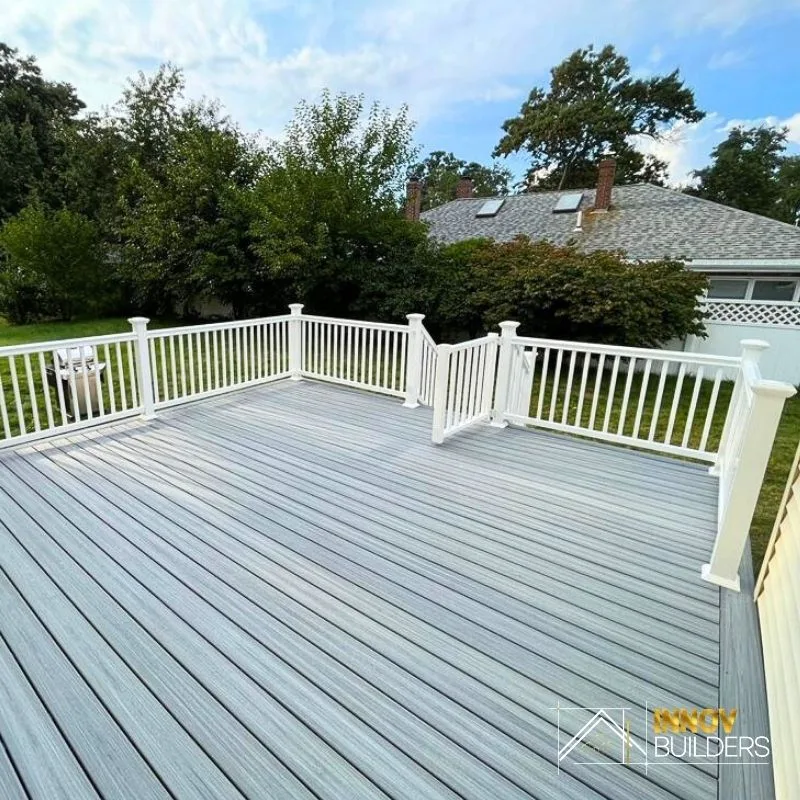
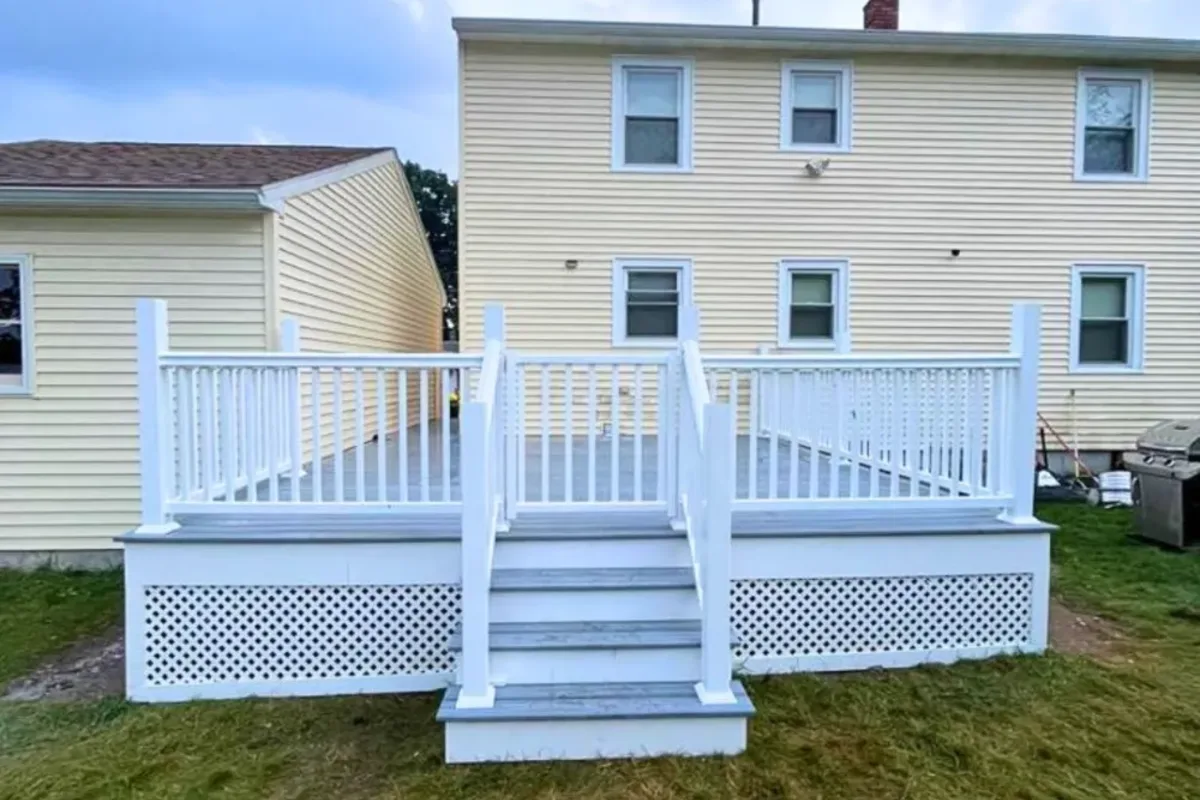
Innov Builders are the pool deck builders Wakefield, MA homeowners rely on when they want a deck around the pool that is safe underfoot, cool in the summer sun, and built to survive years of chlorine, splash and New England winters. A pool deck is not a regular backyard deck with water nearby: it lives in a wet, high-traffic, barefoot environment governed by Massachusetts pool-barrier code, so the material, the slip resistance, the drainage and the safety details all matter more than on any other deck we build. Our in-house crew designs, permits and builds it start to finish from our shop at 50 New Salem St in Wakefield, so you deal with one accountable team rather than a rotating cast of subcontractors.
Whether you have an above-ground pool that needs a surround, an in-ground pool that deserves a proper deck instead of a strip of hot concrete, or an old wood pool deck that has gone splintery and slick, this guide walks you through what goes into a great pool deck in the Wakefield area: the best materials, the Massachusetts barrier rules, slip resistance and cool-touch boards, drainage and grading, layout around the water, cost, and the maintenance a poolside deck really needs.
Why a pool deck is different from a regular deck
Every board around a pool is exposed to things a normal deck never sees: constant splash-out, pool chemicals, dripping swimmers walking barefoot, sunscreen, and the wet-then-baking cycle of a New England summer. A pool deck is also a safety surface first and a good-looking one second. People run on it, kids climb out dripping, and the whole thing sits inches from open water. That changes how we design and build it in three big ways.
First, the surface has to stay slip resistant when wet, so we choose boards and finishes rated for wet, barefoot use rather than whatever looks nice in a showroom. Second, it has to shed water fast and away from the pool, so grading, board gaps and drainage are planned from the framing up. Third, it has to satisfy the Massachusetts pool-barrier rules, which govern fences, self-closing gates and how the deck itself becomes part of the safety enclosure. Get any one of those wrong and you have a deck that fails inspection, holds water, or becomes a hazard. Getting all three right is exactly what a specialist pool deck builder is for.
Above-ground vs in-ground pool decks
The single biggest fork in a pool deck project is whether you are building around an above-ground pool or an in-ground pool. They call for very different structures, and Wakefield yards have plenty of both.
Decks for above-ground pools
An above-ground pool sits roughly four to five feet off the grade, so its deck is an elevated platform, framed on footings and posts, that brings you level with the top rail of the pool. This is genuine structural deck work: footings below the frost line, a code-height guardrail everywhere the deck is raised, a self-latching gate at the pool entry, and stairs or a landing that meet the same code as any other deck stair. A well-built above-ground pool deck completely transforms a basic pool, giving you a lounging area, a safe way in and out, and a place to keep towels and drinks off the wet ground. Because the deck also forms part of the pool barrier, the gate and railing details are not optional extras, they are the safety system.
Decks for in-ground pools
An in-ground pool deck is usually at or near grade, which means the challenge shifts from height to water and slope. Here the deck is a low, wide surround that hugs the pool coping, and the priorities are slip resistance, positive drainage away from the water, and a clean, safe edge where the deck meets the pool. Because the deck is low, guardrails may not be required around the whole thing, but the barrier code still governs the perimeter fence and gates that enclose the pool area. Many Wakefield homeowners replace a cracked, scorching concrete apron with a composite in-ground pool deck precisely because composite stays cooler underfoot and does not crack and heave the way concrete does in our freeze-thaw winters.
Best materials for a pool deck in Massachusetts
Material choice matters more on a pool deck than anywhere else in the yard, because the surface has to handle water, chemicals, sun and bare feet all at once. Here is how the real options compare for poolside use in our climate.
| Material | Wet-slip performance | Heat underfoot | Chlorine & water resistance | Best for a pool deck? |
|---|---|---|---|---|
| Capped composite (Trex, TimberTech) | Good, textured, slip-rated lines available | Warm in full sun, cooler than dark stone | Excellent, will not rot or splinter | Yes, our most-recommended pool decking |
| Capped PVC (Azek / TimberTech Advanced PVC) | Very good, engineered for wet use | Cool-touch lines run noticeably cooler | Best in class, fully moisture-proof | Yes, ideal right at the pool edge |
| Pressure-treated wood | Slippery when wet unless textured and sealed | Moderate | Rots and greys without constant sealing | Budget option, high upkeep near water |
| Cedar / mahogany | Better than PT but still needs sealing | Moderate, comfortable | Handsome but demands yearly care | For wood lovers who accept the maintenance |
| Concrete / pavers (for comparison) | Varies, can be very slick when wet | Gets hot, dark colors bake | Cracks and heaves in freeze-thaw | What many homeowners replace with a deck |
For most Wakefield pool decks we steer homeowners toward capped composite or capped PVC. They will not splinter into bare feet, they shrug off pool chemicals and standing water, and the newer cool-touch and slip-rated lines are engineered specifically for the poolside environment. Pressure-treated wood is the budget choice, but around a pool the yearly sanding, sealing and the tendency to get slick when wet make it a harder sell. We build all of these and will tell you honestly which fits your pool, your budget and how the family uses the water.
Cool-touch and slip-resistant boards
Two features separate a real pool decking board from an ordinary deck board. The first is cool-touch technology: certain capped PVC and premium composite lines are engineered to reflect heat and stay meaningfully cooler than standard boards in direct July sun, which matters a lot when children are running across it barefoot. The second is a slip-resistant texture rated for wet, barefoot use. When we spec your pool deck we look up the manufacturer wet-slip rating and steer toward boards proven around water, not just whatever color you liked. It is a small detail that decides whether the deck is comfortable and safe on the hottest, busiest day of the summer.
Pool safety and Massachusetts barrier code
A pool deck is part of your pool safety system, and in Massachusetts that system is regulated. The state building and pool codes require a barrier around a pool, self-closing and self-latching gates, and specific rules for how a deck, railing or wall becomes part of that enclosure. For an above-ground pool, the elevated deck and its guardrail and gate frequently form the barrier itself, which is why the railing height, the baluster spacing and the latch height are not decorative choices but code requirements. For an in-ground pool, the perimeter fence and gates around the pool area carry the barrier duty, and the deck has to work within that enclosure.
Innov Builders handles this the right way. As a licensed contractor, HIC #212869, we design the pool deck to satisfy the barrier, guardrail, gate and stair requirements, pull the Wakefield building permit, build to current Massachusetts code, and schedule the inspections. Skipping the permit, which some handymen will offer to do around a pool, is a genuine safety and liability problem, and it can fail a home inspection and complicate your homeowners insurance later. Around open water, cutting that corner is never worth it.
Non-slip surfaces, railings and gates
The safety details that make a pool deck genuinely safe are the ones people notice least. We build in slip-resistant decking rated for wet feet, guardrails at the correct code height with proper baluster spacing so a child cannot slip through, self-closing and self-latching gates with the latch set out of a toddler's reach, and stairs with a comfortable, code-compliant rise and run and a solid graspable handrail. On above-ground pool decks we pay particular attention to the gate and railing at the pool entry, because that is the point where the deck and the pool meet and where most poolside falls happen. None of this shows up in a glossy photo, but it is the part of the job that protects your family.
Drainage, grading and the pool edge
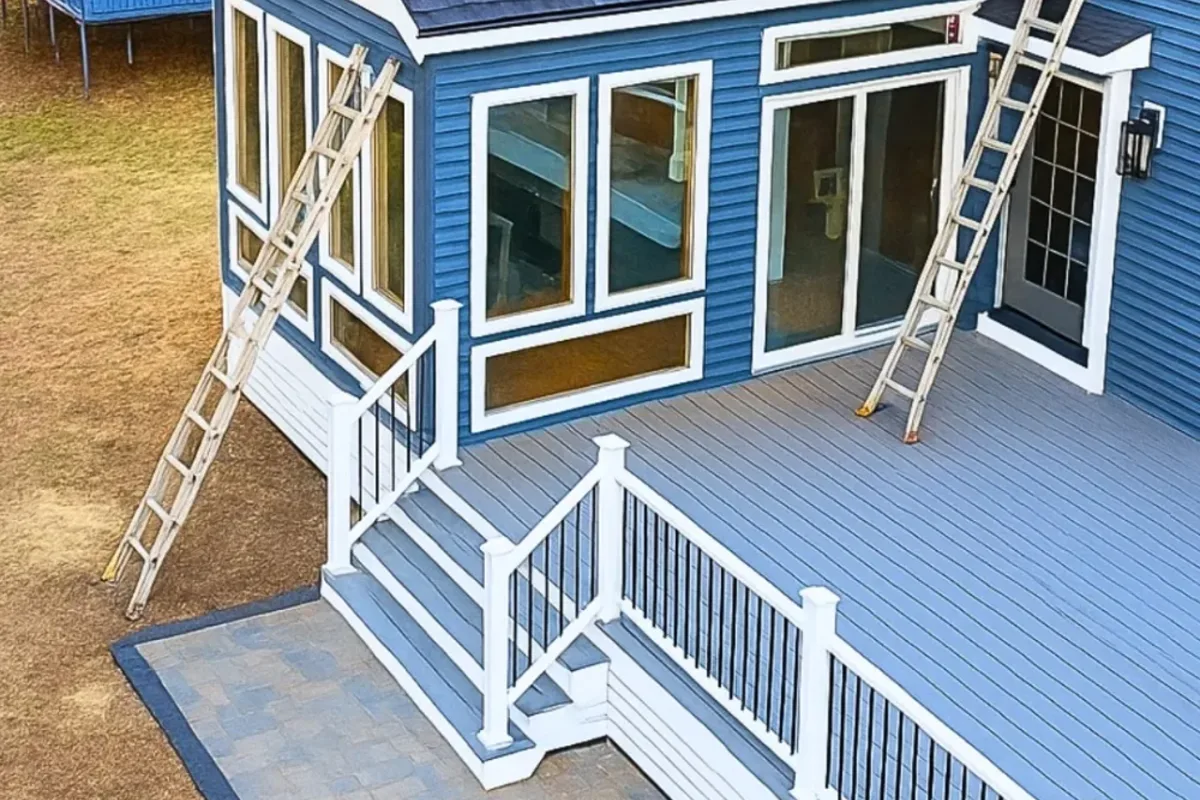
Water management is what separates a pool deck that lasts from one that rots, puddles or grows slick with algae. Because a pool deck is soaked constantly, we plan the drainage before the first board goes down. On an in-ground surround we build in a slight, code-appropriate slope so water sheds away from the pool and the house rather than pooling or draining back into the pool. On an elevated above-ground deck, the board gaps and framing pitch let water fall straight through and away.
The pool edge itself gets special attention. Where the deck meets the coping we detail a clean, safe transition with no lip to stub a toe on and no gap to trap fingers, and we run boards so the edge stays solid and level for years. On composite and PVC decks we use hidden fasteners so there are no screw heads to catch a bare foot or rust in the chemical-rich splash zone. Good drainage also protects the frame, since standing water is what rots joists and heaves footings.
Pool deck layout and design for Wakefield yards
A great pool deck is designed around how the family actually uses the water. Before we draw anything we ask how you swim: is this a lap-and-lounge pool for adults, a splash-and-play pool for kids, or a full backyard entertaining hub? The answers shape the layout.
- A generous lounging apron on the sunny side of the pool, sized for chairs and a couple of loungers without crowding the walk-around path.
- A safe, clear walk-around so no one has to squeeze past furniture at the water's edge, the most common cause of poolside slips.
- Multi-level transitions that step an above-ground pool deck down to a lower patio or yard, separating the wet pool zone from the dry dining zone.
- Built-in bench seating and storage for towels, toys and pool gear that keeps clutter off the wet deck.
- A shaded section or pergola for relief from the July sun and a place for people who are not swimming.
- Low-voltage deck and step lighting, wired by a licensed electrician, so the pool area is safe and inviting after dark.
In a typical Wakefield backyard, space and setbacks shape what is possible, and older homes on the North Shore often have mature trees, slopes and lot lines to design around. During the consultation we walk the yard, mark out real dimensions around the pool, and design a deck that feels generous and safe without wasting budget on square footage you will not use.
How much does a pool deck cost in Wakefield, MA?
The most common question we hear is what a pool deck costs. As with any deck the number depends on size, material, height and complexity, but pool decks carry a few extra cost drivers: the barrier railing and gate, the extra care at the pool edge and drainage, and the premium slip-rated or cool-touch boards many homeowners want at the water. Treat these as planning ranges for a licensed, permitted project, not fixed quotes.
| Pool deck project | Typical range | What it covers |
|---|---|---|
| Above-ground pool deck (pressure-treated wood) | $8,000 - $16,000 | Elevated platform, footings, framing, wood decking, guardrail, gate and stairs, permit |
| Above-ground pool deck (composite) | $14,000 - $28,000 | Same structure in low-maintenance composite with composite or aluminum railing |
| In-ground pool surround (composite / PVC) | $18,000 - $40,000+ | Wide at-grade surround, slip-rated boards, drainage detailing, clean pool-edge transition |
| Pool deck repair & resurface | $2,000 - $7,000 | Replacing rotted or slick boards, rebuilding a failing railing or gate, re-securing the frame |
| Large multi-level or resort-style pool deck | $40,000+ | Multiple levels, built-ins, pergola, lighting, premium PVC decking, privacy screens |
Two pool decks the same size can land far apart in price, and material plus the safety hardware are usually the reason. Pressure-treated wood is cheapest to build but needs constant upkeep in the splash zone. Composite and capped PVC cost more upfront but shrug off water and chemicals and need almost no maintenance, which often makes them cheaper over the life of the deck. We give you an honest, itemized estimate so you can see exactly where the money goes and choose the path that fits your budget.
Pool deck maintenance in New England
A poolside deck works harder than any other deck in the yard, so how you maintain it depends heavily on the material you chose. The good news is that the low-maintenance options really do stay easy.
Composite and capped PVC pool decks (Trex, TimberTech, Azek) are the low-maintenance winners around water. A wash a couple of times a season with soap and water clears off sunscreen, chlorine residue and grime, and that is essentially it. They never need sanding, staining or sealing, they will not splinter into a bare foot, and they resist the algae and mildew that love a constantly wet surface. This is exactly why we recommend them for pool decks over wood in nine cases out of ten.
Pressure-treated and natural wood pool decks need real attention in the splash zone. Constant moisture and pool chemicals accelerate the greying, cracking and rot that wood is already prone to in our climate, so a wood pool deck needs cleaning each spring plus re-staining or sealing every year or two to stay safe and good-looking. Skip it and a wood pool deck turns slick and splintery fast. If you love real wood we will build it, but we will be honest that a poolside wood deck is the highest-maintenance option we offer.
Whatever the material, the smartest poolside maintenance is a quick annual look at the safety hardware: test the guardrail and gate, check the latch still self-closes and self-latches, look for any loose or slick board at the pool edge, and probe for soft spots in the frame. Around open water, catching a loose railing early is not just upkeep, it is safety.
Replacing a concrete pool apron with a deck
Many of the pool decks we build in the Wakefield area replace a cracked, heaved or scorching concrete pool apron. Concrete around a pool has three chronic problems in New England: it cracks and lifts with every freeze-thaw winter, dark surfaces get painfully hot in the summer sun, and once it starts to spall or settle it is expensive and ugly to patch. A composite or capped-PVC pool deck solves all three. It stays dimensionally stable through the winter, the cool-touch lines are far more comfortable barefoot, and a slip-rated board is safer than smooth wet concrete. A wood-look deck also feels warmer and more inviting around a pool than a slab. If your concrete apron is cracking, tilting or too hot to stand on, replacing it with a deck is one of the highest-impact upgrades you can make to the pool.
Our pool deck building process
A clear process is what keeps a pool deck project safe, on time and on budget. Here is how a Wakefield-area pool deck runs with Innov Builders, from first call to first cannonball.
1. Free consultation and design
We visit your home, look at the pool, the grade and the existing surround, and talk through how the family uses the water. You get honest guidance on above-ground versus in-ground detailing, material for the splash zone, and a layout that puts lounging, walking and safety in the right places.
2. Written, itemized estimate
You receive a clear written estimate with materials, safety hardware, timeline and price locked in before any work starts, so there are no surprise change orders at the pool edge.
3. Permit and barrier plan
We pull the Wakefield building permit, confirm the pool-barrier, railing and gate requirements up front, and order your decking and hardware so lead times never stall the job.
4. Footings, framing and drainage
Our crew sets footings below the frost line, builds a properly pitched frame for positive drainage away from the pool, and details the pool-edge transition so it is solid, level and safe.
5. Decking, railings, gates and stairs
We install your slip-rated decking with hidden fasteners, then build the code-height railings, self-latching gates and comfortable stairs that make the pool area both usable and compliant.
6. Final inspection and walkthrough
We pass the final inspection, walk the finished pool deck with you, test every safety detail, and stand behind the work. You get a poolside space that is safe, beautiful and built to last.
Composite decking brands for pool decks
If you go the low-maintenance route around the pool, the next question is which brand. We build with all the leading names and pick based on your budget, your look and, crucially for a pool, the wet-slip and cool-touch performance of the specific line.
- Azek (capped cellular PVC) is our top pick right at the pool edge. It is fully moisture-proof, its cool-touch lines run noticeably cooler barefoot, and it is the most weather-resistant board we build with, ideal for the constant splash of a poolside.
- TimberTech offers both composite and advanced PVC boards with realistic wood-grain looks, excellent color retention and cooler-underfoot premium lines, a strong all-around choice for a pool surround.
- Trex is the best-known composite and a strong value. Its high-performance, slip-textured lines resist fading, staining and scratching and carry long warranties, a proven, budget-friendly pick for most Wakefield pool decks.
- Cedar and pressure-treated wood remain an option for homeowners set on real timber and a lower upfront cost, with the clear understanding that a wood pool deck needs regular sealing to stay safe near water.
There is no single best board, only the best board for your pool. During your estimate we bring samples, show you the wet-slip and heat ratings, explain the warranty and price differences in plain English, and help you choose with no pressure.
Signs your pool deck needs attention
A pool deck gives you warning signs before it becomes a hazard, and around open water those signs are worth acting on quickly. If you notice any of these on your Wakefield pool deck, it is worth a free inspection before someone gets hurt.
- Slick, mossy or algae-covered boards that stay slippery even when you think they are dry, a real fall risk at the water's edge.
- Splintering or cracked wood that catches bare feet and towels.
- A wobbly guardrail or a gate that no longer self-latches, the single most important safety failure on a pool deck.
- Soft, spongy boards or frame near the splash zone, a sign that constant moisture has started rot.
- Standing water or puddles that do not drain away, which means the grade or the board gaps have failed.
- Rusted or popped fasteners at the pool edge, where chemicals and water attack the wrong hardware fastest.
A failing gate or railing and a slick, rotting surface are the two problems that cause the most poolside accidents, and both develop quietly in our wet climate. If you are seeing them, do not wait until swim season.
Common pool deck mistakes we fix
Because we repair as many pool decks as we build, we see the same avoidable failures again and again, usually from a rushed, DIY or unpermitted original build around the pool:
- Standard deck boards used at the pool instead of slip-rated boards, leaving a smooth, dangerous surface when wet.
- Gates that do not self-close or self-latch, or latches set low enough for a toddler to reach, a direct violation of the barrier code.
- No drainage plan, so water pools on the deck and drains back toward the pool and the house, rotting the frame over time.
- Footings too shallow for the frost line, which heave every winter and throw an above-ground pool deck out of level and out of alignment with the pool.
- Exposed screw heads at the pool edge that rust in the chemical splash and snag bare feet, where hidden fasteners belong.
- Railings that miss code height or baluster spacing, a serious hazard with children constantly climbing in and out.
When we build or rebuild a pool deck we correct all of these to current Massachusetts code, so the deck is genuinely safe around water, not just newer on the surface. Near a pool, the part of the job you cannot see is the part that protects your family.
Above-ground pool decks: what makes them safe
Because an above-ground pool deck is an elevated structure that doubles as the pool barrier, it deserves its own note. The features that keep it safe are the ones that also make it feel finished: a continuous code-height guardrail everywhere the deck is raised, a self-closing and self-latching gate at the pool entry with the latch out of a small child's reach, wide code-compliant stairs with a graspable handrail, and a solid, level deck-to-pool transition with no gap at the top rail. We frame these decks on footings set below the frost line so they do not heave, and we tie the guardrail and gate into the structure so they stay rock solid for years of leaning, climbing and splashing. Done right, an above-ground pool deck turns a basic backyard pool into a proper outdoor room without ever compromising the barrier that keeps the water enclosed.
How long does a pool deck take to build?
Most pool deck projects in the Wakefield area take one to three weeks of active work once we start, depending on size and complexity. A straightforward pool deck repair or a board-and-railing refresh can be a few days. A standard above-ground pool deck usually runs one to two weeks, while a large in-ground surround or a multi-level, resort-style pool deck with built-ins, a pergola and lighting can take three weeks or more. Special-order slip-rated composite and PVC decking can add lead time, so we order materials before we begin and finalize every selection up front. As with any build, the projects that run long are the ones where the boards, railing style and safety hardware were not locked in early, which is exactly why we settle those before the first footing goes in.
Pool deck lighting and finishing touches
The details that turn a pool deck into an evening destination are worth planning from the start rather than adding later. Low-voltage step and rail lighting, wired by a licensed electrician as part of our general-contractor scope, makes the pool area safe to walk after dark and gives it a warm, resort-like glow. Recessed deck lights along the walk-around path mark the edge of the water without glare, and a shaded pergola section gives non-swimmers a comfortable place out of the July sun. We also build in bench seating with hidden storage for towels and pool toys, privacy screening where a neighbor's sightline crowds the pool, and clean cable or glass railing options for homeowners who want an unobstructed view of the water. Because we coordinate the whole pool deck as one project, the lighting, seating and screening line up with the decking and the safety hardware instead of looking bolted on.
Hot tub and spa decks
A hot tub or in-deck spa is a close cousin of a pool deck, and it brings its own structural and safety demands. A filled hot tub is extremely heavy, so the framing and footings under it have to be engineered for that concentrated load, not just standard deck spacing. We plan the tub location before framing, reinforce the structure to carry it safely, and detail the surround so the deck sheds splash-out and stays slip resistant right where wet feet step out. Access matters too: comfortable steps, a solid graspable handrail, and often a small privacy screen or pergola over the tub. If you are combining a spa with a pool deck, we design them together so the wet zones, drainage and safety hardware work as a single, code-compliant system rather than two projects fighting each other.
Deck, patio or paver pool surround: which is right?
Homeowners often ask whether a pool should have a deck, a paver patio, or a mix of both. Each fits a different pool and yard, and because we build decks we will be straight about where a deck is and is not the best answer. An elevated deck is the natural choice for an above-ground pool or wherever the pool sits above grade, and it is the easiest way to create a safe, level, walk-around surround with the barrier built in. A composite or PVC deck at grade is a superb replacement for a cracked, hot concrete apron around an in-ground pool, giving you a cooler, slip-rated, wood-look surface. A paver patio can make sense for a fully at-grade in-ground pool on flat ground and a different look and price point. Many of our favorite projects combine them, a composite pool deck on the lounging side that steps down to a paver patio, so we help you weigh cost, heat, slip resistance and maintenance, then design the surround that actually fits your pool.
The best time to build a pool deck in Massachusetts
Spring and early summer are the busiest pool deck seasons in Massachusetts, because everyone wants the deck ready before swim season, which means the best builders book up fast. If you want your pool deck finished for July, the smart move is to plan in late winter or early spring, get on the schedule, and let us handle permits, the barrier plan and materials while the ground thaws. That said, we build pool decks year-round, and fall is an underrated time to build: the weather is mild, schedules open up, and your deck is ready the moment the pool opens next season. The one thing we never do is rush the footings, drainage and safety hardware to beat the calendar, because around open water those are the details worth doing right regardless of the season.
Does a pool deck add value to your home?
A well-built pool deck is one of the better outdoor-living returns in the Greater Boston market, because it turns a pool from a maintenance item into a genuine backyard destination. A safe, good-looking deck that wraps the pool expands the usable outdoor footprint, makes the pool easier and safer to enjoy, and gives buyers a feature they can picture themselves using on a summer afternoon. A cracked concrete apron or a splintery, unsafe wood surround does the opposite, it reads as deferred maintenance and can even make buyers wary of the pool itself. Building the deck to code with permits and a proper barrier also protects that value, because an unpermitted pool enclosure is exactly the kind of thing that derails a home sale during inspection. A mid-range composite pool deck that fits the yard tends to recover a healthy share of its cost while giving you years of daily enjoyment before you ever sell.
Why Wakefield homeowners choose Innov Builders for pool decks
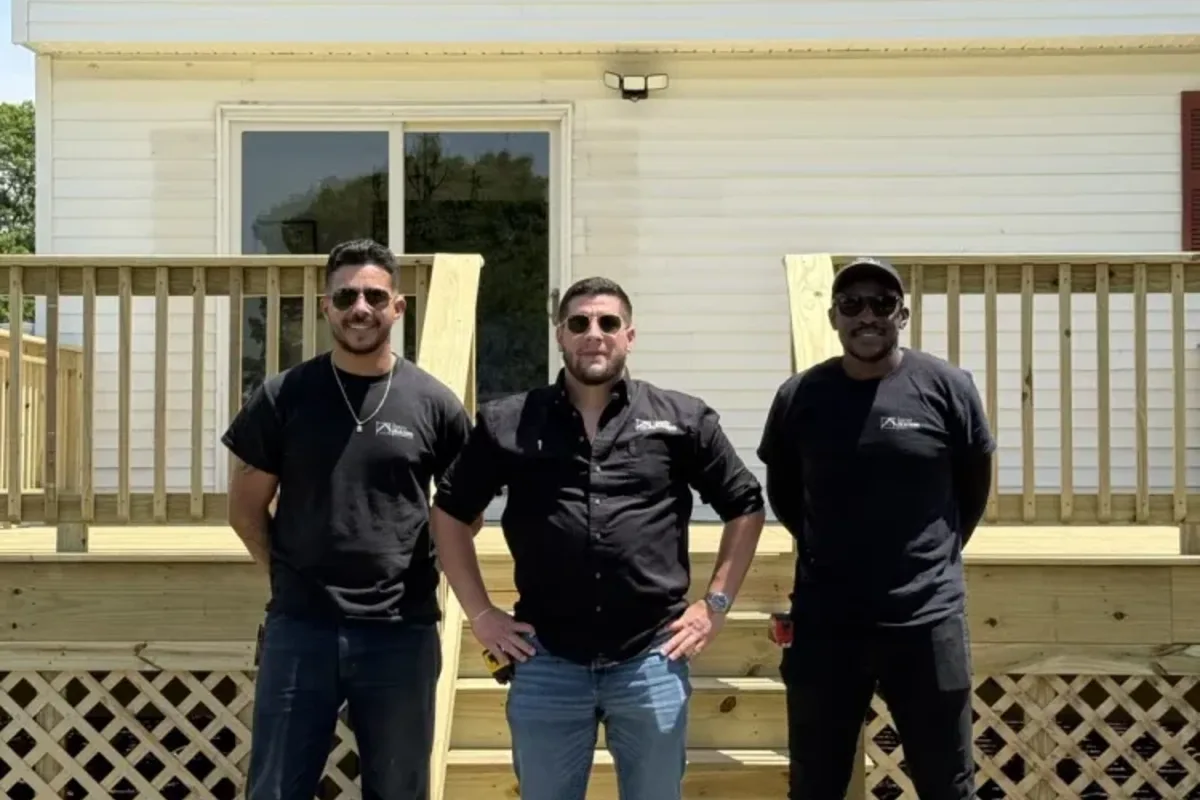
A pool deck is structural, safety-critical work, so who builds it matters as much as what they build. Innov Builders is a licensed and insured general contractor, HIC #212869 and OSHA certified, led by Iago Maciel with a trained in-house crew based at 50 New Salem St right here in Wakefield, MA. We do not hand your pool deck off to rotating subcontractors: the people who quote the job are the people who build it, and they understand the barrier code, the slip-rating and the drainage details that a general handyman often misses around water. That is how we keep quality high, communication clear and the job accountable from the first footing to the final gate latch. Our work is backed by strong local reviews and a simple promise, to build it right and build it to last, around a pool where safety is never negotiable.
How the pool area comes together
Homeowners often ask how the whole pool area fits together, beyond just the deck boards. A finished poolside is a system: the deck surface, the barrier fence and gates, the drainage, the lighting and the seating all have to work as one. We coordinate all of it as a single project so nothing is left as an afterthought, the safety hardware matches the deck, the lighting is wired properly by a licensed electrician, and the drainage protects both the deck and the house. Whether you are starting from a bare above-ground pool, a tired in-ground surround, or a cracked concrete apron, the goal is the same: a pool deck that is safe underfoot, comfortable in the sun, easy to keep clean, and built to last for decades rather than seasons.
Areas we serve around Wakefield
Based in Wakefield, we design, build and repair pool decks across the North Shore and Greater Boston, including Reading, North Reading, Lynnfield, Stoneham, Melrose, Saugus, Wakefield, Medford, Malden, Winchester and Woburn. Being local means we know the housing stock, the yards and slopes, our freeze-thaw weather, and the Wakefield permit and pool-barrier process, so your pool deck project moves without the delays an out-of-town contractor runs into. Whatever town your pool is in, we bring the same in-house crew and the same standard of safe, code-compliant work to the water's edge.
Get a free pool deck estimate in Wakefield, MA
If your above-ground pool needs a proper deck, your in-ground pool deserves a real surround instead of hot concrete, or your old pool deck has turned slick and unsafe, the next step is simple. Request a free, no-obligation estimate from a licensed Wakefield pool deck builder, and we will visit your home, assess the pool and the site, walk you through material and safety options, and give you a clear written scope and price before any work begins. Let's build a pool deck your family will enjoy safely for years.